Iceland Foodie Bucket List: Must-Try Icelandic Foods, Drinks & Food Experiences


This post may contain affiliate links wherein I earn a small commission if you purchase or subscribe to a product from one of my links (at no extra cost to you!). Read my full Privacy & Affiliate Policy here.
Envisioning Iceland as a foodie destination might seem a little farfetched at first, but once you “dig in,” you’ll find an abundance of dishes featuring fresh local ingredients from both land and sea!
Being an island nation in the North Atlantic, seafood is a prime focus, especially when it comes to langoustine, whitefish like cod or haddock, and even fresh-water fish like arctic char. On land, sheep serve as a crucial source of meat and you’ll find lamb/mutton prepared in many different ways.
Iceland’s food landscape also features foods rich with hundreds of years of history – some born out of necessity for survival; sustainably-grown produce that harnesses the land’s geothermal energy; and quite possibly my favorite discovery – endless pastries heavily influenced by Iceland’s Nordic and European neighbors.
What’s On My Iceland Foodie Bucket List?
I previously covered my picks for best places to eat in Iceland in my Iceland Food Guide, but this foodie bucket list specifically covers what to eat when you go to local restaurants and shops. This includes food items, drinks, snacks, specialty dishes, and even unique food experiences that are visitor-worthy!
There are a few things I left off purposely…looking at you whole boiled sheep’s head (yes, that is a thing in Iceland!). I also omitted some other delicacies like puffin (they’re just too cute) and fish jerky (I simply haven’t made my way to it). And while I did try horse filet, I don’t necessarily think it’s a “must-try” food in Iceland.
I’m sure there are also plenty of food and drink items I have yet to try in Iceland. Once I get my hands on them, I’ll be sure to add them here! For now, I present this guide to all the items I’ve tried so far that I think are bucket list-worthy for any trip to Iceland.
Must-Try Icelandic Foods
From hearty comfort foods featuring fresh seafood and local lamb to mouthwatering baked goods, Iceland provides a wide range of savory and sweet foods to try. Here are my picks!
Icelandic Hot Dogs
Hot dogs (pylsa/pylsur) in Iceland are at the top of my list of foods to try in Iceland. But why?! People generally associate hot dogs with American culture or sausages with German cuisine, but hot dogs in Iceland could very well be the unofficial national dish of Iceland.
Sausages were originally brought to Iceland by the Danes in the early 1900s and Icelanders put their own twist on them by incorporating lamb into the mix (along with beef and pork). Lamb (sheep’s meat/mutton) is a staple in Iceland’s cuisine (more on that below) so it’s no surprise to find this ingredient here.
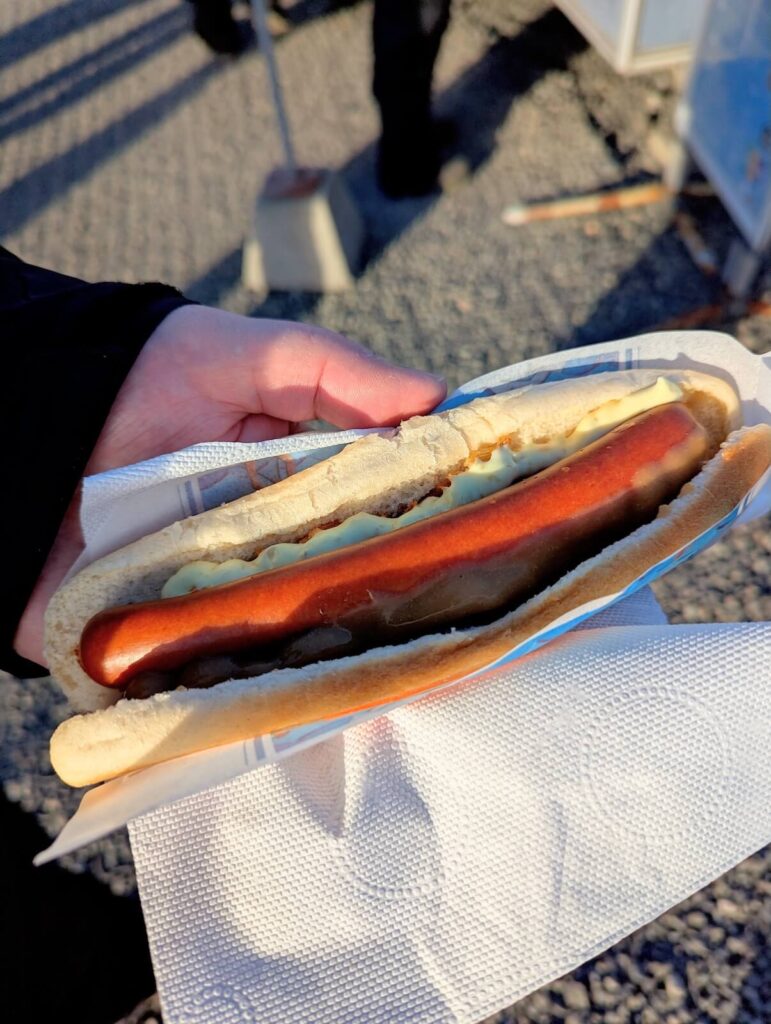
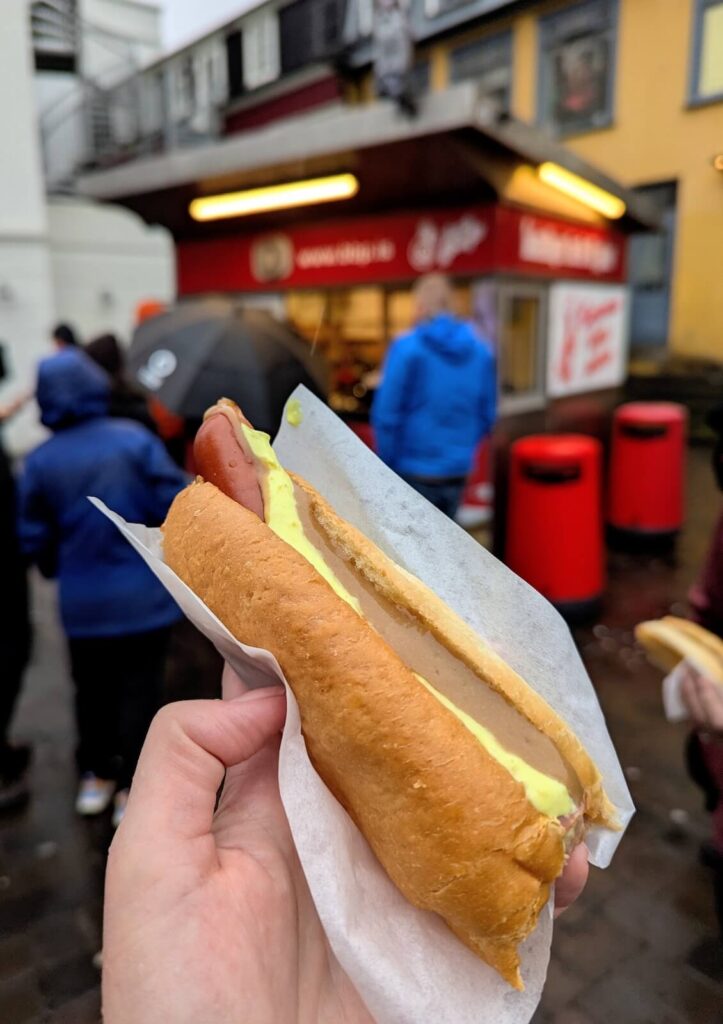
Even though lamb is not the only meat component to the hot dog, they definitely have a distinct lamb flavor profile. They also have a great snap!
Icelandic hot dog toppings are also super unique: fried onions, raw onions, sweet mustard, ketchup, and remoulade. I recommend trying at least one with everything, even if you think you won’t like some of the toppings.
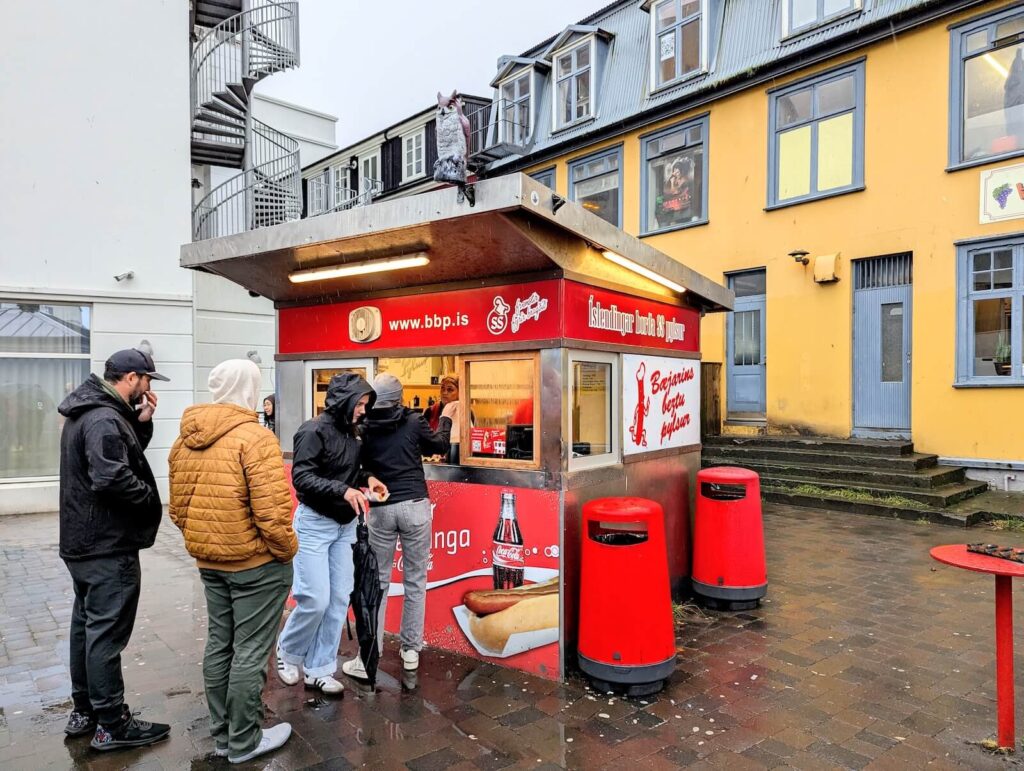
Bæjarins Beztu Pylsur is the OG spot for hot dogs in Iceland and they even have stands at Keflavík airport! There are also many other places around Reykjavík and Iceland in general to get hot dogs – some with whacky toppings too.
Hot dogs are a really affordable meal in Iceland. Eating out in Iceland is pricey but hot dogs can typically range from $6 to $9 USD, making them a cost-effective and filling snack.
Icelandic Lamb
As I mentioned above, lamb is a staple meat in Icelandic cuisine. At one point, sheep even outnumbered the Icelandic people population!
Lamb meat (or sheep’s meat/mutton) is presented and incorporated in a variety of ways throughout Icelandic dishes. Terms to know include lambakjöt (young lamb meat), kindakjöt (a general term for mutton or sheep’s meat), and hangikjöt (smoked lamb or mutton).
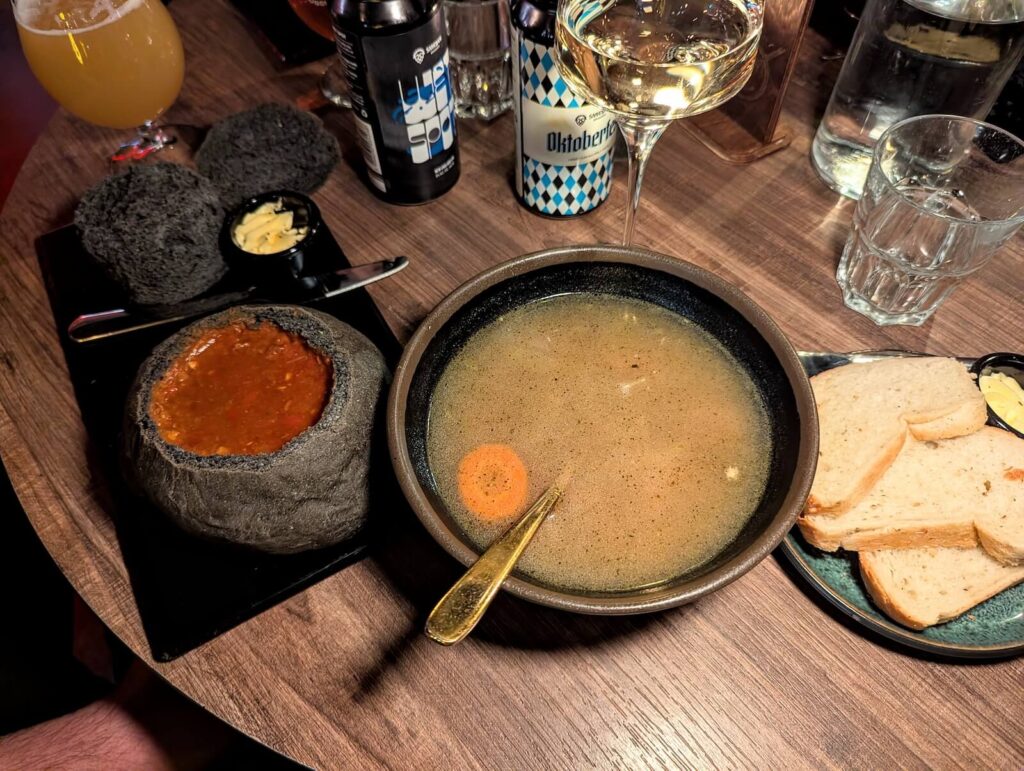
In Iceland, I’ve personally had grilled lamb steaks, lamb soup (kjötsúpa), pulled lamb, lamb hot dogs, and even a lamb birria burrito!
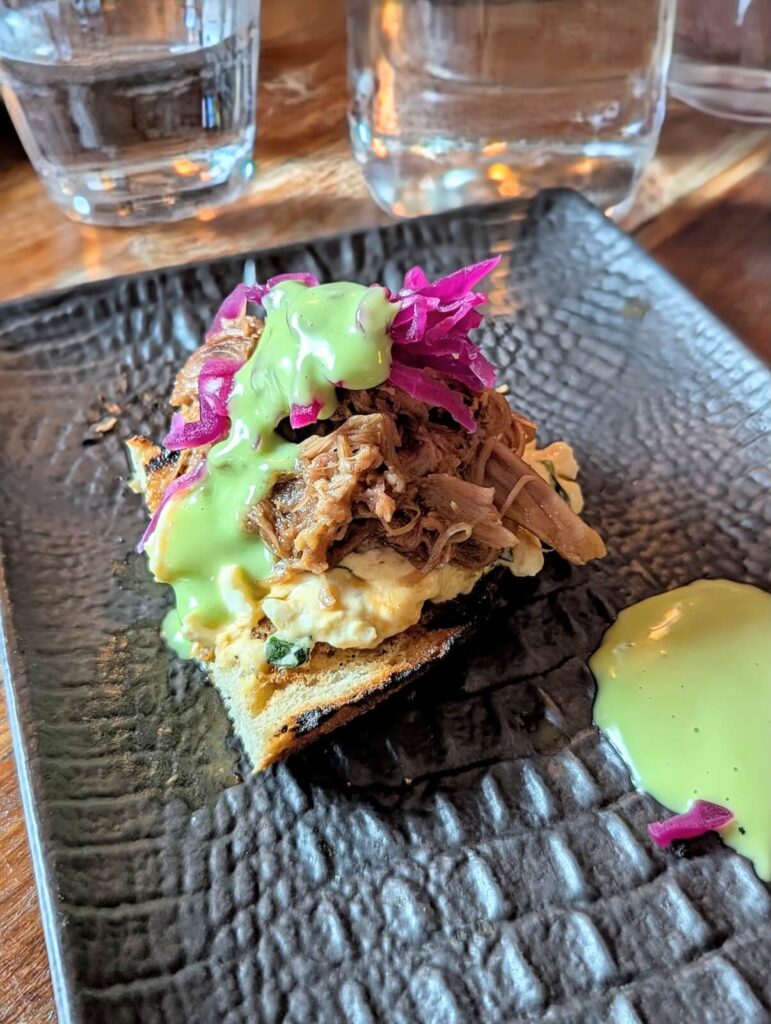
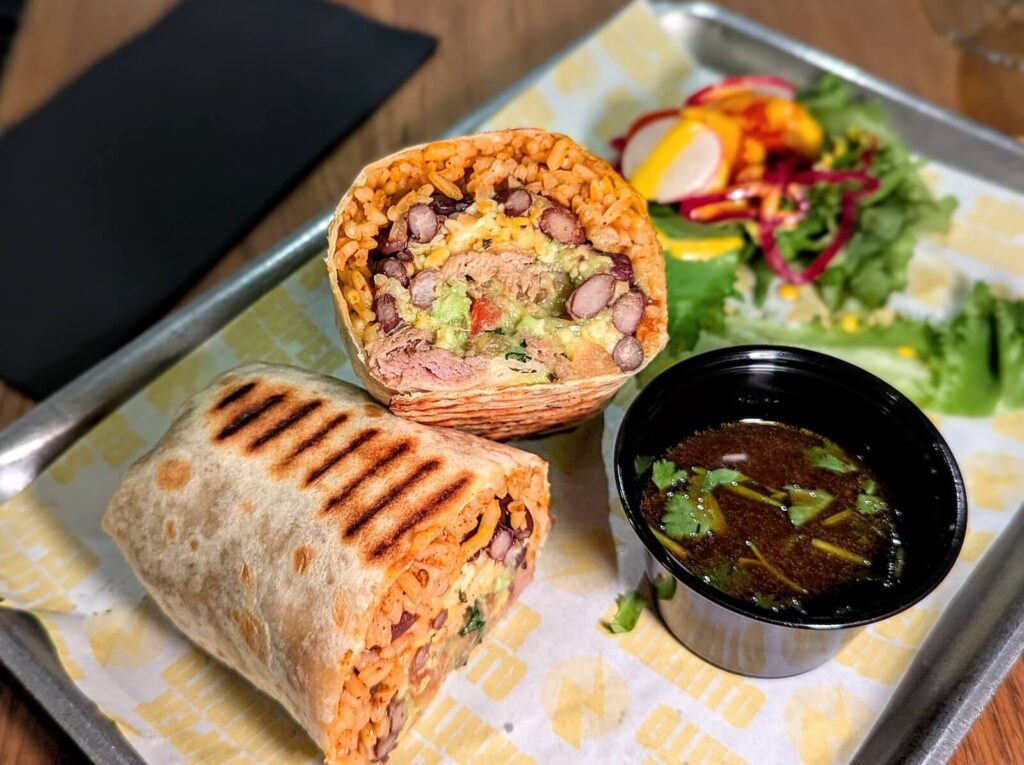
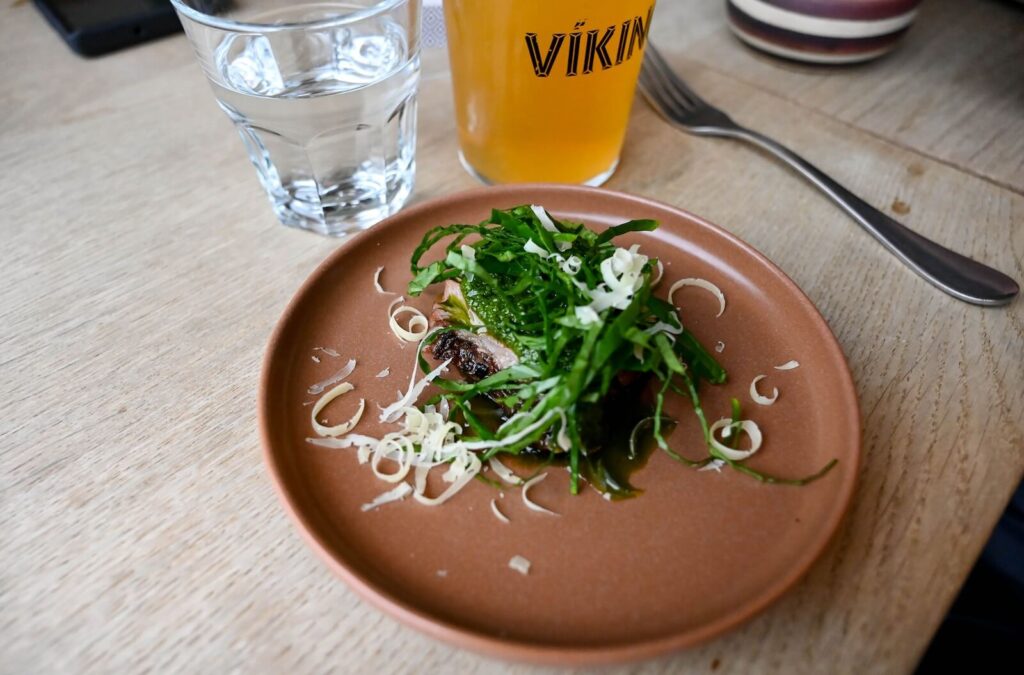
Lamb is not usually my favorite meat as it can sometimes have a strong gamey flavor profile. Icelandic lamb, however, doesn’t always present that way.
Sheep in Iceland are free range, roaming the land grazing on grass and berries and sipping on that fine Icelandic water. They are also free of antibiotics and growth hormones. Simply put, they are pure and that’s reflected in the quality and flavor of the meat.
Skyr
If you like yogurt (especially Greek yogurt), you’ll love Icelandic skyr. High in protein, Icelandic skyr is a creamy dairy product that’s technically a “cheese” but is basically what most people would classify has a yogurt.
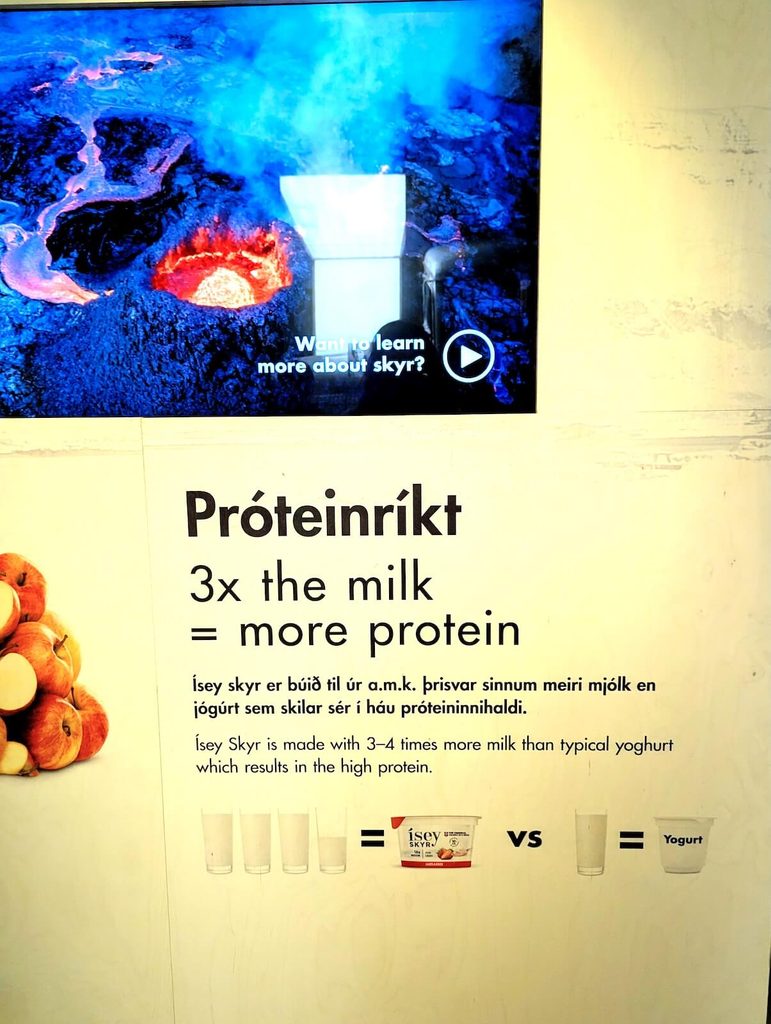
Skyr is made with 3-4 x the amount of milk than traditional yogurt, which is what gives it a high protein content.
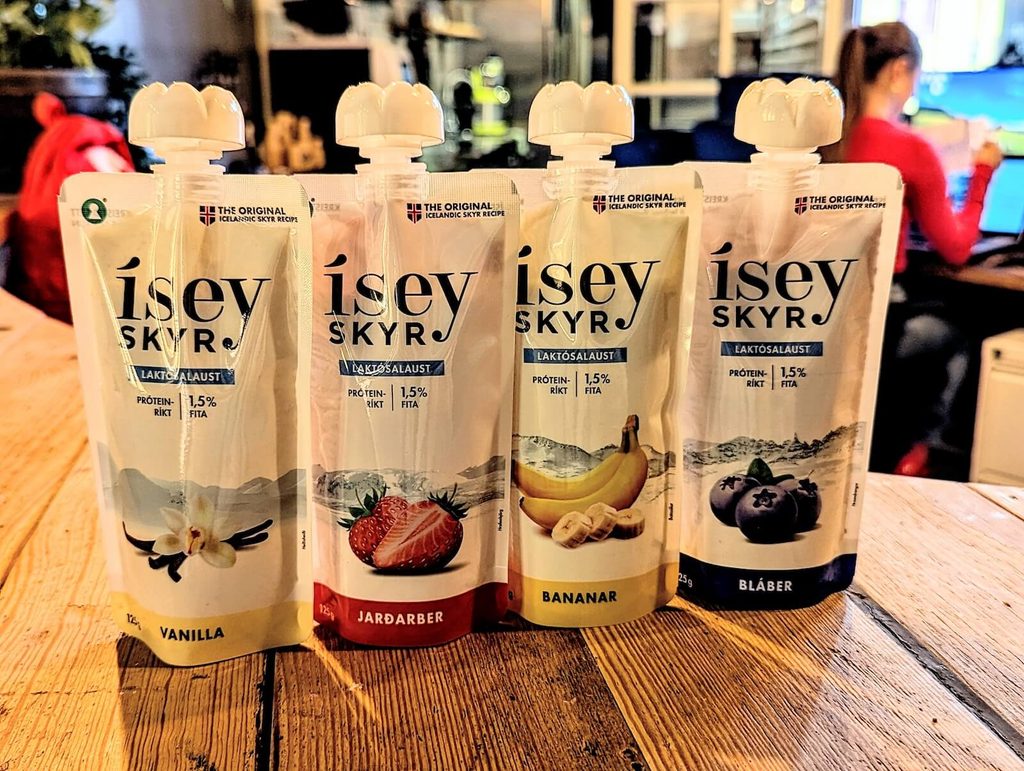
I’ve eaten plenty of Skyr in the U.S. – Siggi’s and Icelandic Provisions are typically readily available. In Iceland, I also got to try the Ísey brand when we visited Skyrland in Selfoss to learn about its history.
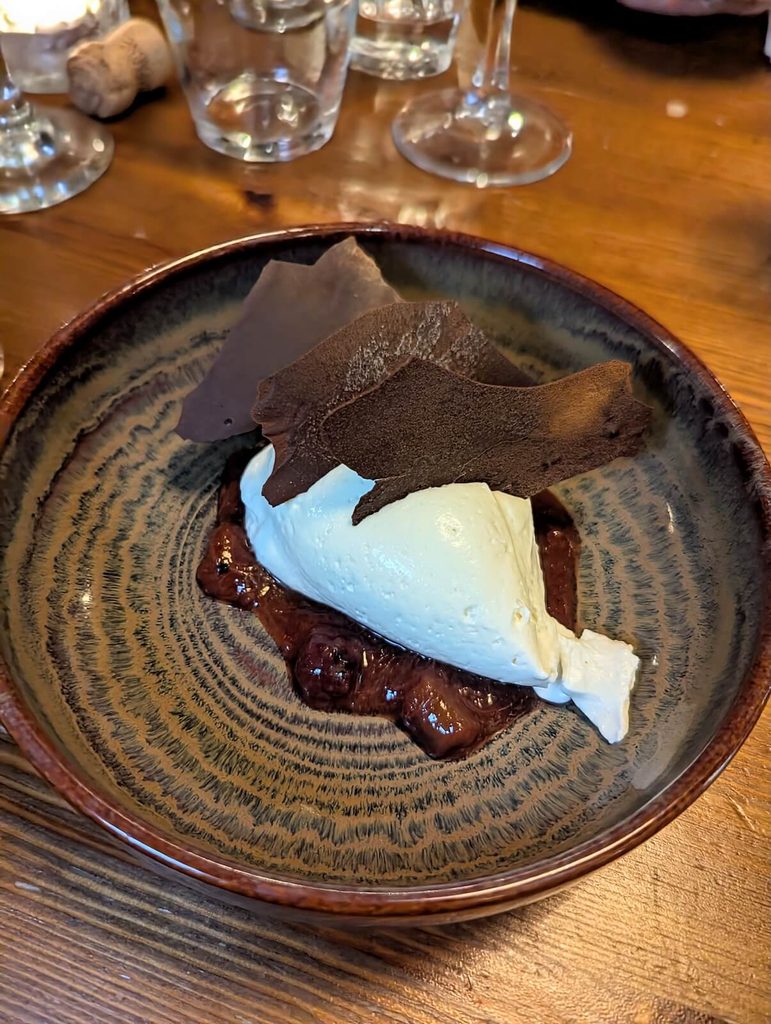
Skyr is great for breakfast or as a snack with granola and berries but it can also be delicious when incorporated into desserts. We had a really good skyr mousse for dessert at Forréttabarinn in Reykjavík and our friends had a tasty berry skyr ice cream at Efstidalur II on the Golden Circle.
🏨 Book My Favorite Iceland Hotels
Arctic Char
Arctic char was the one fish I was most looking forward to trying when visiting Iceland. It’s a vivid pink color and is in the same family as salmon and trout, but has a more mild flavor and buttery texture. This is the fish to try if you’re a salmon hater!
I’ve had it both cured on flatkaka (Icelandic flatbread) and slow-cooked. It’s so delicate and tasty any way you have it.
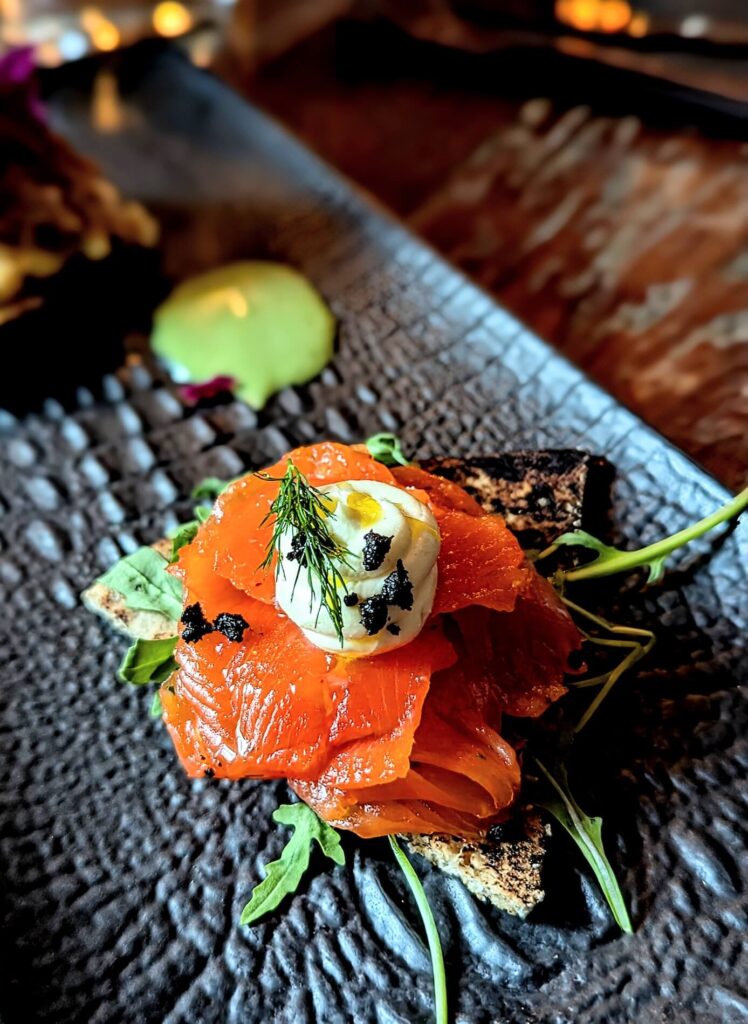
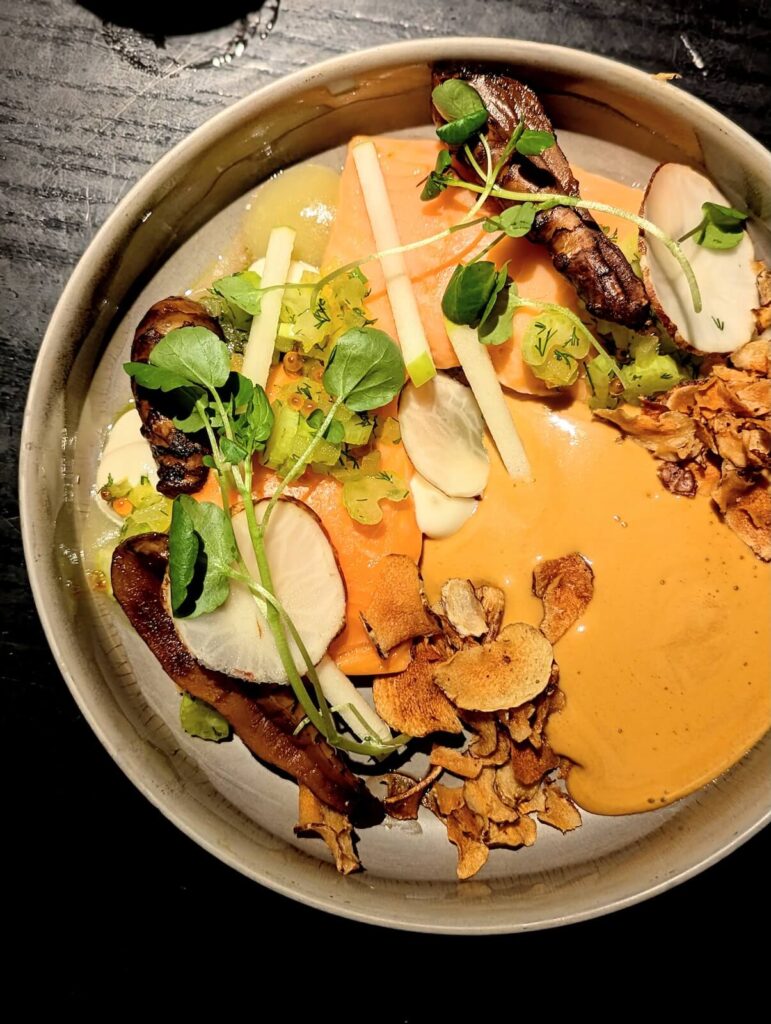
Arctic char does live wild in freshwater streams and lakes in Iceland, but it is also a farmed fish, which is likely what you’ll be eating at most restaurants.
Langoustine
Another local seafood to try in Iceland is langoustine, typically sourced from the cold waters off the southeast coast (Höfn is Iceland’s “lobster” capital). Langoustine is commonly labeled as lobster on menus but the meat of a langoustine differs in that it has a lighter flavor profile and is less firm.
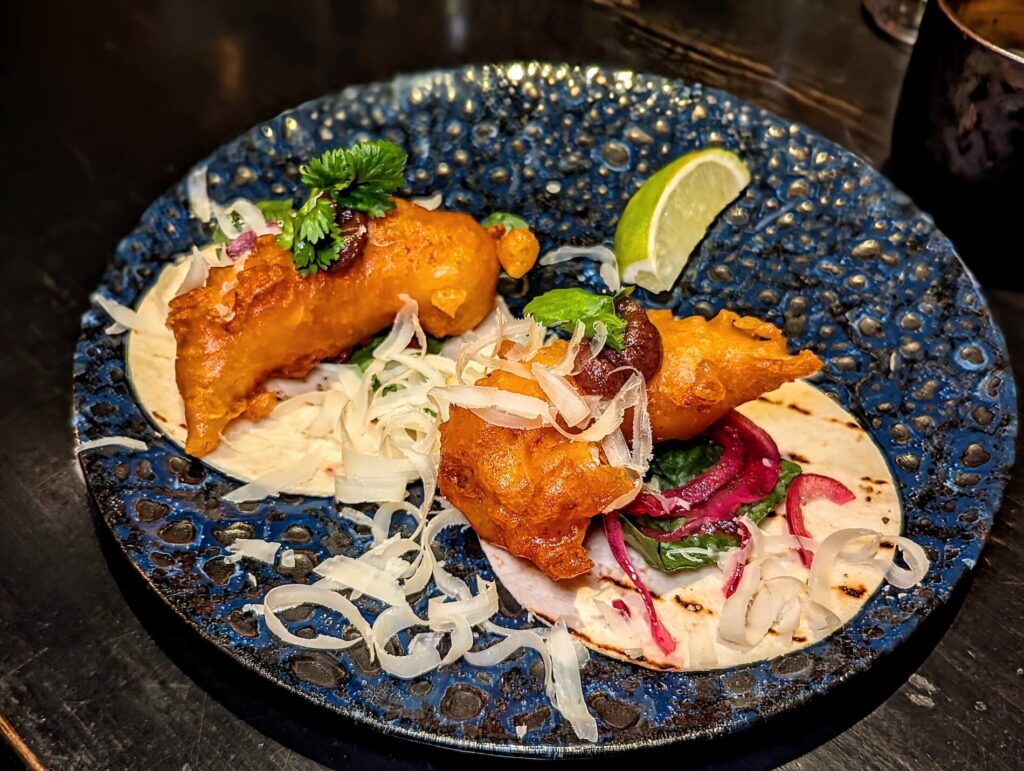
The meat of the langoustine is a versatile ingredient. I’ve had langoustine soup, battered and deep fried in tacos (another one of my most favorite bites in Iceland), and stuffed into a roll from a food truck at the Jökulsárlón Glacier Lagoon.
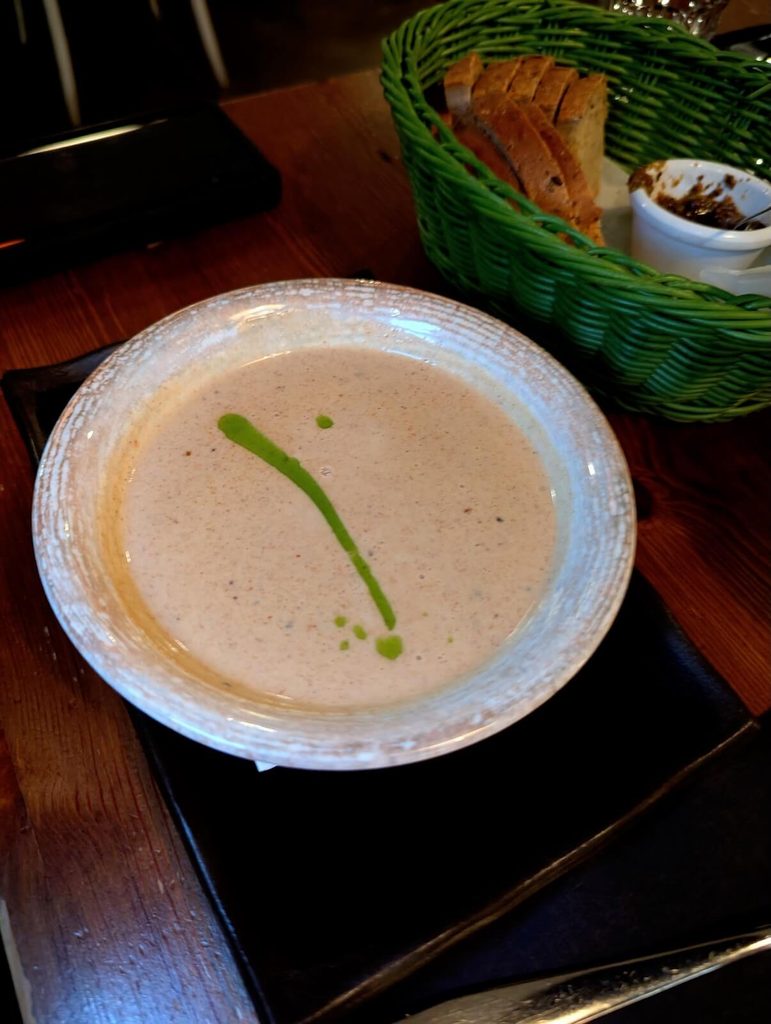
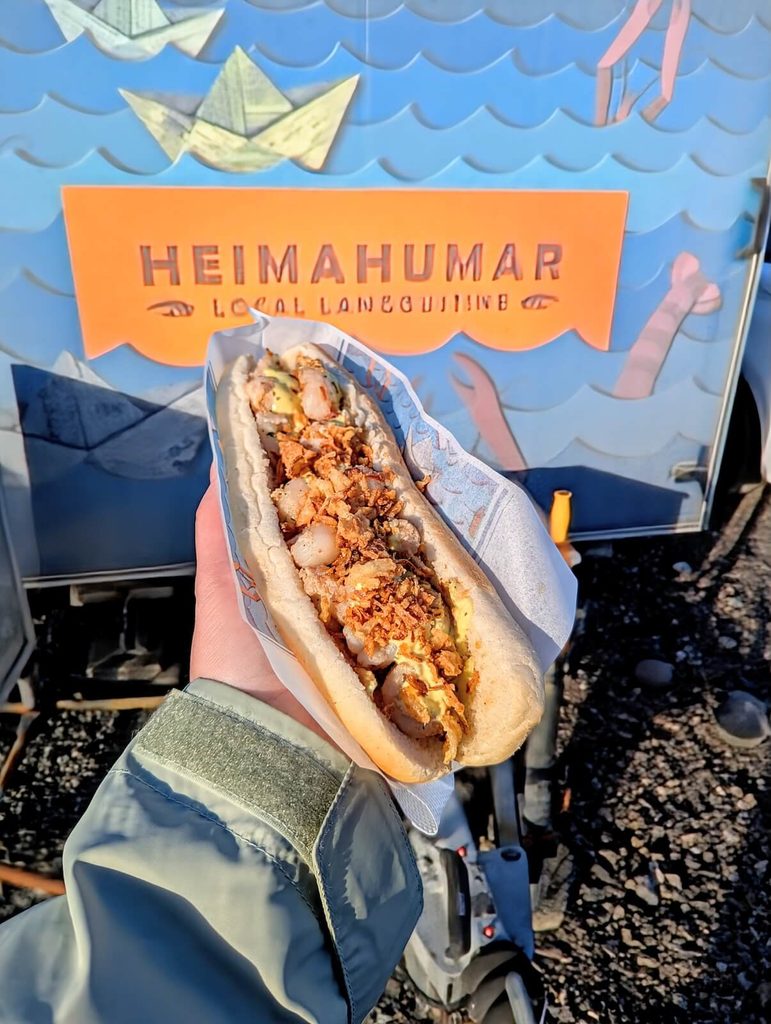
If you’re a seafood lover, langoustine is a must-try!
Plokkfiskur
One of my favorite traditional Icelandic dishes is plokkfiskur – a thick fish stew/pie/mash dish served piping hot!
Plokkfiskur is comprised of white fish, potatoes, and onion all pulled together with a creamy bechamel sauce consisting of butter, flour, and milk. In the past, Icelanders would use dried or salted fish for this dish but in present day, chefs make this with fresh cod or haddock.
Each version that I’ve personally tried also comes with a layer of melted cheese on top (a more modern addition), which makes it extra delicious.
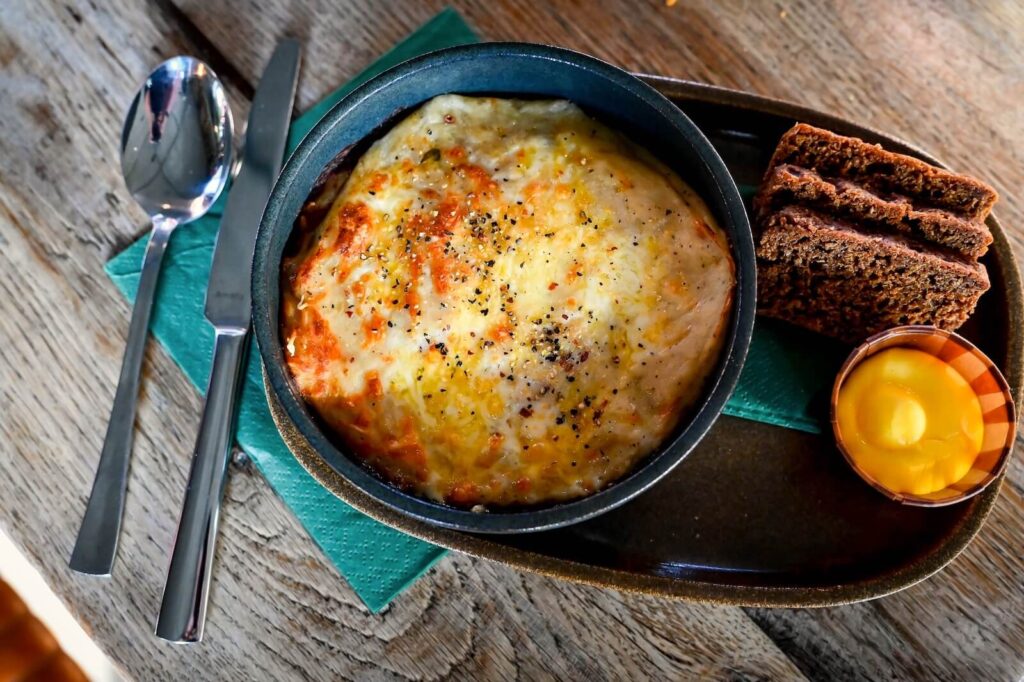
Plokkfiskur also seems to be typically served with a side of Icelandic rye bread (rúgbrauð) and butter, which I’ll cover more below. It’s a winning combo.
This is the ultimate comfort food to dig into on a cold Icelandic day!
Rúgbrauð – Rye Bread
A loaf of bread steeped in centuries’ old tradition is rúgbrauð (aka Icelandic rye bread) and is nothing like the sliced sandwich breads that you might be used to.
This is a special “hot springs” or “volcano” bread that is very dense and slightly sweet. Because of this sweetness, it’s great to have as a side to a savory dish or with salty or pickled foods.
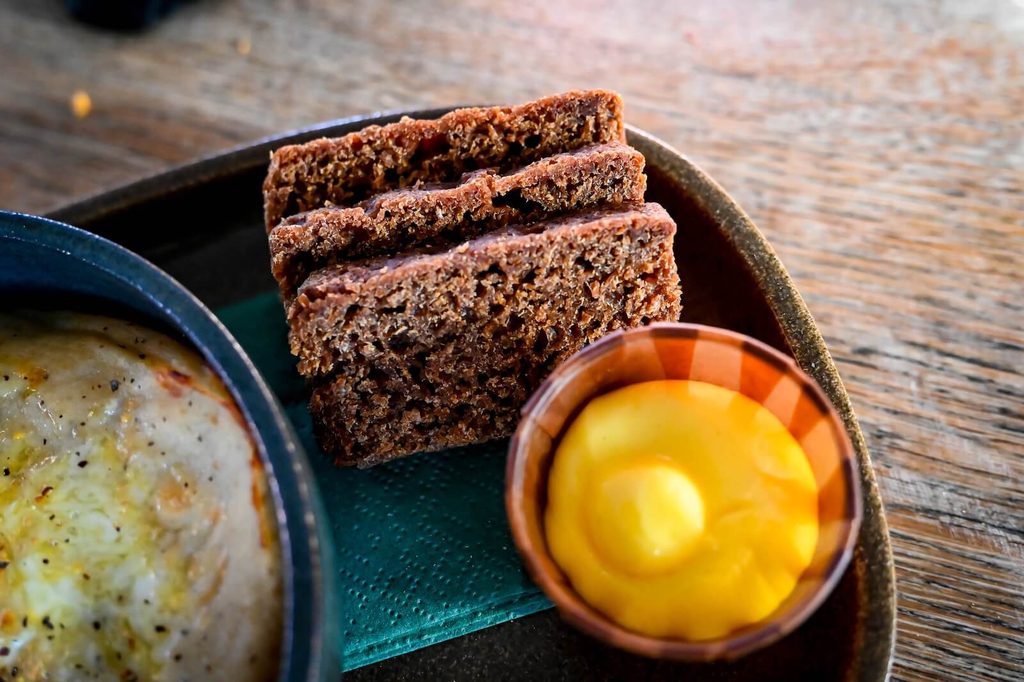
What makes rúgbrauð even more unique is the tradition of steaming it in pots buried in volcanic soil near hot springs. The underground geothermal heat slowly cooks it to perfection! While many households today use conventional ovens, there are a few still keeping this cooking tradition alive.
If you’re visiting the Golden Circle, you can experience the art of geothermal rye bread making at Laugarvatn Fontana and also get a little taste of this delicious bread. Book this experience here!
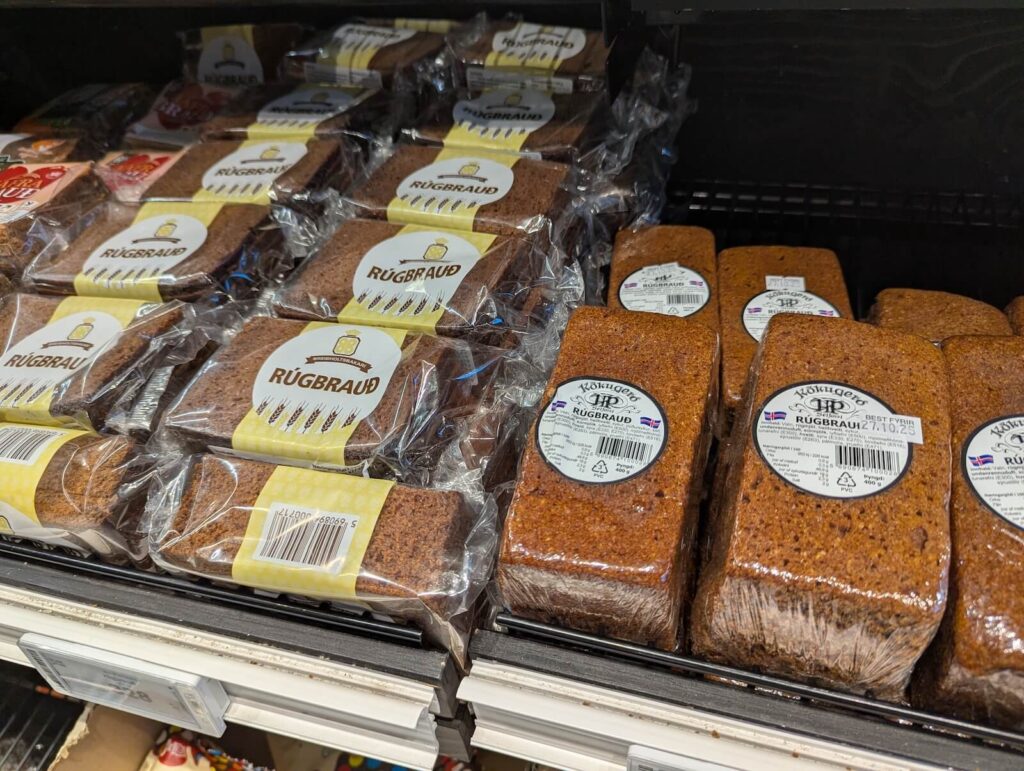
I’ve had rúgbrauð as a side a couple of times with plokkfiskur in restaurants, but you can also buy rúgbrauð at local bakeries. My friend liked the one from Brauð & Co. and they also have it in loaves at stores like Kronan.
On my wish list: to try the rúgbrauð ice cream from Cafe Loki in Reykjavík.
Icelandic Pastries
If there’s one thing Iceland does well, it’s pastries – and there are all kinds to try! Iceland’s bakery landscape is vast. There’s no shortage of shops, especially in Reykjavík, with the smell of freshly-baked goods wafting from their doors!
Kleinur/Kleina
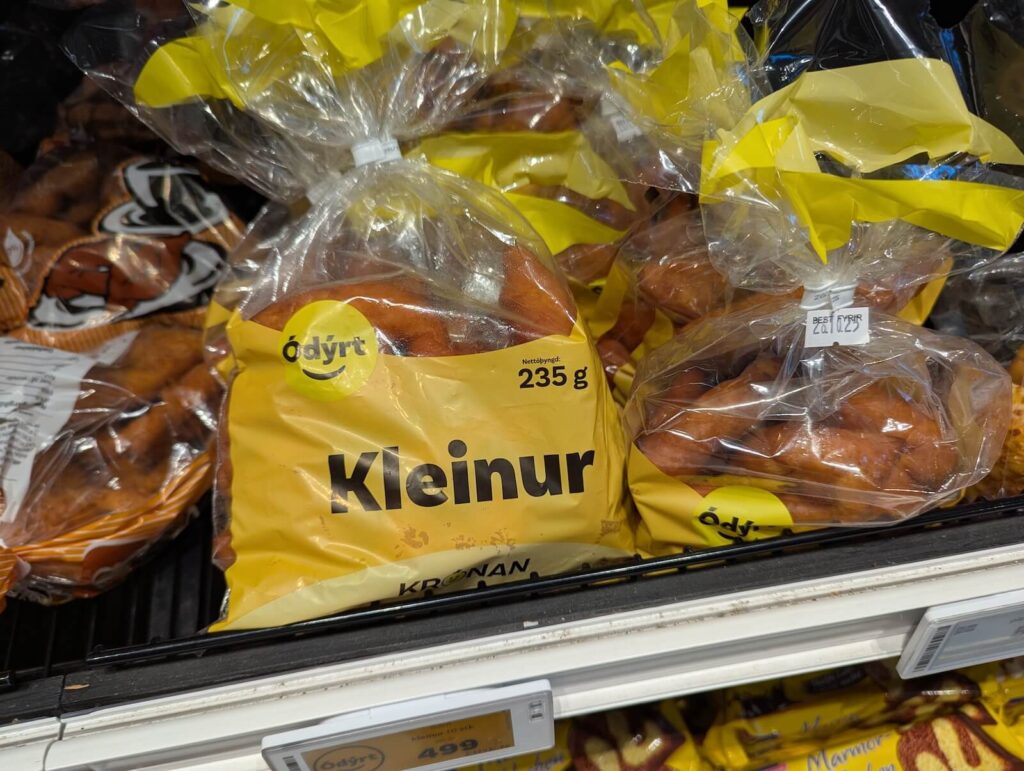
Kleinur are essentially Iceland’s version of a plain donut, shaped into diamond knots and sometimes infused with a dash of cardamom.
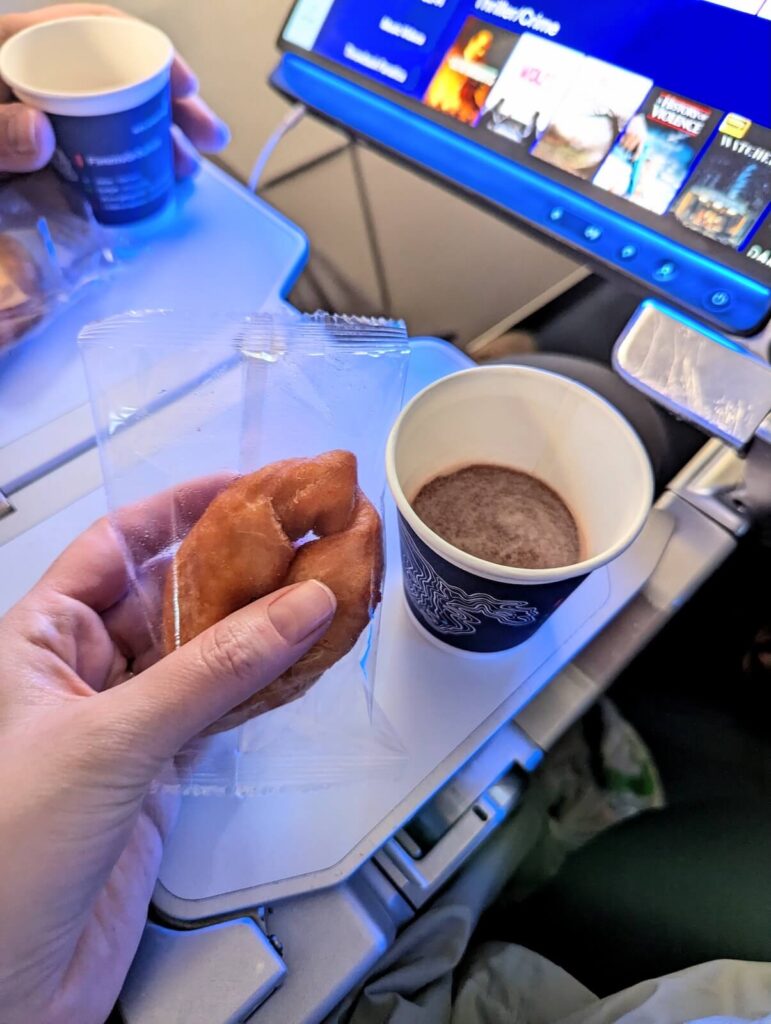
Because they aren’t very fancy, kleinur are best served with a cup of hot cocoa or coffee. I don’t think I’d be a huge fan if I had to eat them plain as they can be a little dry (maybe I just haven’t found the perfect one yet), but they were great for dunking in my cocoa.
Fun fact: on our last day of our first trip to Iceland, we flew home on the first official day of winter – which was actually in October! To celebrate, Icelandair gave us complimentary kleinur with hot cocoa.
Cinnamon Rolls/Buns
If you only try one pastry in Iceland, let it be cinnamon rolls! And if you only go to one place, make it Brauð & Co. I dream of these daily.
Cinnamon rolls are called kanilsnúður in Icelandic – snúður referencing its spiral snail-like shape. Outside of cinnamon, you can also find other varieties of snúður – like caramel or the vanillasnúður from Brauð & Co. I loved both of the buns we tried at Brauð & Co., but the OG is undoubtedly the best!
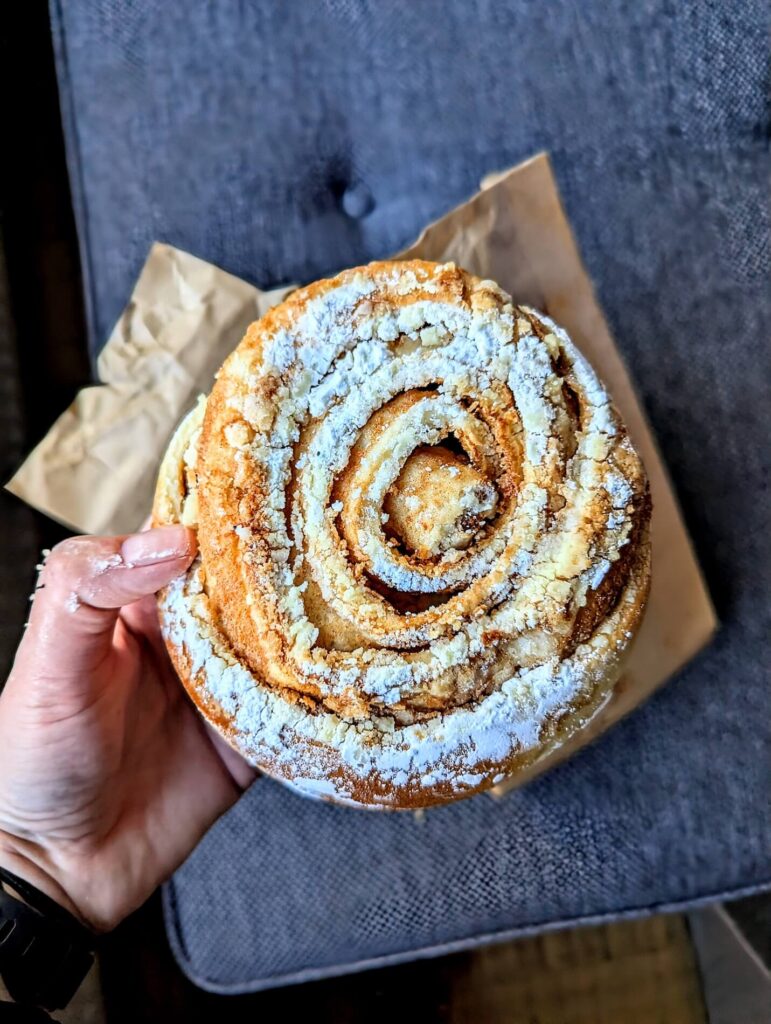
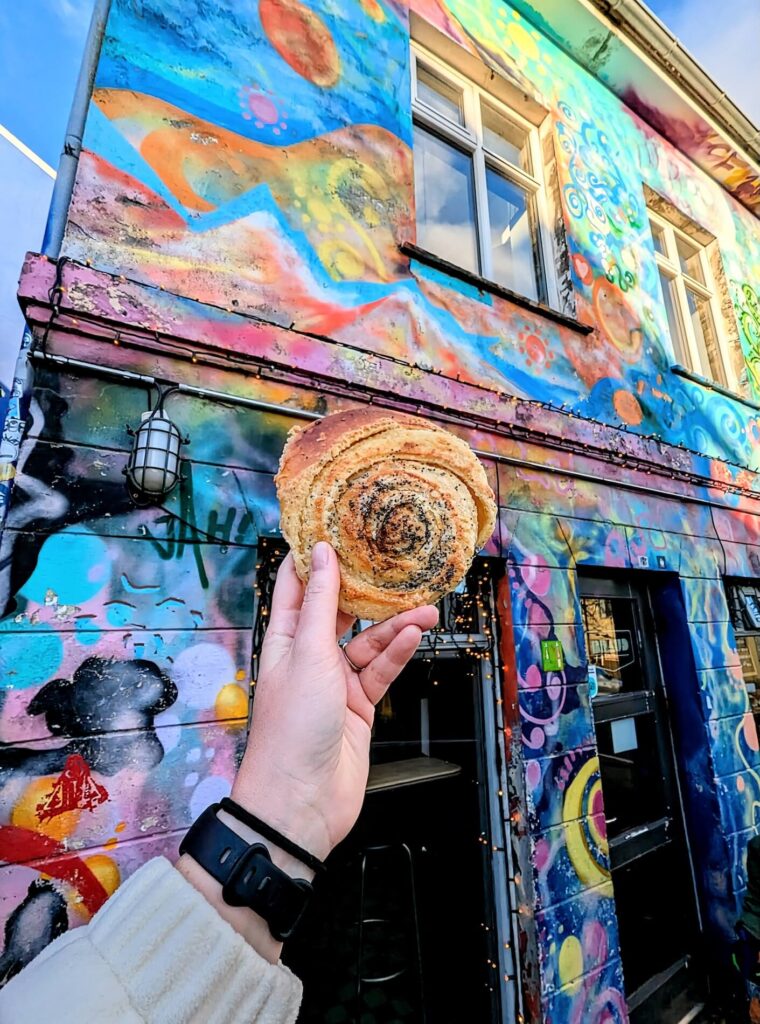
Nordic-style cinnamon rolls are different than those you might find in the U.S., which are typically thicker and slathered with icing. These instead have a crunchy sugar crust on top and can be flatter, wider, and incorporate a lovely flavor of cardamom. I will not ever be able to visit Iceland without having one (or more) of these!
Vinarbrauð
Another favorite pastry to try in Iceland is vinarbrauð, which translates to Vienna bread. Vinarbrauð is similar to a traditional danish and can come in longer strips of pastry cut into pieces like ours was.
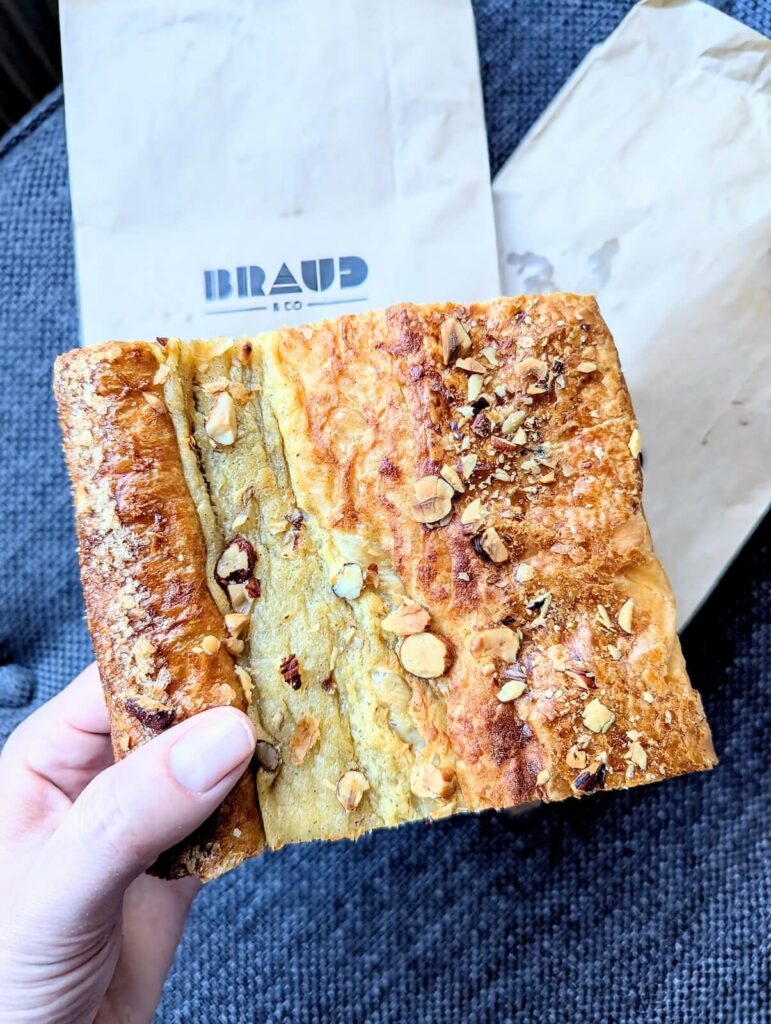
Inside the vinarbrauð, you’ll find a sweet almond paste (made from brown sugar, butter, flour, cinnamon and almond extract) and vanilla custard. The pastries are most often topped with chopped nuts and sometimes a little bit of frosting.
I randomly ordered a slice of this at Brauð & Co. and am so glad I did. The flavors are fantastic!
Spandauer
Similar to vinarbrauð is the spandauer, which essentially has the same ingredients but is crafted in a circular shape – great for individual eating. The one I had from Kökulist Bakery in Njardvík came with a chocolate and pink frosting and was actually the very first pastry I had in Iceland!
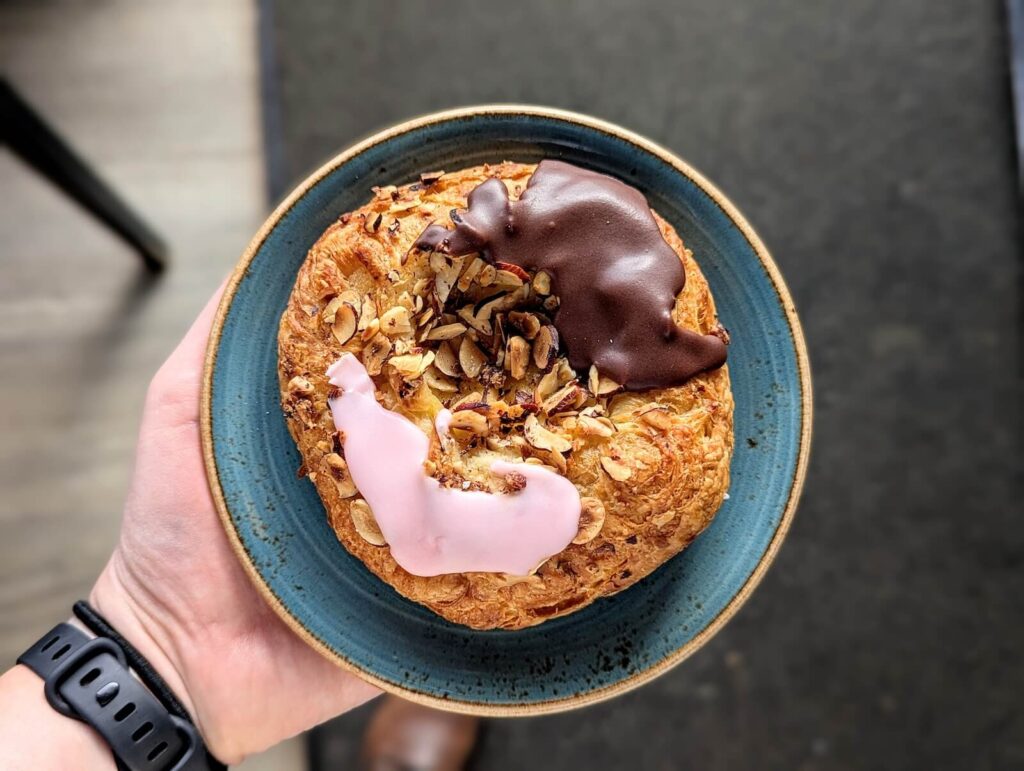
The creamy almond paste mixed with custard in the center is what does it for me. I’ll take five next time, please!
Hjónabandssæla – Happy Marriage Cake
Hjónabandssæla is a more rustic sweet bite in Iceland, named for its “happy marriage” of ingredients of butter, oats, and rhubarb. This to me is the perfect bite to accompany a cup of coffee, hot cocoa, or even a cup of tea.
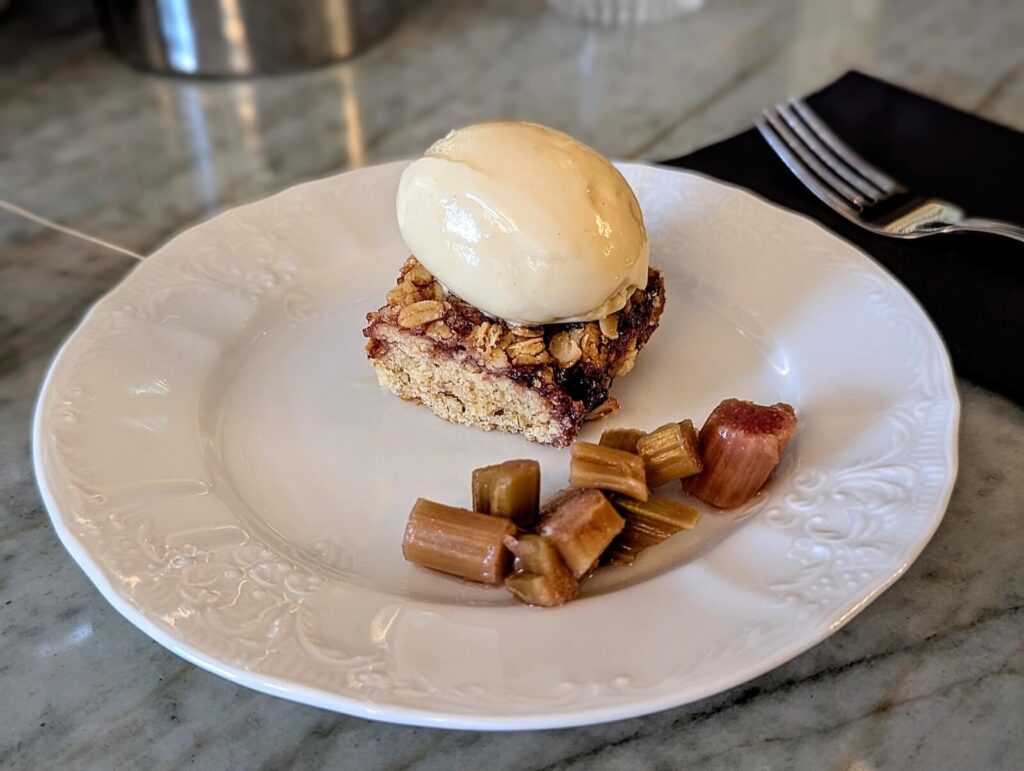
When researching this online, I’ve seen this cake shaped and presented in many different ways. The one we had from Borg in Reykjavík was firm and more like an oat bar rather than a crumbly cake.
As someone who loves rhubarb (as does my husband), we both thought it was really good – especially with a dollop of cold vanilla ice cream on top!
Arctic Macarons
These are a highly specialty item created by the pastry chef at Black Crust Pizzeria in Vík. You can only get these macarons at select locations in Vík and Hvolsvöllur on Iceland’s South Coast!
I’m always down for macarons – they are one of my favorite little sweet bites when done right.
Buy why are these unique? Their colors and flavors are Iceland themed, inspired by Iceland’s landscape. Not only are they beautiful, they’re tasty and made perfectly.
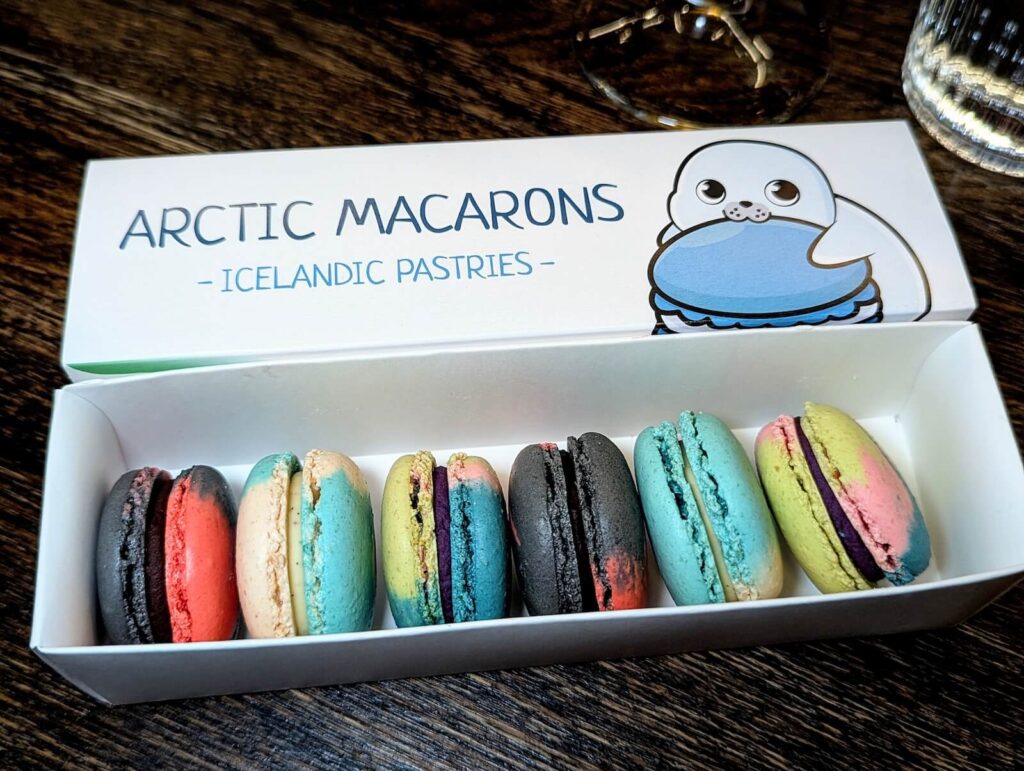
We got a box of their Classic Set from Black Crust Pizzeria in Vík, which included:
- Lava Macarons with dark chocolate & espelette pepper (my personal favorite with a little spicy kick!)
- Glacier Macarons with vanilla – lightly creamy with soft blue and white coloring
- Aurora Macarons with a blueberry flavor – obviously the most colorful of the bunch
They also have a Signature Set with flavors of Skyr Ganache, Icelandic Herbs, and Arctic Berries. It looks just as pretty with adventurous flavor profiles.
Why didn’t we get both sets? Well, these are a little pricey (at close to $24 USD for a box), so we’ll save trying the second set for another visit.
Wish List Pastries
For my next trip to Iceland, I’m eyeing this additional sweet:
- Bollur: Icelandic cream puffs made with a light choux-style pastry and stuffed with whipped cream. It even has a whole holiday dedicated to it called Bolludagur!
Icelandic Waffles
When I first visited Iceland, I didn’t even know that Icelandic waffles were a thing! I’m more of a savory breakfast kind of girl, but my husband ordered these at a little cafe in Borgarnes and I was impressed.
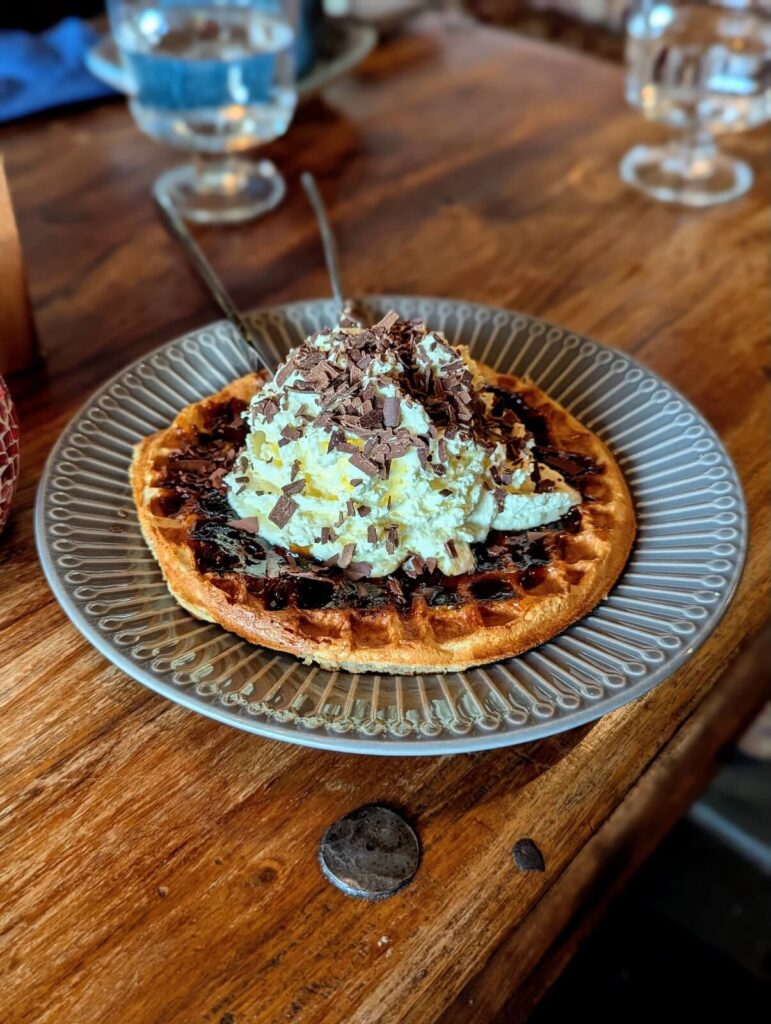
Icelandic waffles are soft and thin and often come heart-shaped (although ours sadly did not). Typical toppings include jam (especially rhubarb) and whipped cream, but ours was special with the addition of chocolate syrup and shavings. It was definitely a treat!
Icelandic Pancakes
Much like waffles, I had no idea Icelanders had their own pancakes too. Pönnukökur, or Icelandic pancakes, are more like crepes than thick American-style pancakes. These are cooked as thin as possible and often served rolled or folded with sugar or jam.
Pönnukökur differ from French crepes as they have more eggs in them creating a sturdy, less delicate pancake. They are also browned more and are cooked on a pan that should never be washed!
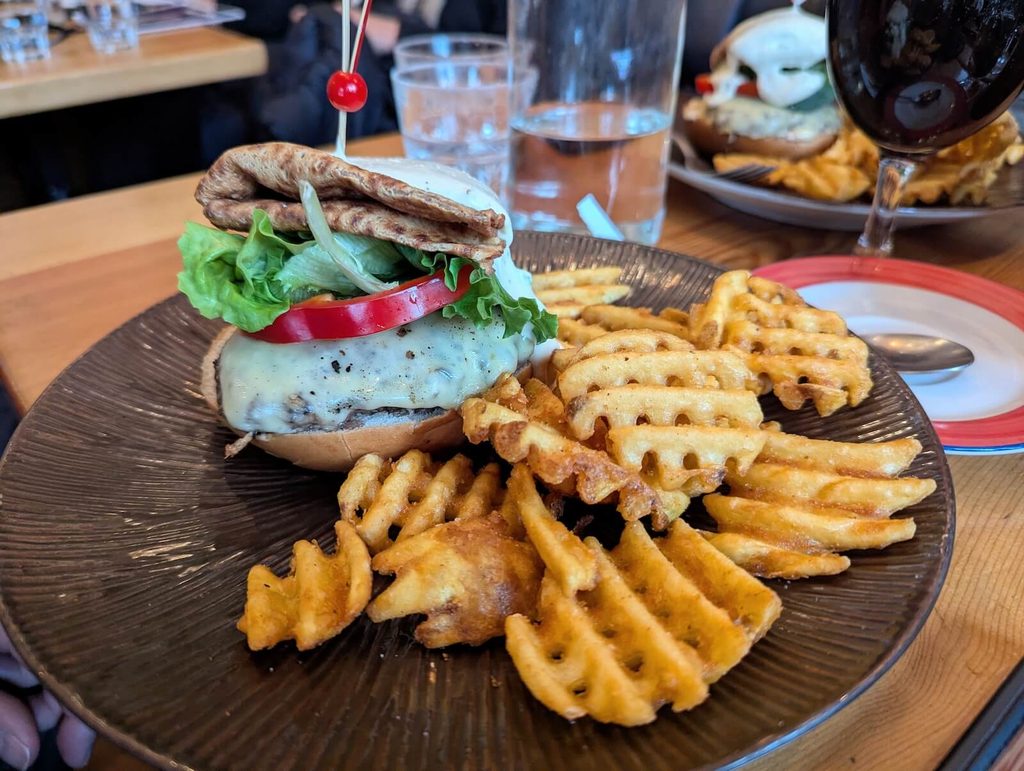
Our only introduction to Icelandic pancakes was a savory version with bacon in it and was used to replace the top part of a burger bun at The Icelandic Bar in Reykjavík. It was really good!
Flatkaka
More bread please! Iceland also has flatkaka, which is a simple unleavened rye flatbread. The best use for flatkaka is to treat it as a vessel for putting other yummy things in your mouth like cured arctic char or smoked lamb. Or, just slather it with creamy Icelandic butter and have it on the side of a hot bowl of lamb soup!
Feykir Cheese
For all my cheese lovers, try some aged Feykir made from sheep’s milk! Icelandic sheep are good for more than their meat and wool 😉
We had feykir cheese shaved on top of a delicious grilled lamb steak at Mat Bar in Reykjavík (which is now sadly closed – a shame because this was a favorite bite of food for us!). This aged cheese is rich and slightly nutty, and reminded me a lot of parmesan.
Auður Cheese
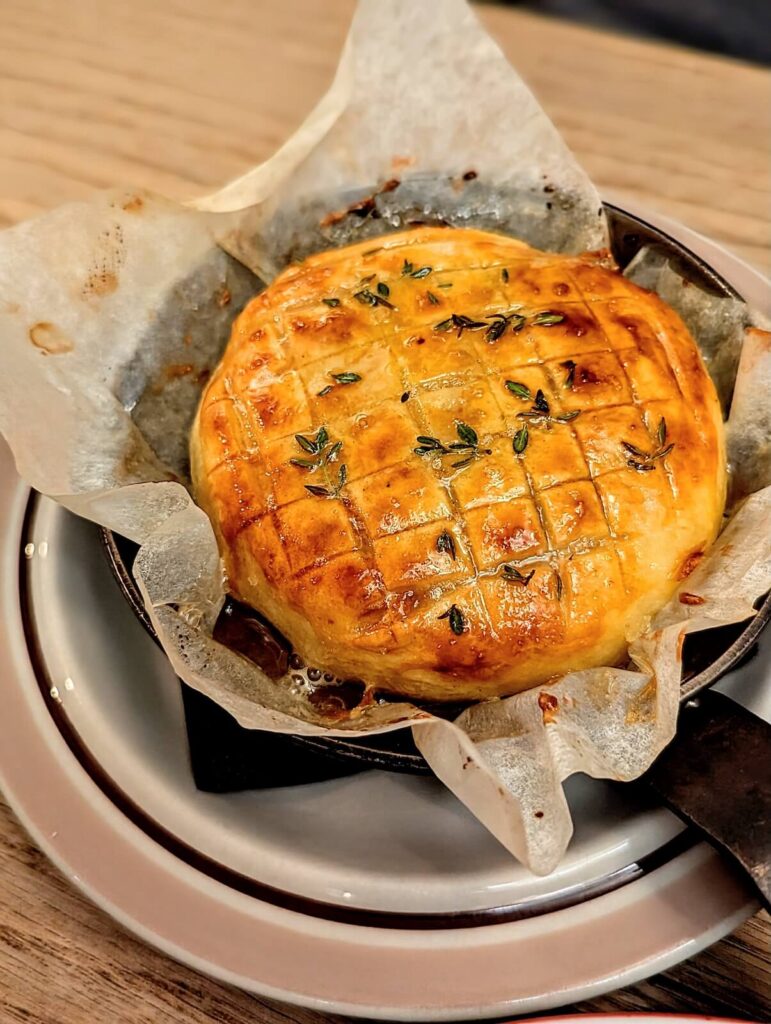
Keeping along the lines of Icelandic cheese, in contrast to the firm, nutty feykir cheese, auður is a creamy brie-like bleu cheese.
We had this cheese warm in the form of a Wellington where the cheese was baked in a pastry-style crust. It oozed out as soon as we cut into it and we spread it onto sliced sourdough. It was fantastic, which is why I’m so bummed this restaurant (Mat Bar) has closed since our visit.
Hákarl – Fermented Shark
Did I save the best for last under Icelandic foods to try? Most would argue no, lol. But hákarl, Iceland’s notorious fermented Greenland shark, is certainly at the top of a lot of travelers’ bucket lists.
The flesh of the Greenland shark is actually poisonous when fresh – it has no urinary system so it has a high content of urea and trimethylamine oxide in its body. Sounds appetizing, doesn’t it? Early settlers came up with a method to press and bury it in the ground to drain fluids and then dry and cure the meat to make it edible.
In modern day, hákarl is eaten more as a reminder of the past rather than as an everyday dish – especially during the Þorrablót winter festival. I’m sure there are the odd ones out there who actually enjoy eating it, but I’d wager that most Icelanders don’t.
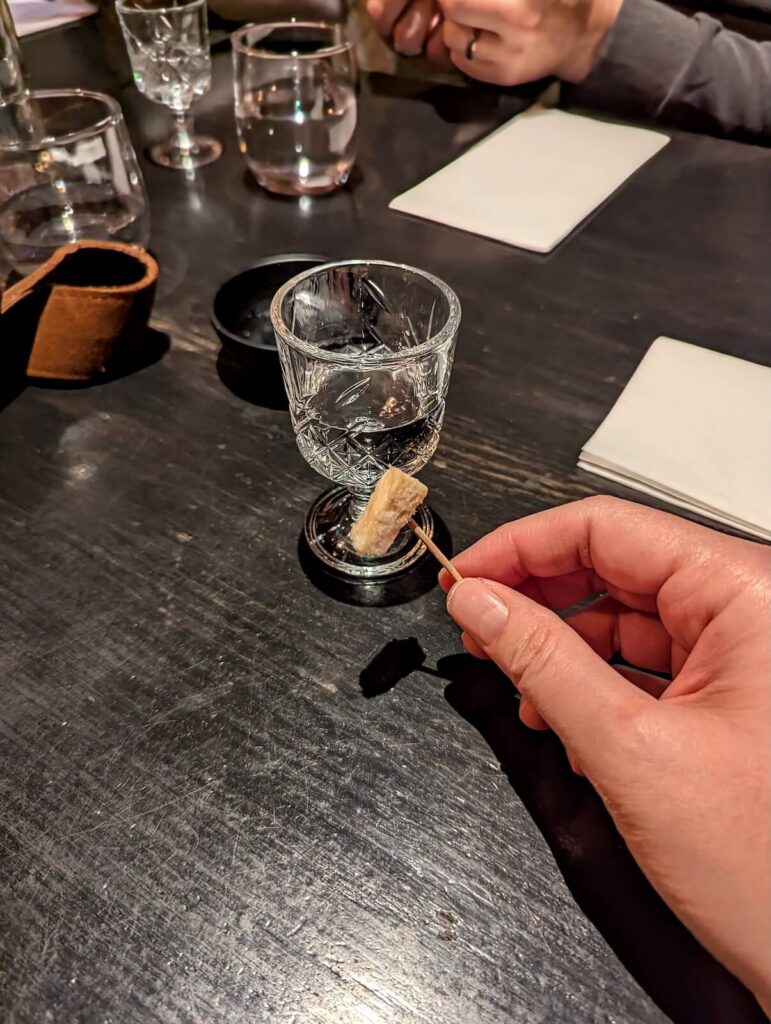
My thoughts? I was preparing the eat the most disgusting thing of my life. Why do we want to punish ourselves like this?! However, it turned out to be not as bad as I anticipated (once you get past that ammonia smell and taste). Was it delicious? Absolutely not. Would I eat it again? Maybe – for the sake of camaraderie with another group of people.
Bites of hákarl are often chased with a shot of Brennivín (aka Black Death – more on that below) to make the experience more palatable. I don’t think I could have it any other way!
Overwhelmed With This List?
I highly recommend taking a food tour in Reykjavík if you feel at all intimidated by the above list of Icelandic foods. Learn a little bit of history, have a professional (and entertaining) guide you to the right spots, and get to taste incredible food! It’s one of my favorite food tours of all time.
Must-Try Icelandic Drinks
Iceland has a nice selection of specialty drinks ranging from those of the alcohol variety like whiskey, aquavit, and beer to delicious fizzy delights like Appelsín and even their own energy drink brand! Below are my favorite Icelandic drinks to try when in Iceland.
Brennivín (aka Black Death)
Iceland’s national drink, Brennivín, roughly translates to “burnt wine” and carries the eyebrow-raising nickname of Black Death. It’s an aquavit spirit distilled from grain or potato and infused with bold flavors from the wild-grown caraway plant. To me, caraway has a similar flavor profile to licorice or anise – not typically my favorite flavor profile, but it grows on you.
Its nickname, Black Death, originated back in 1935 when it was given a plain black label with a skull and crossbones logo to deter people from drinking too much of it. History shows the label actually had the opposite effect and it became a favorite among Icelanders!
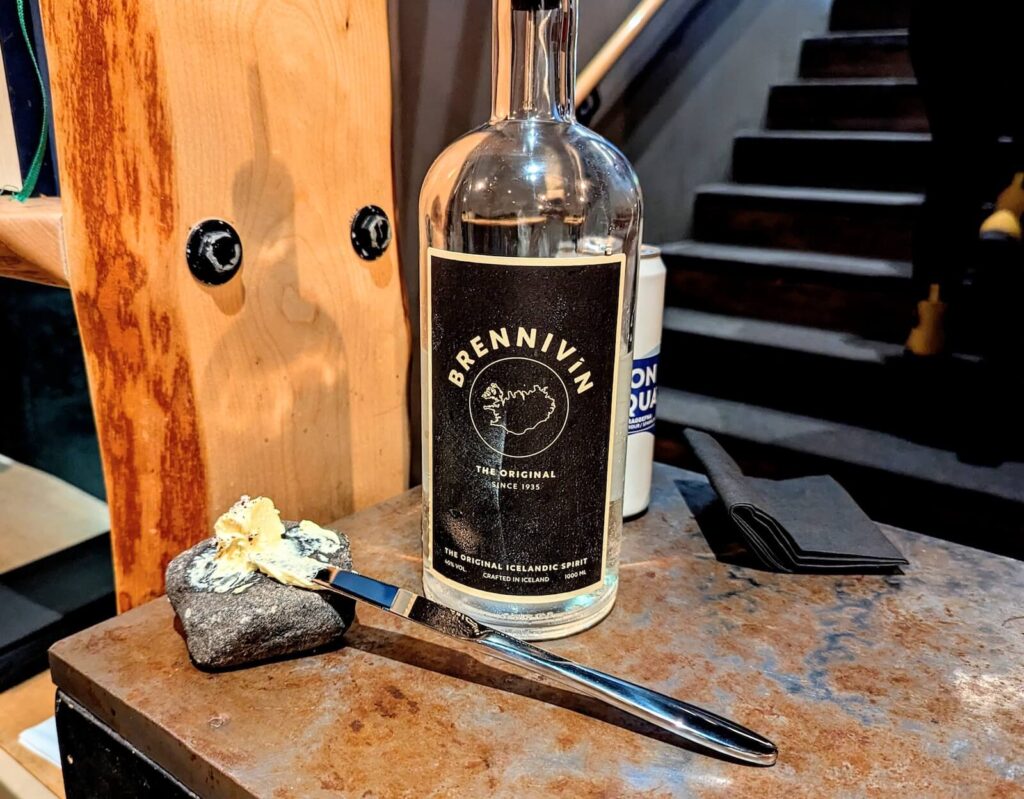
As I mentioned above, Brennivín is commonly used as a chaser for a bite of fermented shark (necessary in my opinion). It can also be enjoyed on its own or even mixed in cocktails.
Brennivín can also be infused with specialty flavors – we had the Rúgbrauð Edition, infused with flavors of Iceland’s rye bread. It was slightly sweet, earthy, and very unlike any spirit I’ve ever tasted. We liked to have a couple of shots of this before heading out to dinner or happy hours at the bars in Reykjavík.
If you’re into trying local spirits, a shot of Brennivín in Iceland is a must!
Appelsín
Appelsín is Iceland’s very own orange soda, gracing store shelves and household refrigerators since 1955. You might easily get confused by its name but there are no apples in this – appelsín literally translates to “orange.”
Appelsín is brewed by Egils – the same company that brews Iceland’s popular Gull beer.
It also has a special place at Christmas time with a tradition of mixing Appelsín with Egils Malt, a non-alcoholic dark malt beverage, to create the mixed drink called Jólaöl.

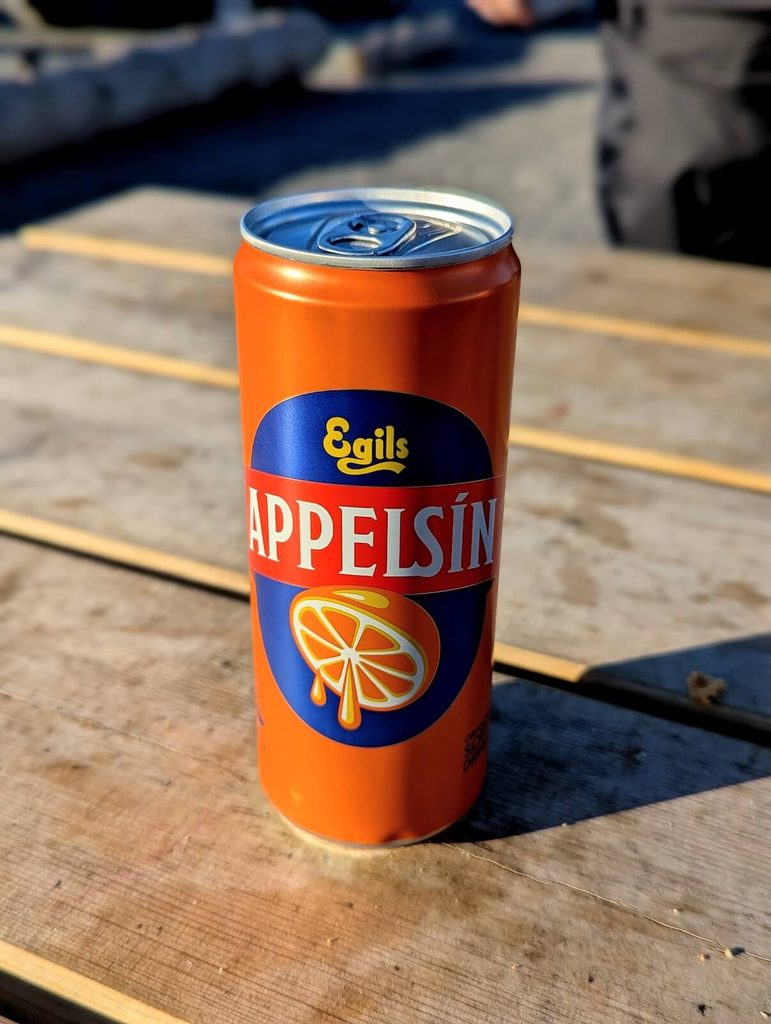
Appelsín is not as loaded with sugar compared to sodas in the U.S. and they do have a sugar-free version. Be sure to double check the labels before you grab one (I didn’t!) as the sugar-free version does very much taste like diet soda.
Either way, I’m a fan – although, I did prefer the full sugar version and thought it was most crisp from a can.
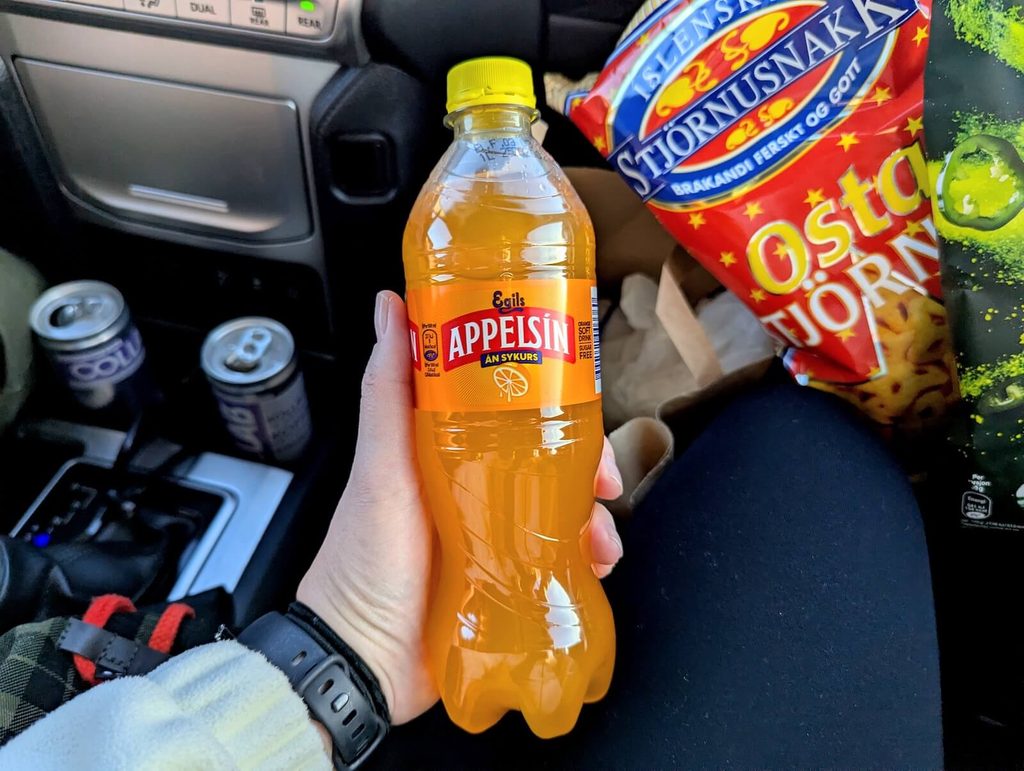
If you like sodas or just want a break from water or beer, this is a refreshing alternative with Icelandic roots. It’s especially tasty when paired with a couple of Icelandic hot dogs!
Icelandic Beer
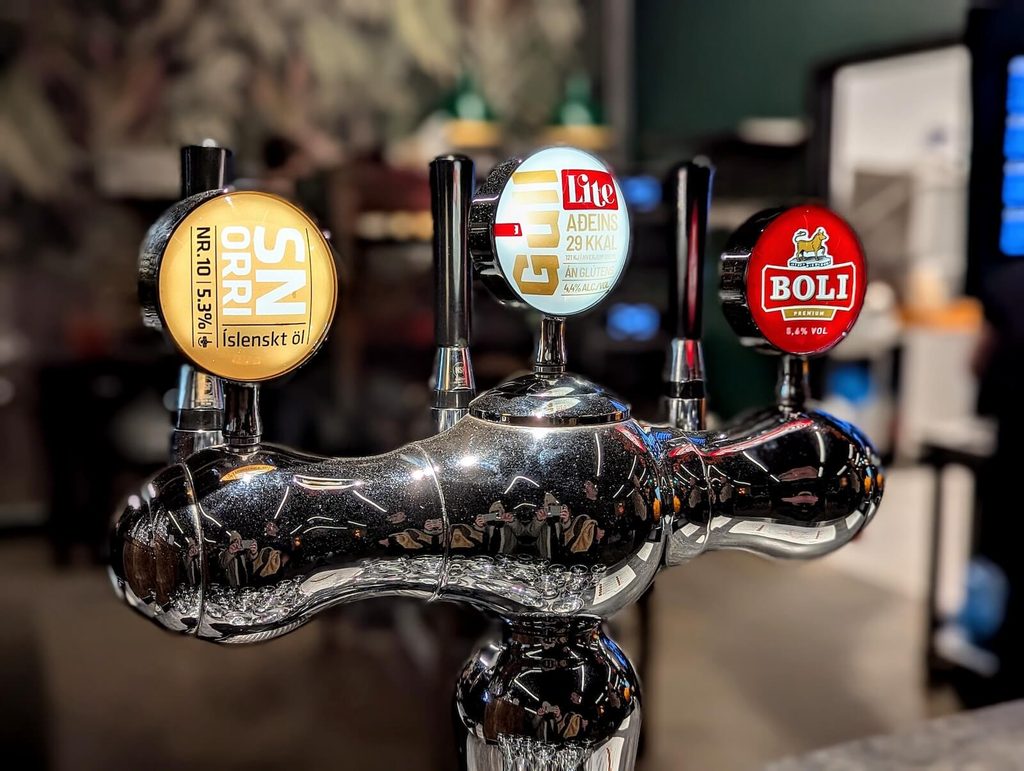
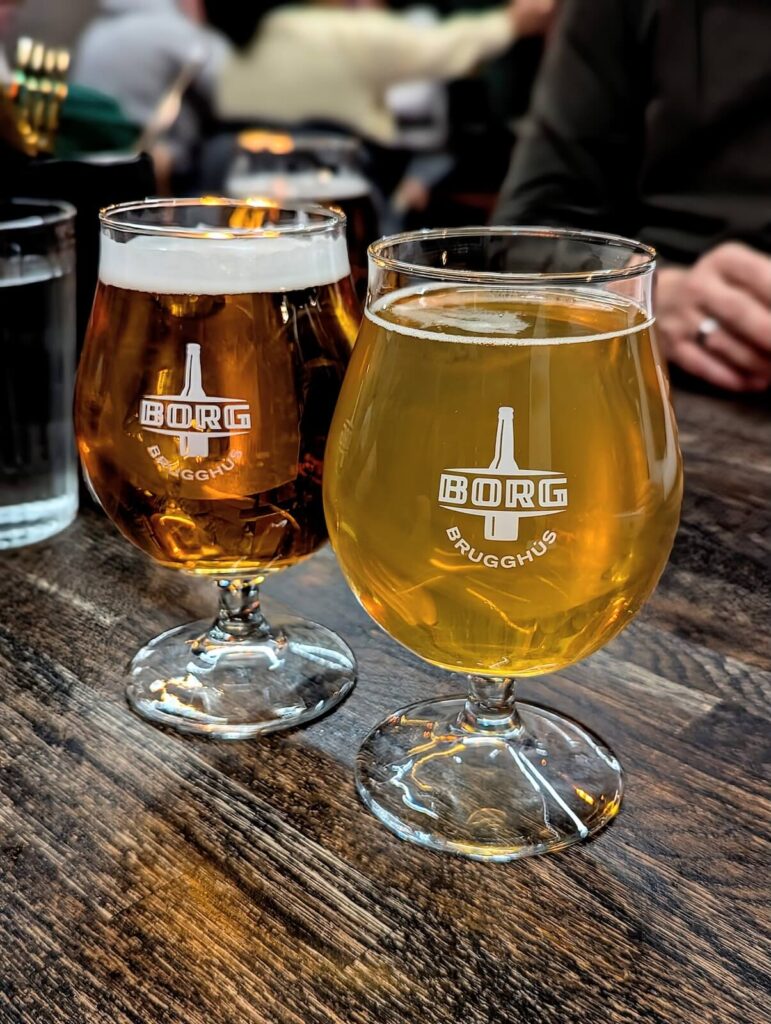
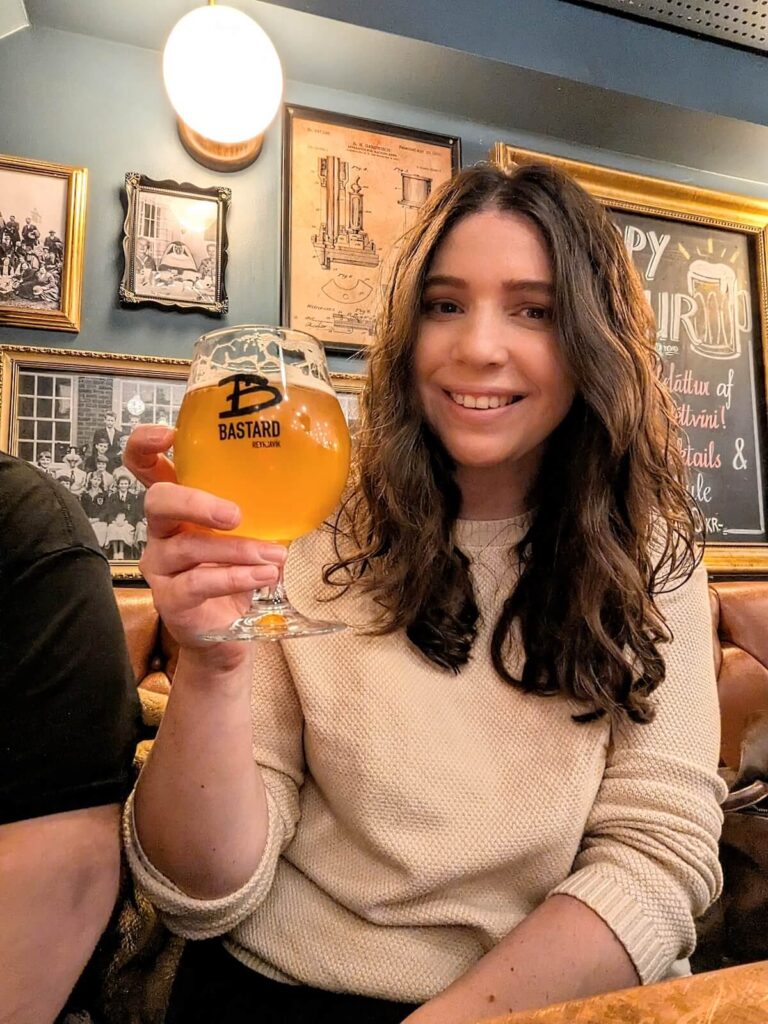
If you’re a beer drinker, Iceland is the place for you! Beer is plentiful here and there are many excellent locally-brewed options. These range from lighter beers like Egils Gull and Einstöck lagers to stronger IPAs from Bastard Brew (in collab with Malbygg) and Borg.
There are tons of great places to get a pint especially in Reykjavík where a lot of bars run good happy hour specials. Alcohol, including beer, can be pretty pricey in Iceland so take advantage of these deals when you can.
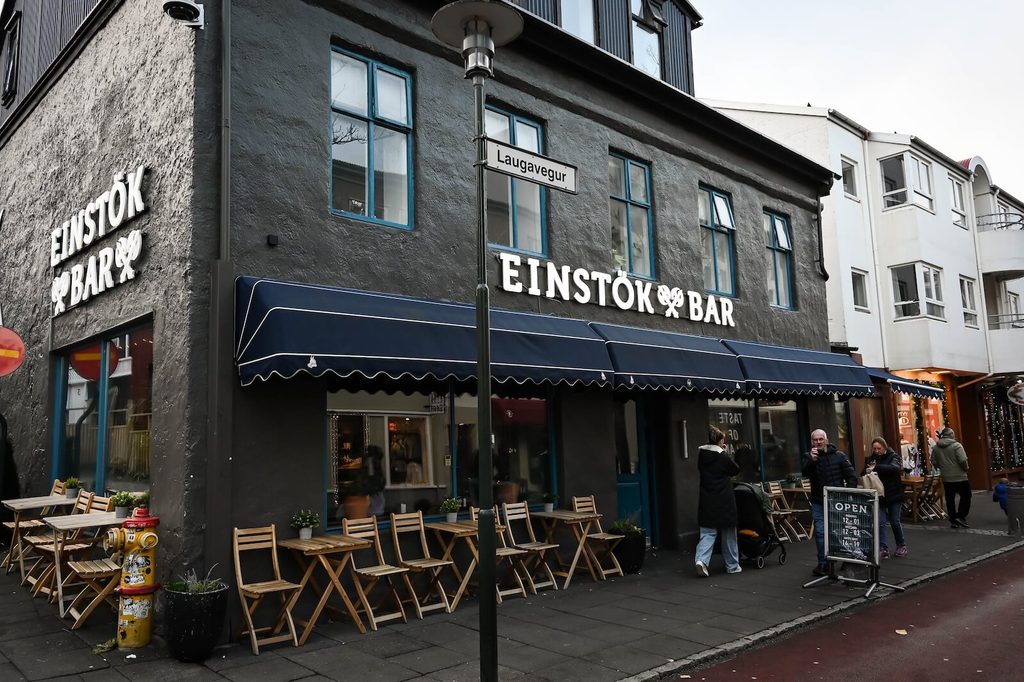
Beer with alcohol content was not even allowed to be sold in Iceland until 1989! Alcohol sales are still pretty regulated today – outside of duty-free at Keflavík airport, you can’t actually buy cans or bottles of full-alcohol beer (over 2.25% ABV) and spirits anywhere but Vinbúðin shops, which are government run.
Beer Brands & Recommendations
Here are a few examples of popular Icelandic beer brands with my recommendations for styles to try:
- Borg: Ulfur IPA – an easy drinking IPA with a lower ABV of 5.9%. We had this several times around Iceland and it was one of our favorites in terms of flavor profile. We even got a boot of it at Sæta Svínið in Reykjavík! Pairs well with almost everything.
- Einstöck: An excellent option for a pale ale and their toasted porter is fantastic (pair it with plokkfiskur and rye bread)
- Viking: We had their Bondi Session IPA at 4.6% ABV – it was very complementary to a lean grilled lamb dish we had at Mat Bar
- Egils: Gull 5.0% golden lager (gull meaning “gold” or “golden” in Icelandic) – refreshing and easy to gulp down (like after a long hike) and often on happy hour menus
- Bastard Brew: They have two custom-brewed beers in collaboration with with Malbygg brewery – Hazy Bastard (NEIPA) and Amber Bastard (an amber ale) – both great (especially with pretzels and cheese!)
- Boli: Another easy-drinking lager
COLLAB Energy Drinks
Caffeine and collagen? Sign me up! COLLAB is a sugar-free caffeinated energy drink with a unique twist – it’s also made with collagen from sustainably-sourced wild caught fish from the Atlantic Ocean.
I’m not typically a big energy drink fan, but road trips call for beverages to help keep the eyes open on the longer stretches of road.
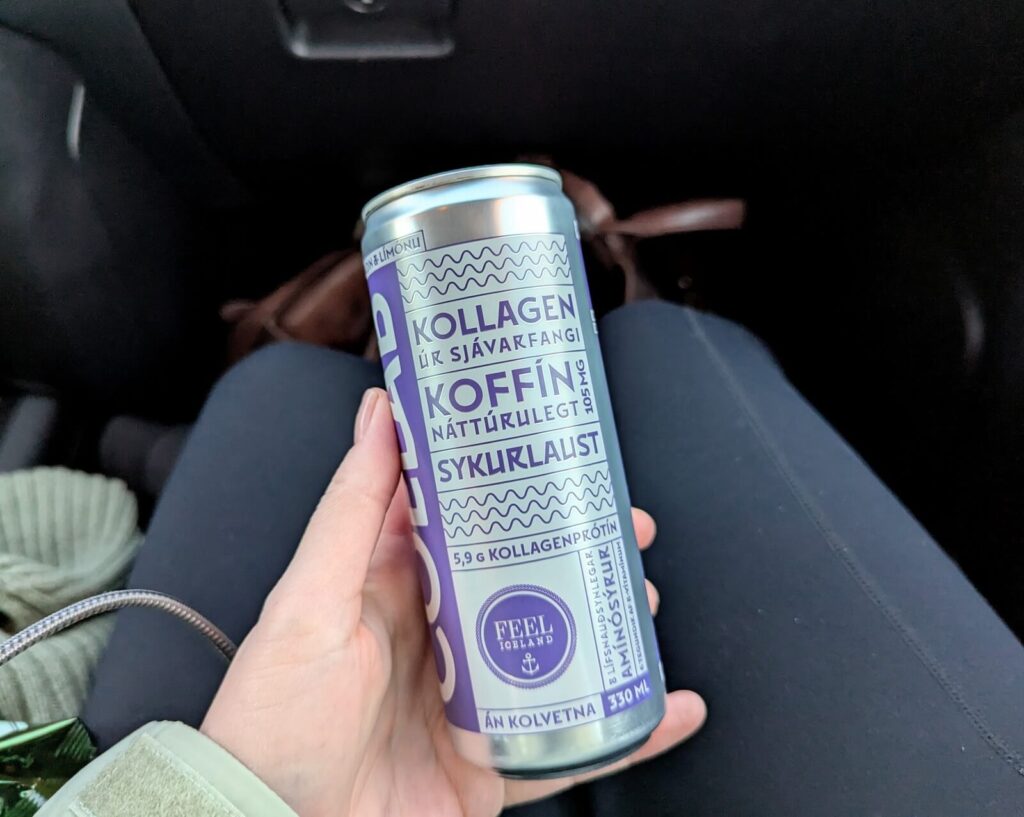
These COLLABs come in many different flavors. So far, we’ve tried the passion fruit & lime, which I highly recommend.
Pro tip: these are likely to fizz over when you open them so make sure to open them outside of your vehicle! Speaking from experience…
🏔️ Planning An Iceland Adventure? 🏔️
Here’s everything you need to plan a trip to Iceland!
- One-Week Iceland Itinerary: Experience the highlights of Reykjavík, Snæfellsnes Peninsula, the Golden Circle, and the South Coast in one week
- Iceland Travel Tips: A “know-before-you-go” list of general Iceland travel tips – especially if doing a self-drive road trip
- Iceland Food Guide: A list of my favorite places to eat around Iceland, whether in Reykjavík or one of the many towns around the country
- Iceland Packing List: My guide on everything you need to pack for a trip to Iceland (especially in the fall)
Grocery Store Snacks
In Iceland, grocery stores are going to give you the best bang for your buck with food. You can buy all kinds of snackies from candies to chips and even pre-made sandwiches, kleinur, and loaves of rúgbrauð! These are all my favorite items we’ve picked up so far (mostly from Kronan stores).
Candies
As someone who has embraced their sweet tooth, I’m always reaching for local candy bars when visiting a new destination. It’s so interesting to see what’s available outside of your home country! There are a TON of candies and sweets to try in Iceland – I’ve barely even scratched the surface.
Þristur
If there’s one thing you’ll notice about Icelandic candies it’s that Icelanders love licorice. While not my favorite, I’m always willing to try something new.
Our very first intro to Icelandic candies was the Þristur (Thristur) bar – a soft caramel-chocolate fudge bar that has little bits of sweet black licorice, coated in a layer of creamy milk chocolate.
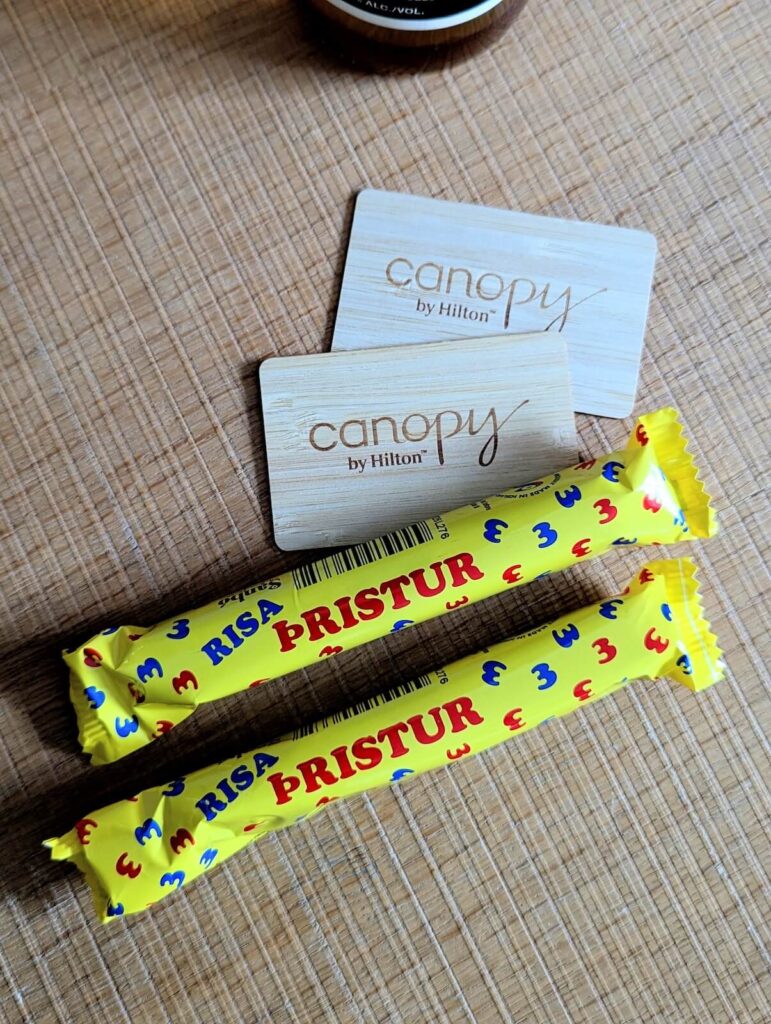
I think Þristur is actually a great intro to Icelandic candy bars as the licorice flavor is fairly mild. It actually became a favorite of mine! And since it was our first-ever Icelandic candy bar, it’s the ultimate symbol of nostalgia.
Hraun
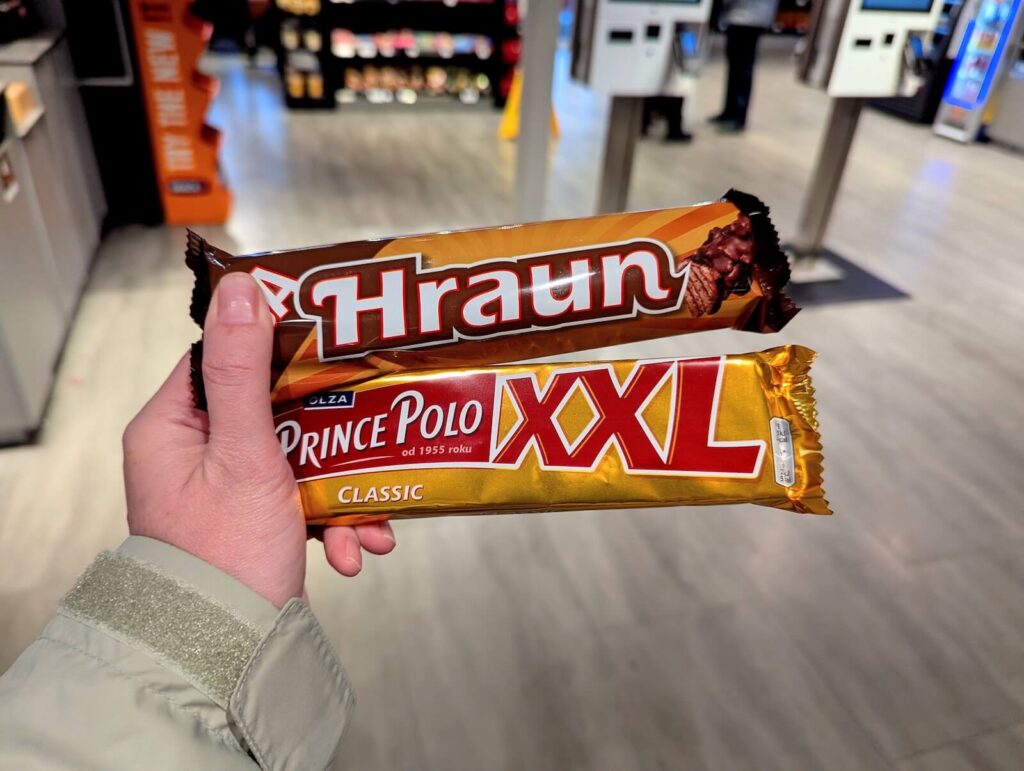
Our favorite candy bar we had in Iceland was the Hraun chocolate bar! Hraun is also known as the lava bar for its bumpy appearance (kind of like a lava field) with “hraun” literally translating to “lava.”
This bar is made up of layers of wafers covered in milk chocolate and crispy corn puffs. It’s nice and thick and provides good crunch! If you like Kit Kats, this is kind of like a Kit Kat bar on steroids.
Prince Polo
Okay so Prince Polo is actually Polish but Icelanders love this chocolate bar. In fact, it is one of the best-selling chocolate bars in all of Iceland!
Layers of wafers are covered with milk chocolate. It’s very light and airy and I loved it! On my wish list: to try the Prince Polo-filled crepe at the Crepes.is food stand in Vík.
Freyja
This chocolate bar was made for milk chocolate lovers (aka me)! I read in Facebook groups to “get the candy with the puffin on it,” so I zeroed in on the “puffin candy” without really knowing what it would be like.
Luckily for me, the puffin chocolate bar is made with crunchy bits of caramel and sea salt and oh my, this is one of the best milk chocolate bars I’ve ever had!
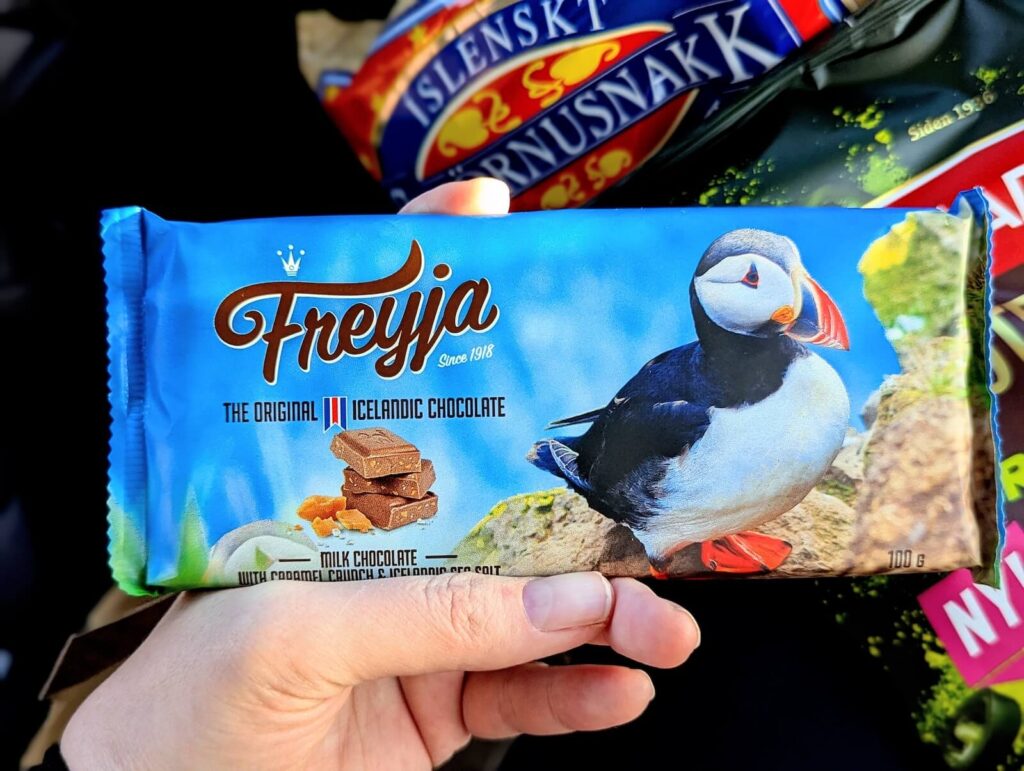
Freyja is Iceland’s oldest confectionery having been in operation since 1918. Aside from this amazing chocolate bar, they also produce other popular items like Ris and Djupur.
Osta & Paprika Stjönur
Moving on from the sweets, these savory, crispy star treats are a must-get road trip snack! These stjönur (stars) are light and airy, made from a mix of potato and rye flour.
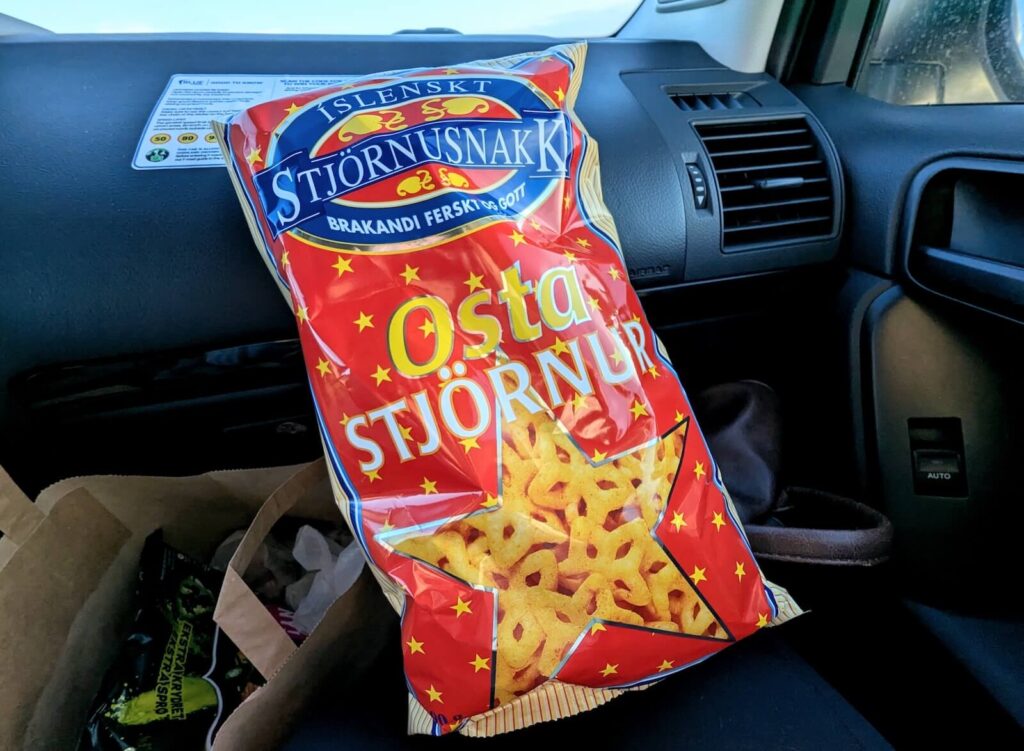
I was looking for Paprika Stjönur and accidentally grabbed the Osta Stjönur (cheese stars) without realizing they even existed! They were really good but I will definitely be picking up a bag of the paprika stars next trip for something with more of a kick.
Unique Iceland Foodie Experiences
Alright, so, knowing what to eat is important, but what about some unique food experiences to have in Iceland to get to know Iceland’s dishes and foods more in depth?
Take a Food Tour
My absolute favorite thing we did in Reykjavík was the Reykjavík Food Walk with Wake up Reykjavík.
I could have designed my own DIY food tour in the city but I wanted to get some first-hand knowledge from a local guide. Plus, I figured it would be an entertaining way to get to know more about Iceland’s cuisine and a little bit of the country’s history and customs.
Dishes and restaurants are also hand-picked by professionals – there’s no thinking involved on your part!
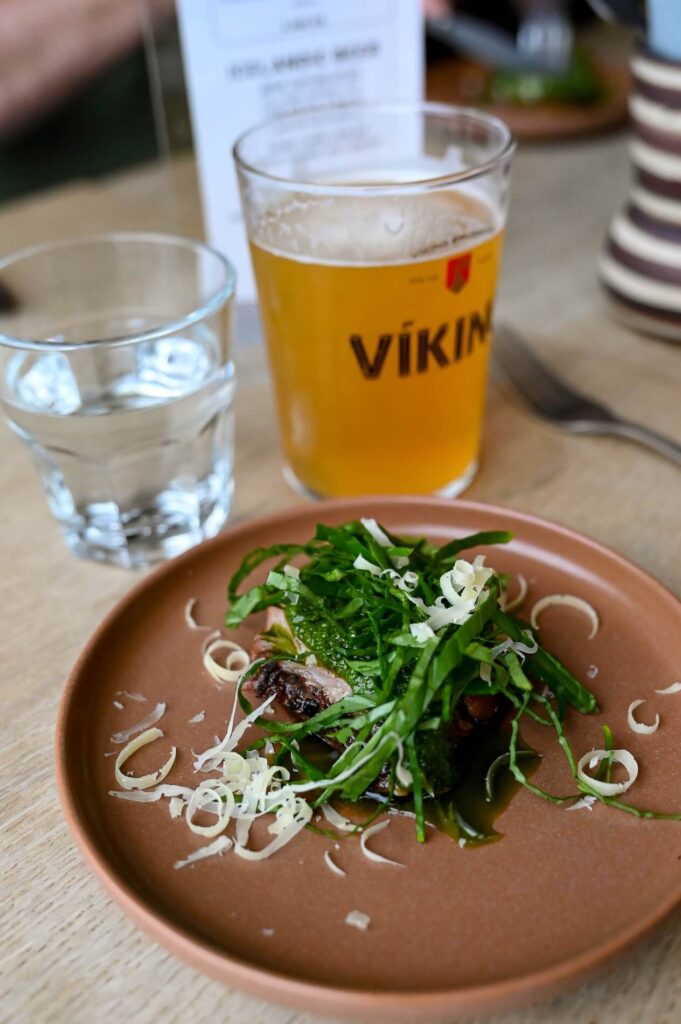

We made our way around Reykjavík on a rainy day to five different stops, sampling everything from Icelandic lamb and seafood to the country’s famous hot dogs. And yes, we even had that crazy fermented shark and Black Death on this tour that I talked about above!
It was so fun to experience an introduction to Icelandic cuisine with other travelers.
If you want to read more about my experience, check out my food tour review post.
Have Lunch at a Tomato Farm
Farming in Iceland is incredibly interesting. With a climate that is often quite harsh, you might be wondering just how they’re able to grow produce here!
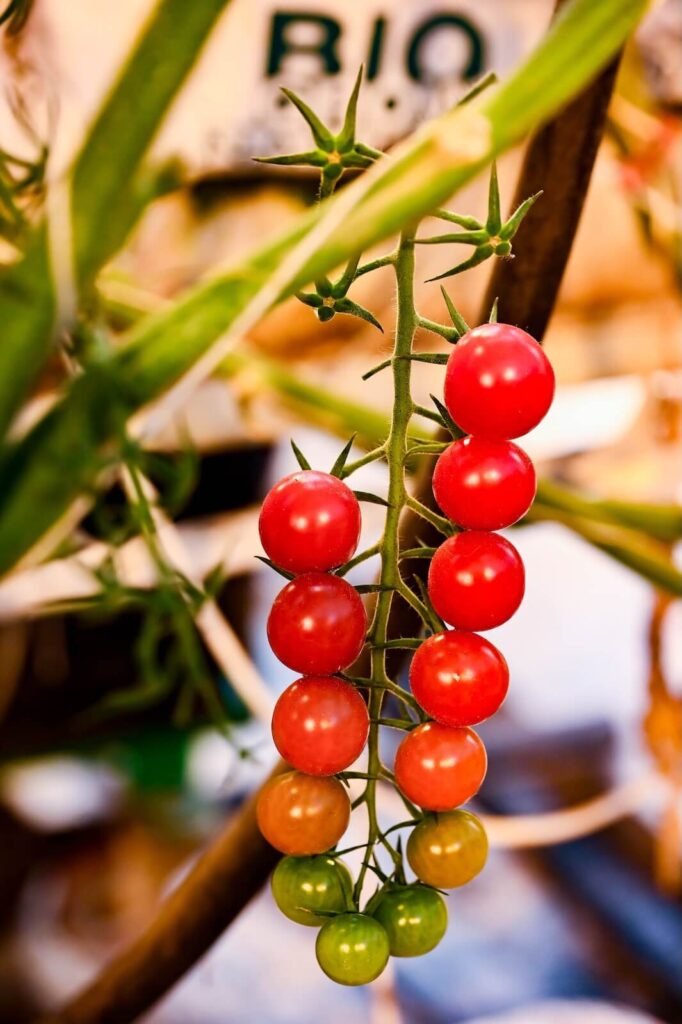
The big answer is, of course, greenhouses heated with geothermal energy. The volcanic soil is also rich with minerals and we can’t forget about that pure Icelandic water giving life to all the plants.
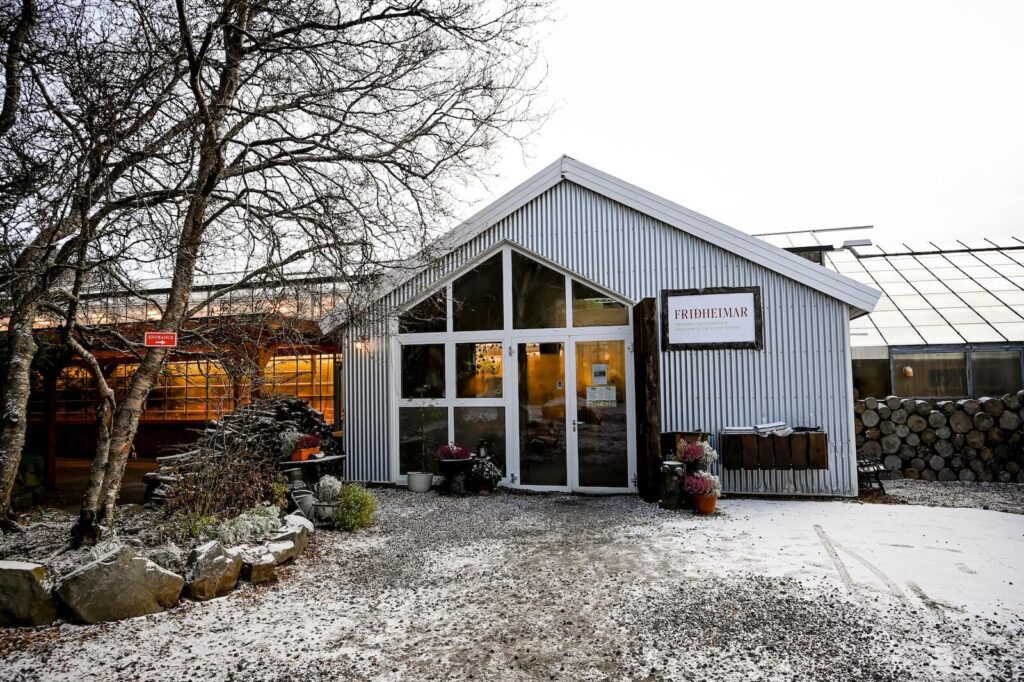
One place where you can see organic vegetable growing first hand is Friðheimar – a tomato farm located on the Golden Circle route.
Having lunch here is a popular option for many travelers (and is even included on group tours from Reykjavík). Because of this, I highly recommend making reservations to secure your spot in the main restaurant. If you want to wing it, you can roll up to their wine bar next door unannounced (though the food menu is a little more limited).
I thought having a tomato-focused lunch right next to the tomato vines in the greenhouse was such a unique food experience! The unlimited tomato soup and bread bar option was my pick, with bowl after bowl of their warm and tangy freshly-made soup and heaps of endless bread.
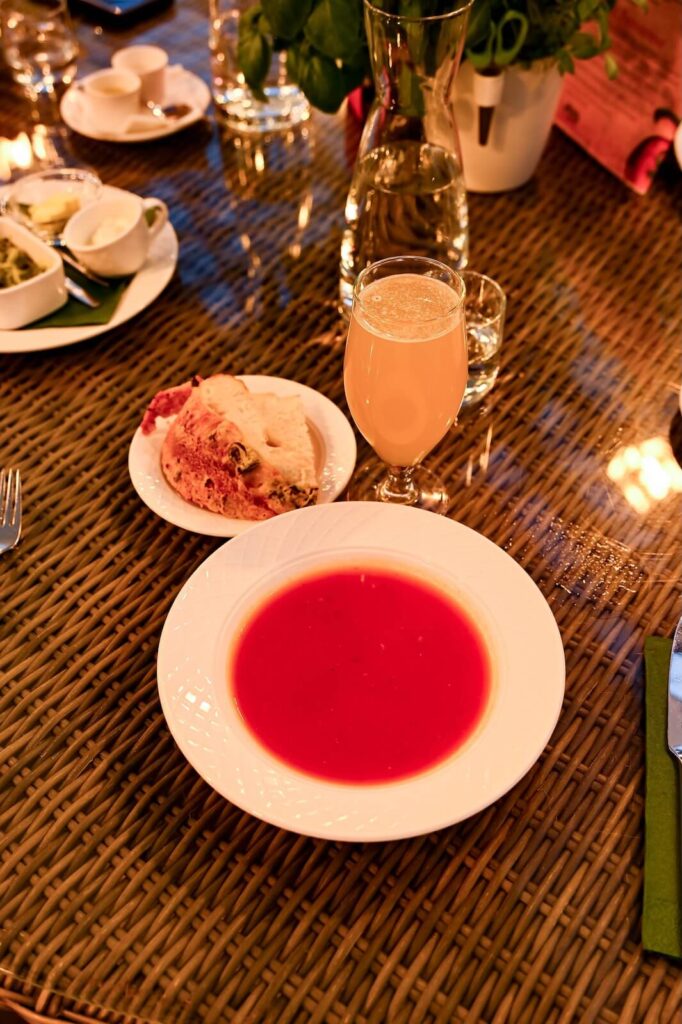
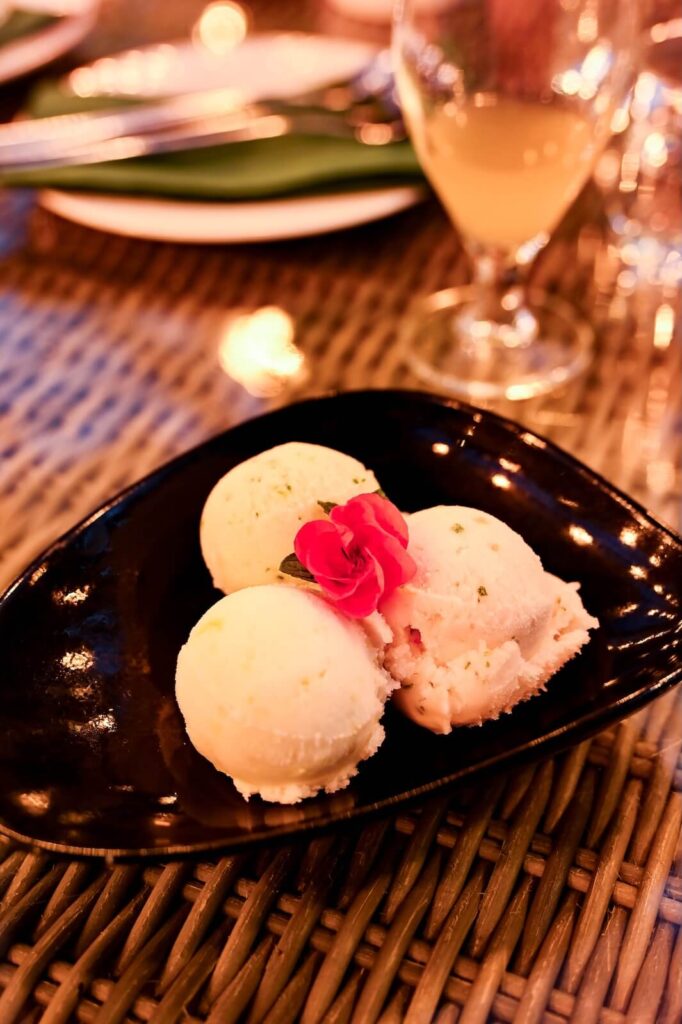
We also tried the pasta and tomato beer for good measure (not a strong enough tomato flavor for me in the beer though) and the sorbet trio, which was really refreshing with a lot of different flavors going on.
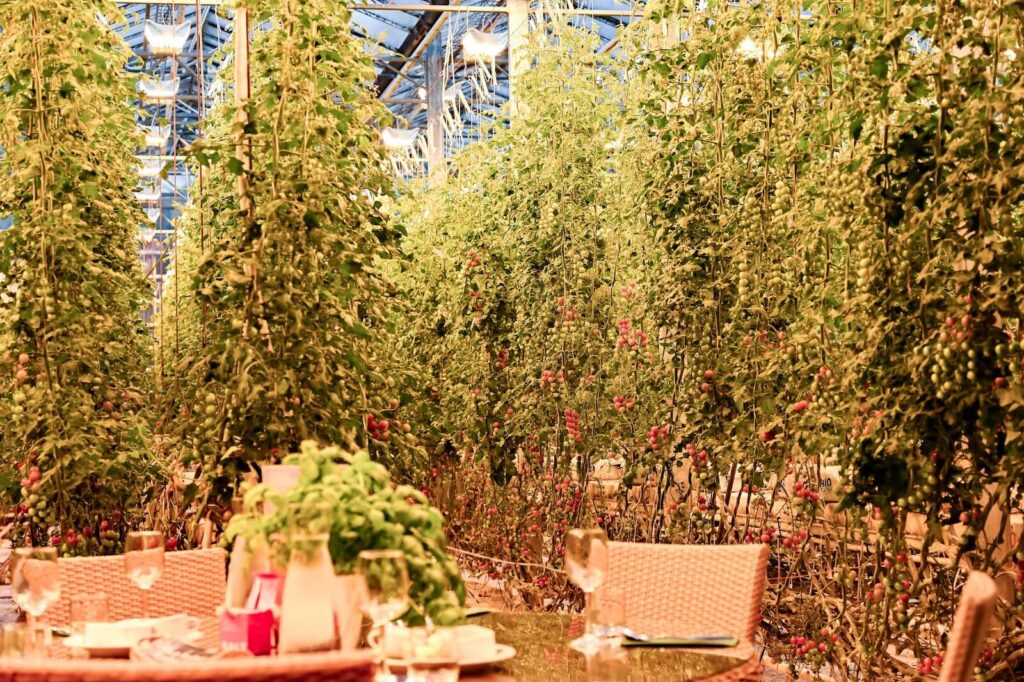
If you want to get more in-depth knowledge of the workings of the farm, you can pre-book a tour if you’re doing a self-drive trip. Alternatively, tours of the greenhouses are included in some arranged day tours from Reykjavík.
Try Black Crust Pizza & Bread Bowls
I love when restaurants get creative and have fun with their food visually! This is really evident in the pizzas from Black Crust Pizzeria and the bread bowls from The Soup Company, both located in the South Coast town of Vík.
Vík sits at the base of Katla, a large glacier-capped volcano. It’s also surrounded by numerous black sand beaches like the famous Reynisfjara and Víkurfjara. To pay homage to the surrounding landscape, these restaurants infuse activated charcoal into their bread making for a striking appearance.
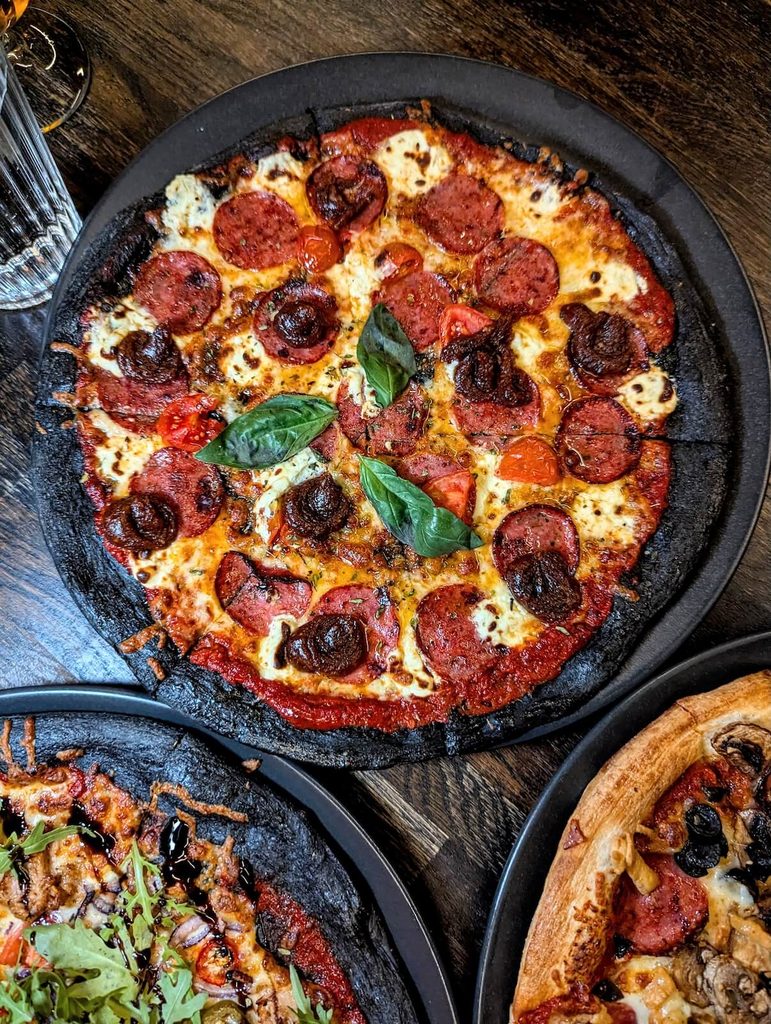
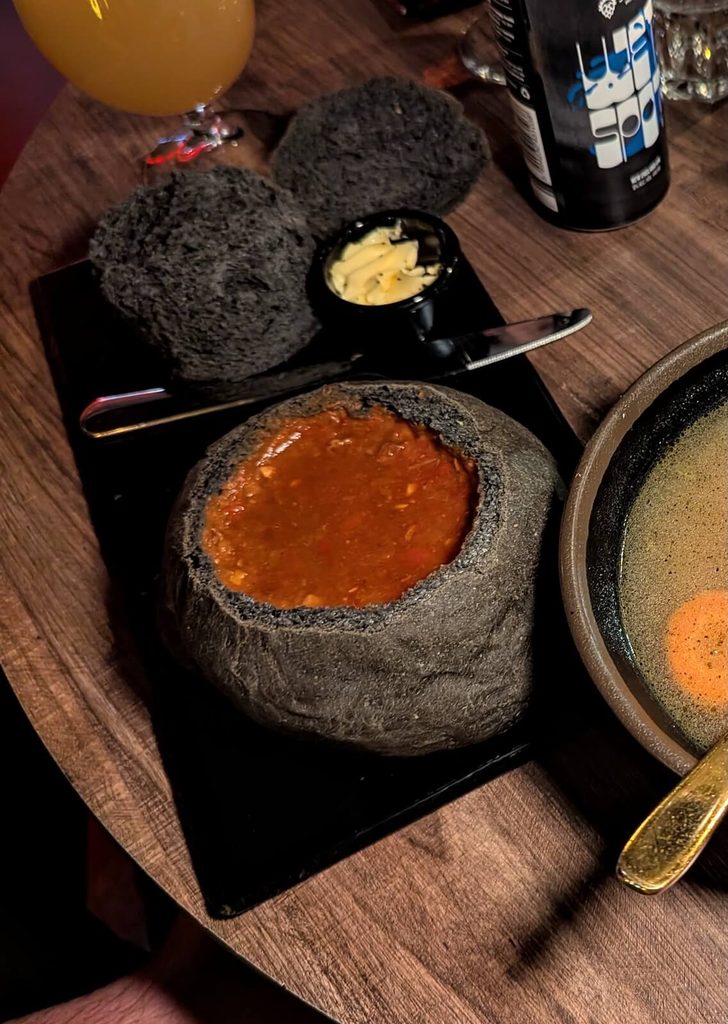
Not only do these look cool, everything tastes amazing too! We loved the pepperoni and sausage black crust pizza at Black Crust and the hot lava soup in a bread bowl at The Soup Company. The bread bowl had a strong sourdough flavor that had me devouring every bit of it even when we were done with our soup.
While pizza and bread bowls aren’t exactly “Icelandic,” these spots do a great job of capturing some of the essence of Iceland in their food.
Learn About Skyr at Skyrland
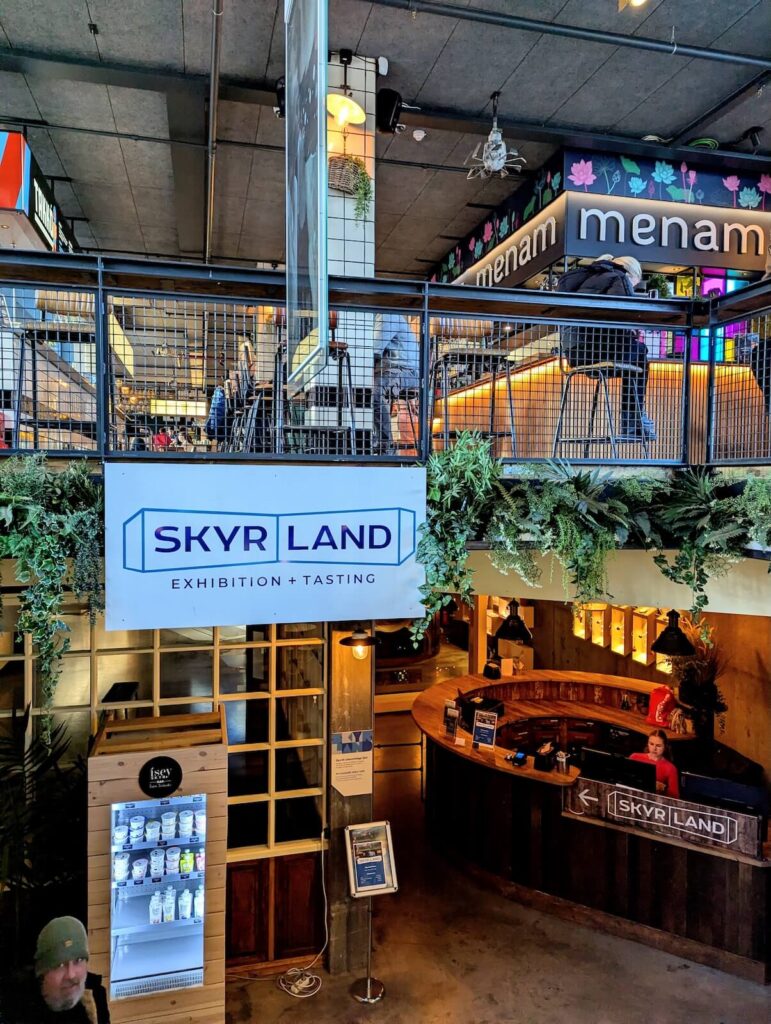
As any good foodie does, learning about the history of a destination’s food is always a good idea. For skyr, Iceland’s famous high-protein dairy product, there is a dedicated exhibit at the Old Dairy Food Hall in Selfoss called Skyrland.
For around $15.00 USD per person, you can spend about 30 minutes wandering around to learn all the facts about what skyr is, its history and significance to Icelandic culture, and see a bunch of artifacts and photos along the way. At the end of your self-guided tour, you get to have a tasting of skyr (ours was the Isey brand).
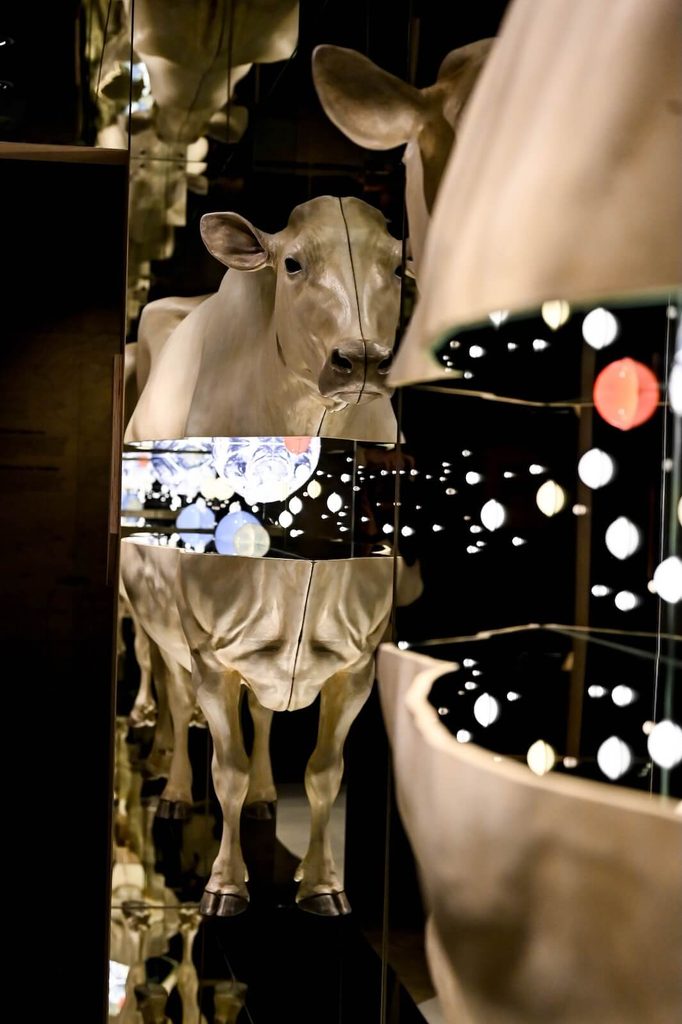
Some cool things I learned: skyr is technically a cheese and not really a yogurt (although, it pretty much presents just like yogurt). Additionally, it takes about 3 to 4 times the amount of milk that traditional yogurt does, giving it such a high protein content.
Also, women were historically in charge of making skyr and it was a craft passed from generation to generation for many years.
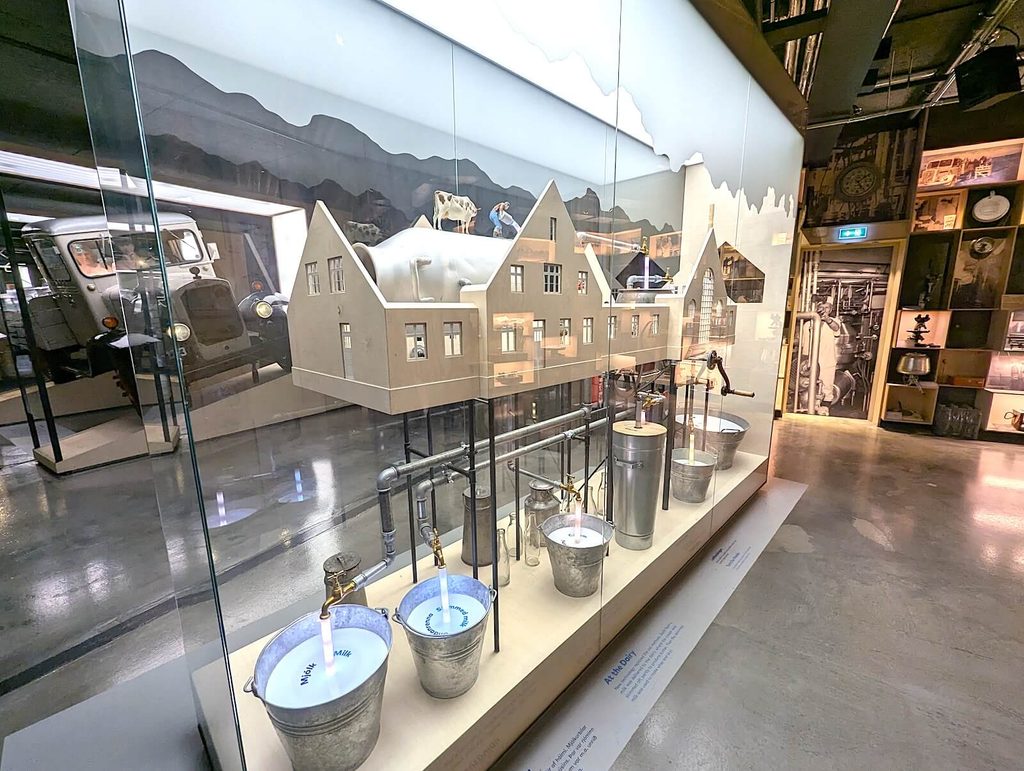
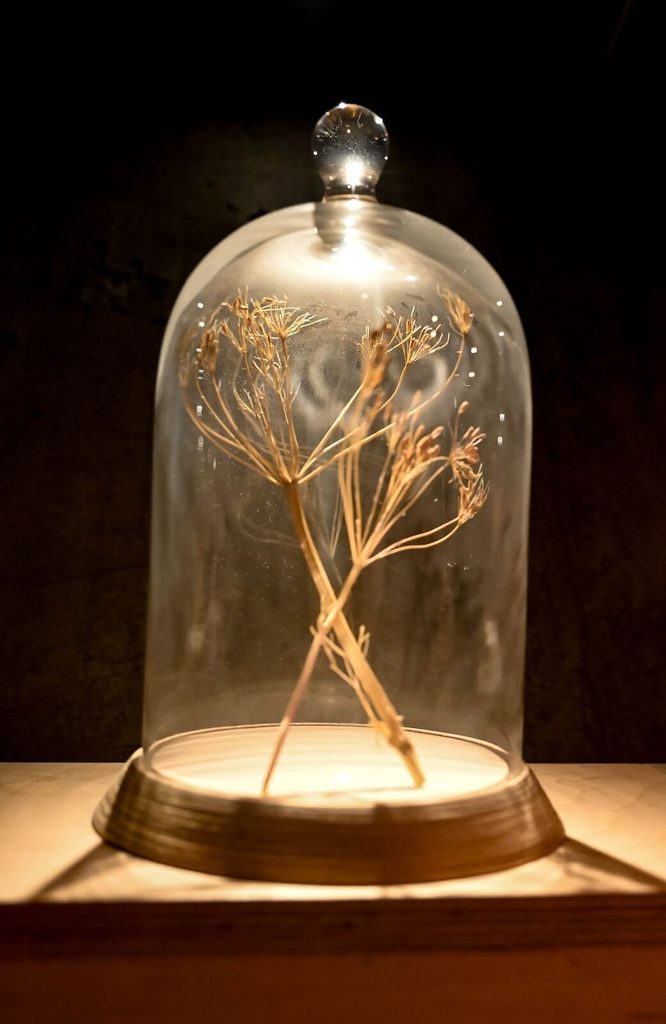
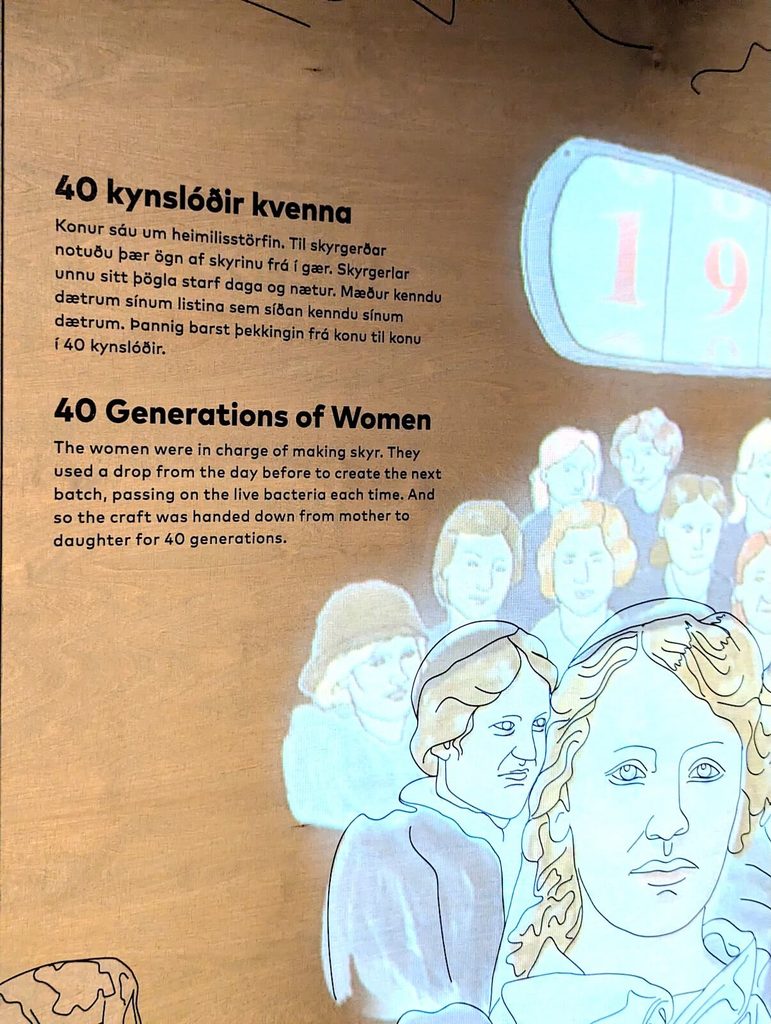
Overall, I think the exhibit is set up well visually but let me set some expectations: Skyrland is for sure more of an exhibit versus a museum. Some people might find it underwhelming because it really isn’t that big. If you aren’t super into reading information, you can be in and out pretty quickly, which may make you feel like that $15 was a bit of a steep price for what it is.
The tasting itself, at least when we went, were simply packets of skyr that you can get at the grocery stores. I would love to see them improve on that process a bit with a more interactive and robust tasting experience.
All that said, I personally enjoyed it having at least learned some new facts about skyr that I might not have otherwise looked up.
Have Ice Cream at a Dairy on the Golden Circle
A can’t-miss stop on the Golden Circle is Efstidalur II – a working dairy farm with a hotel, restaurant, and coffeehouse/ice cream shop.
Their ice cream is made from the property’s dairy cows and is quite honestly some of the best ice cream I’ve ever had! It’s so creamy and luxurious with all-natural flavors.
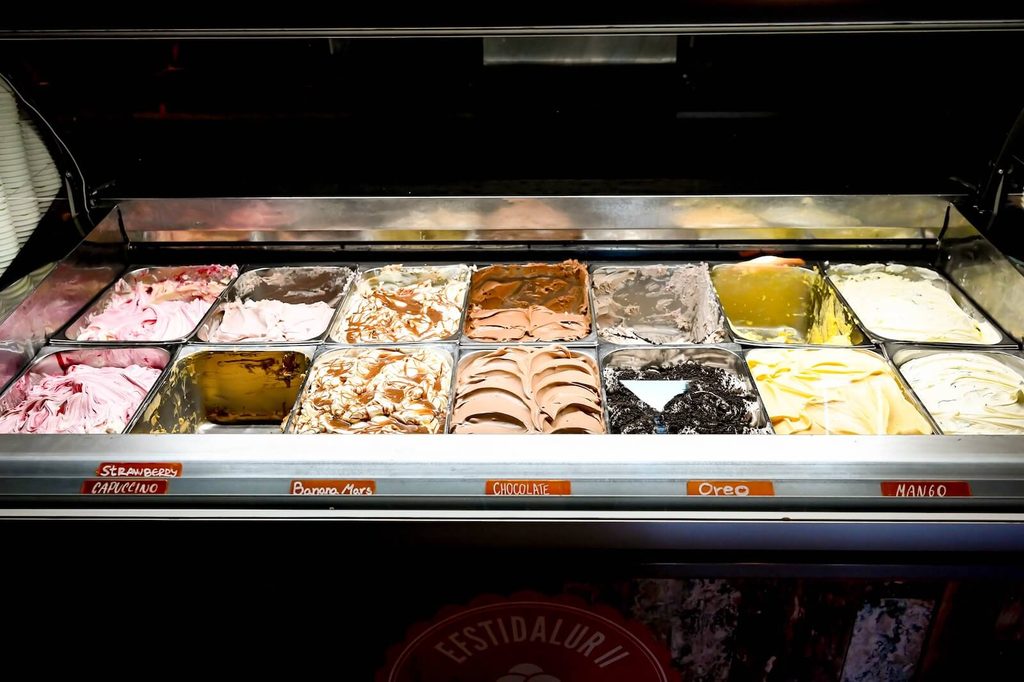
Our picks: strawberry and Oreo (okay maybe not 100% natural but still delicious); the strawberry is life changing and is one of their regular flavors. They’re always experimenting with and rotating flavors – you can try everything from mango and cappuccino to berry skyr and plain chocolate or vanilla.
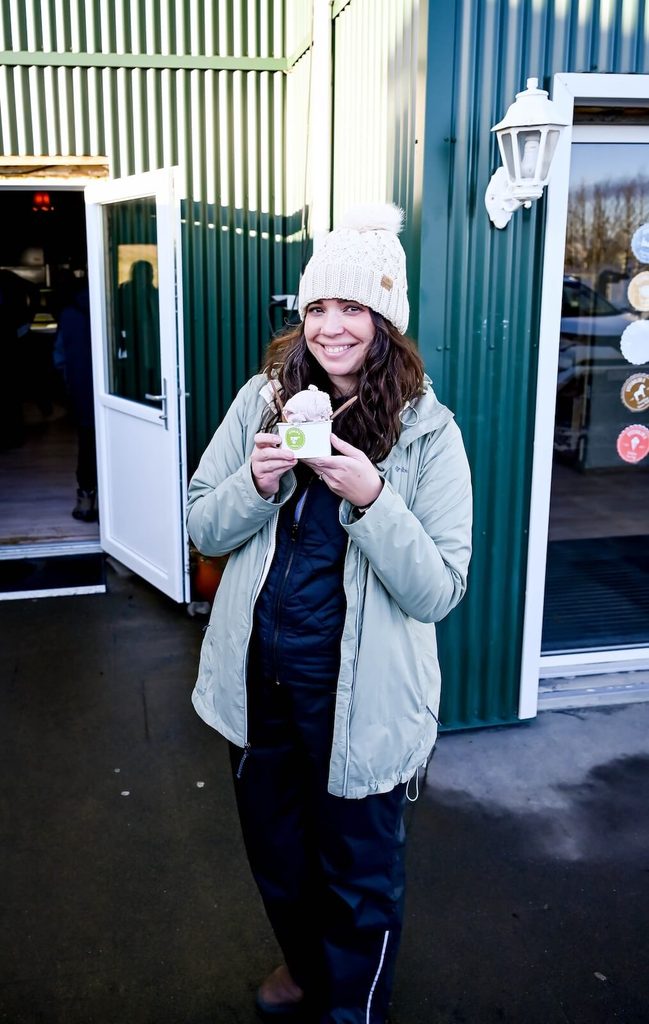
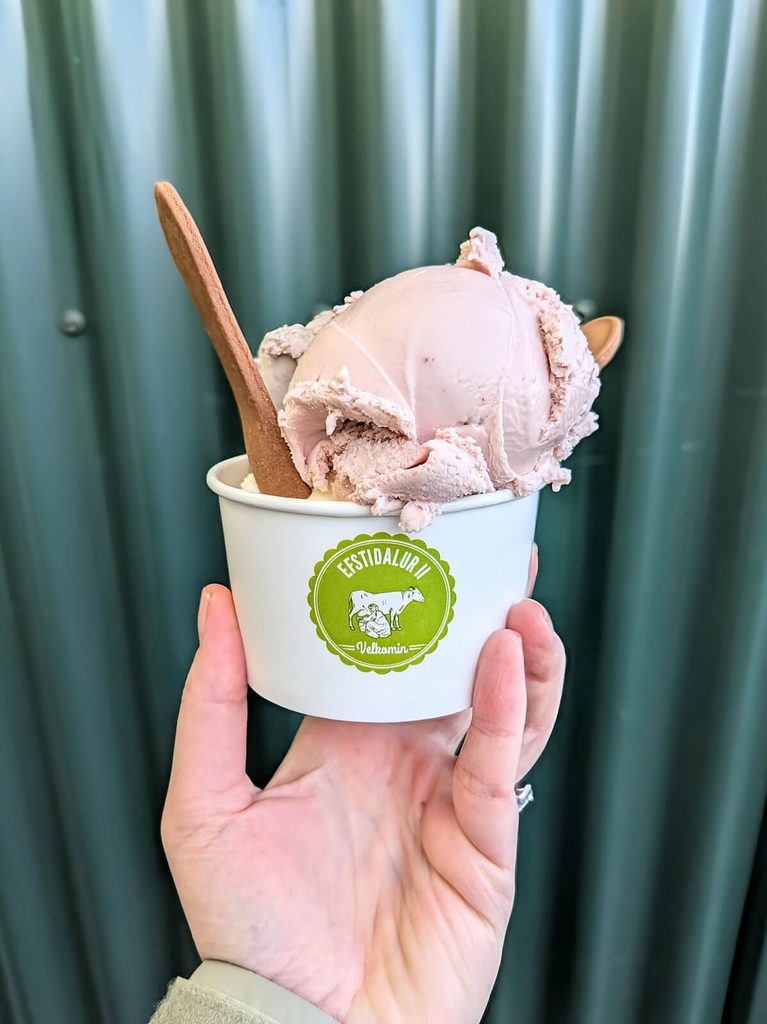
And what caps off the whole experience? A viewing window where you can see their dairy cows munching away on hay while you enjoy product of all their hard work.
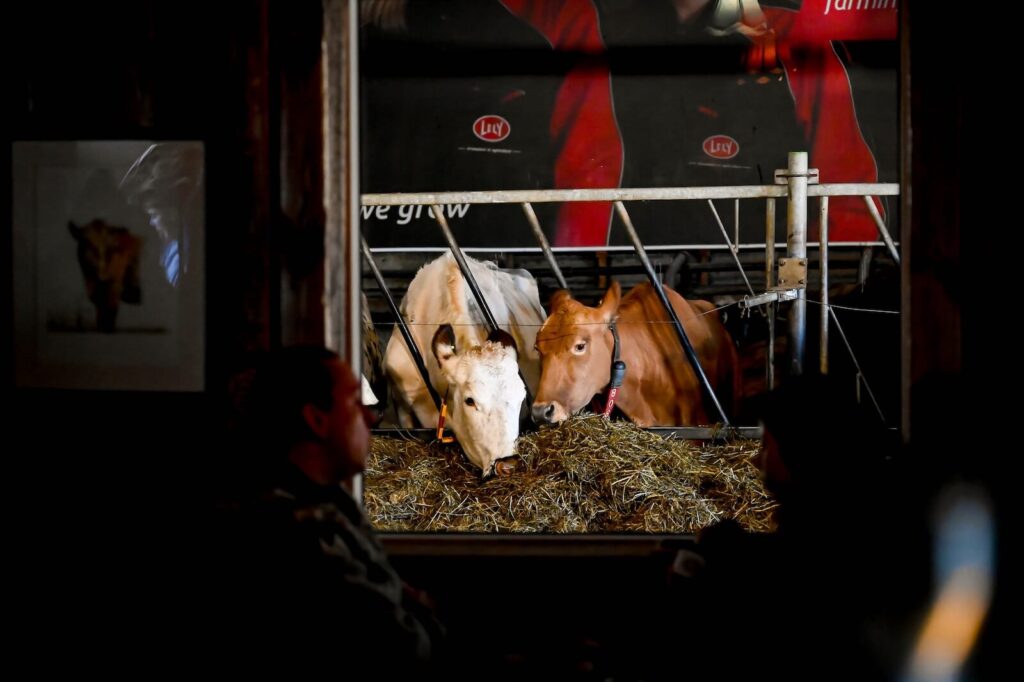
If there’s one thing I’m doing every time we are in Iceland, it’s taking a drive around the Golden Circle just for more of this ice cream.
As you can clearly see, there is no shortage of things to add to your Iceland foodie bucket list! What do you think you’ll be trying first? If you’ve been to Iceland or are an Icelander yourself, what else would you include on this Iceland foodie bucket list?
Want More Iceland Inspo? Check These Out:
- One-Week Iceland Itinerary Based in Reykjavík & Vík
- Iceland Travel Tips & Self-Drive Road Trip Advice
- Iceland Packing Guide: What to Pack for Iceland in the Fall
- Where to Eat in Iceland: A Guide to My Favorite Food Finds in Iceland
- Reykjavík Food Tour Review: The Best Thing to do In Reykjavík
- Snæfellsnes Peninsula Day Trip Itinerary from Reykjavík