Iceland Travel Tips & Self-Drive Road Trip Advice

This post may contain affiliate links wherein I earn a small commission if you purchase or subscribe to a product from one of my links (at no extra cost to you!). Read my full Privacy & Affiliate Policy here.
When I started planning my first-ever trip to Iceland, I had a lot of questions (as I usually do). I’m a super planner and like to know everything I possibly can before arriving to a new destination!
I figured others probably have the same questions I did, so I pulled everything I learned into this know-before-you-go guide covering everything that couldn’t fit into my One-Week Iceland Itinerary – because that sucker is already long enough.
Keep in mind this guide is based entirely on my own personal experience planning and taking a self-drive trip around Iceland. I’m not an official Iceland expert by any means, so this won’t cover everything. When I return to Iceland, I’ll be sure to update this with anything new I learn!
Language
The primary language spoken in Iceland is Icelandic. That being said, we found Icelanders speak excellent English as they learn it in school growing up. However, I do think it’s good to learn a few words before you go for etiquette and sightseeing.
Here are a few of my favorites:
- Skál: cheers (essential for drinking!)
- Foss: waterfall (waterfall names in Iceland all end with “foss,” i.e. Skogafoss and Seljalandsfoss)
- Kirkja: church
- Jökull: glacier
- Brauð: bread
We also tapped our food tour guide as a resource for pronunciation of a few words but if you can’t get the hang of it, you’ll be just fine with English.
Currency & Cash
The currency in Iceland is the Icelandic Krona (ISK), which can commonly be written out like 4.000 ISK or 3.850 kr.
You do not need cash in Iceland for most things as everything is pretty much cashless. The only thing we used cash for was to tip a couple of tour guides. If you choose to do this, there are plenty ATMs around Reykjavík.
Tipping
Speaking of tipping, tipping is not customary in Iceland. That being said, I personally wanted to thank our guides who spent hours with us like on our food tour and our Northern Lights Tour. Otherwise, we did not tip at restaurants or anywhere else.
Is Iceland Really That Expensive?
Compared to most destinations, Iceland is one of the most expensive countries in the world, especially when it comes to dining out. However, keep in mind that there’s no tipping in restaurants so relatively speaking, I think costs of some meals can be pretty comparable to the U.S.
We live in California where everything is expensive anyway, so it wasn’t a huge shock for us. If you’re coming from destination where the cost of living is lower, make sure you budget appropriately.
If you want some insight on Iceland travel costs, check out my budget I broke down in my one-week Iceland itinerary post.
Dining & Drinking in Iceland
Iceland has an incredible food and drink scene that should absolutely be included in your travel plans! That being said, I do have a few tips when it comes to my favorite travel activity – eating.
Restaurant Budgeting
As I mentioned above, Iceland is quite expensive when it comes to dining out. Pad your food and drink budget a little with this in mind.
Some examples of meal costs: burgers or a plate of tacos are going to cost you about $30-$35 USD, a beer will set you back around $12-$14 USD, and cocktails run around $21-$24 USD. For a plated main course with seafood or beef, expect an average of $50-$60 USD.
These are just rough estimates to give you an idea of what to expect, and may be a little more or less depending on the restaurant.

Cost-Savings Tips
My best tip to help with your food costs in Iceland is to choose a couple of nice restaurants for an elevated dinner and stick to more “budget-friendly” options for the rest of your meals.
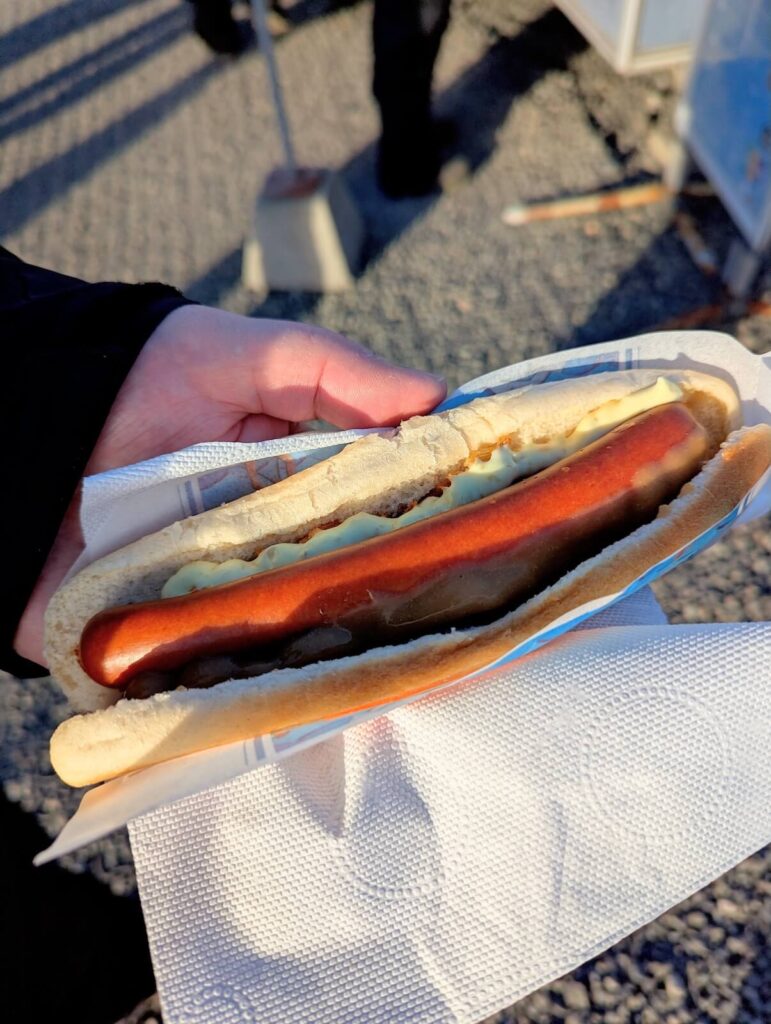
Look to options like food halls, brewpubs, and more casual cafes for lower prices and keep an eye out for places that have happy hour deals. Budget-friendly meals typically include the famous Icelandic hot dogs (the most budget-friendly food in my opinion), fish and chips, or hearty bowls of lamb stew.
Stores like Bonus and Kronan also have a lot of snacks and ready-made meals and sandwiches that are perfect for breakfast and lunch to help keep costs down.
Reserve Your Must-Try Restaurants
Make dinner reservations if you have your heart set on something special, especially if visiting in the summer. When we visited in October, I made a couple of reservations but we probably would have been okay just walking in with it being shoulder season. That being said, I didn’t want to risk it!
One place where you should always make a reservation: Friðheimar Tomato Farm on the Golden Circle. This is a super popular stop for visitors and it will fill up quickly! Alternatively, their wine bar next door is walk-in only and typically has good availability and serves their famous tomato soup.
Check Out My Iceland Food Guide
Want to know my picks on where and what to eat when visiting Iceland? Read through my Iceland Food Guide where I cover foodie spots in Reykjavík and beyond!
Icelandic Water
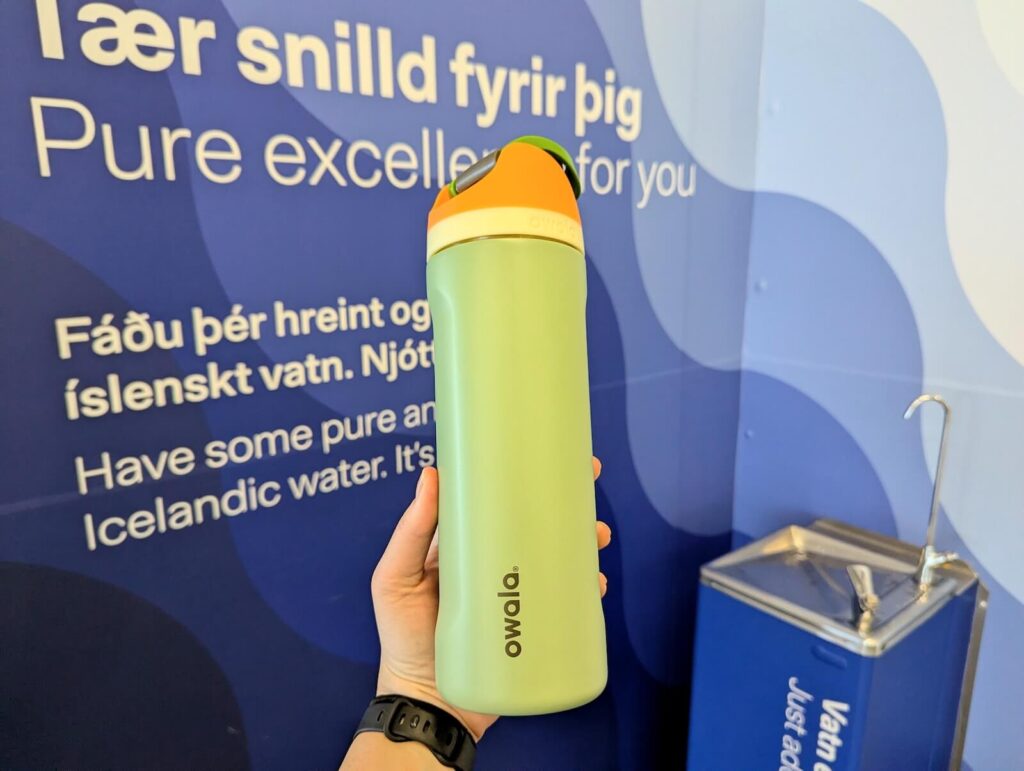
It’s no secret that Iceland has some of the best water in the world and is the best water I’ve personally ever tasted – even straight from the hotel bathroom sink! It’s cold, clean, and refreshing.
Bring a refillable water bottle and enjoy that glorious water wherever you go rather than buying a bunch of plastic water bottles. Or, buy one big water bottle at the start of your trip and reuse it.
Buy Alcohol at Duty-Free
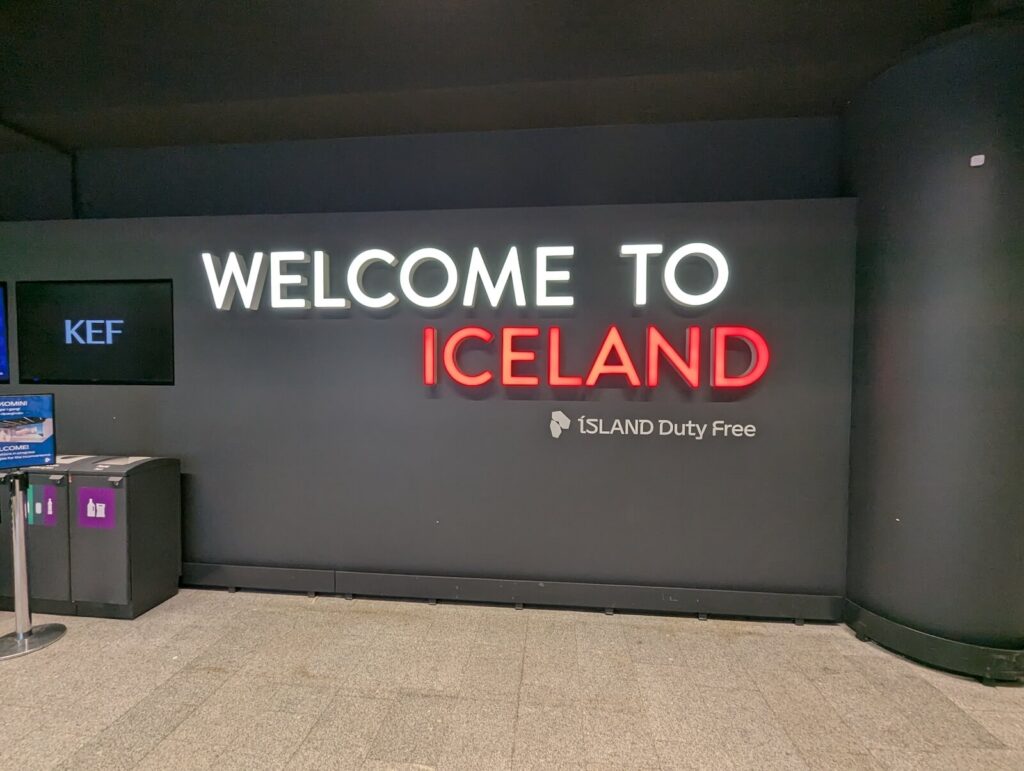
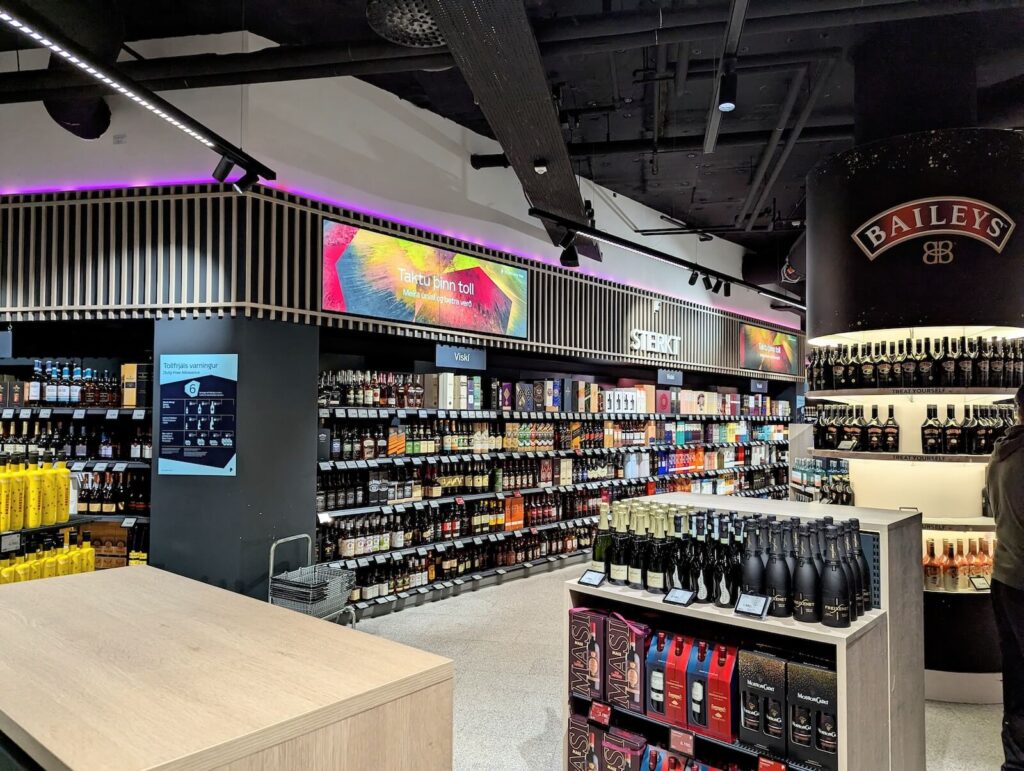
If you’re a drinker, I do recommend picking up liquor or beer at the the duty-free shop at Keflavík airport before you leave the airport. You can’t miss the shop as you literally have to walk right through it to get out.
Stopping at the duty-free is not an absolute must but it will be your chance to get the best prices on bottles and cans. We still spent plenty of money at happy hours around Iceland!
Some extra notes for duty-free:
- Make sure you hold onto your boarding pass as you will need that to check out at the register with alcohol.
- There is a limit you can purchase in the duty-free shop, i.e. six “units” per person, which you can calculate ahead of time online to see how much your max will be depending on what you are purchasing.
Alcohol at Vínbúðin Shops
Outside of the duty-free shop at the airport, bottles/cans of liquor and regular-strength beer can only be purchased at government-run Vínbúðin shops. We visited one in Vík to pick up a pack of Einstok beers and it was not cheap. What can you do when you’re really craving a cold one?
Note that Vínbúðin shops are closed on Sundays.
General Itinerary Tips
When it comes to building your Iceland itinerary keep these things in mind: book early, be flexible, don’t try to pack too much in, and be prepared for any kind of weather imaginable. I applied these principles to my one-week itinerary and we had the BEST time!
Book Everything Early For Best Rates
I mean this sincerely, as soon as you decide on when you want to travel to Iceland, get your accommodations, rental car, and activities booked. The closer you get to your departure, especially if traveling in the summer, the greater the risk of increased prices (and less availability). I booked our flights, hotels, and rental car in February for an October trip.
Book My Iceland Hotel Picks
These are the hotels we’ve stayed at in Iceland and recommend!
Be Flexible & Have Backup Plans
The weather in Iceland can often be unpredictable. Because of this, you should always have backup plans ready especially for longer day trips.
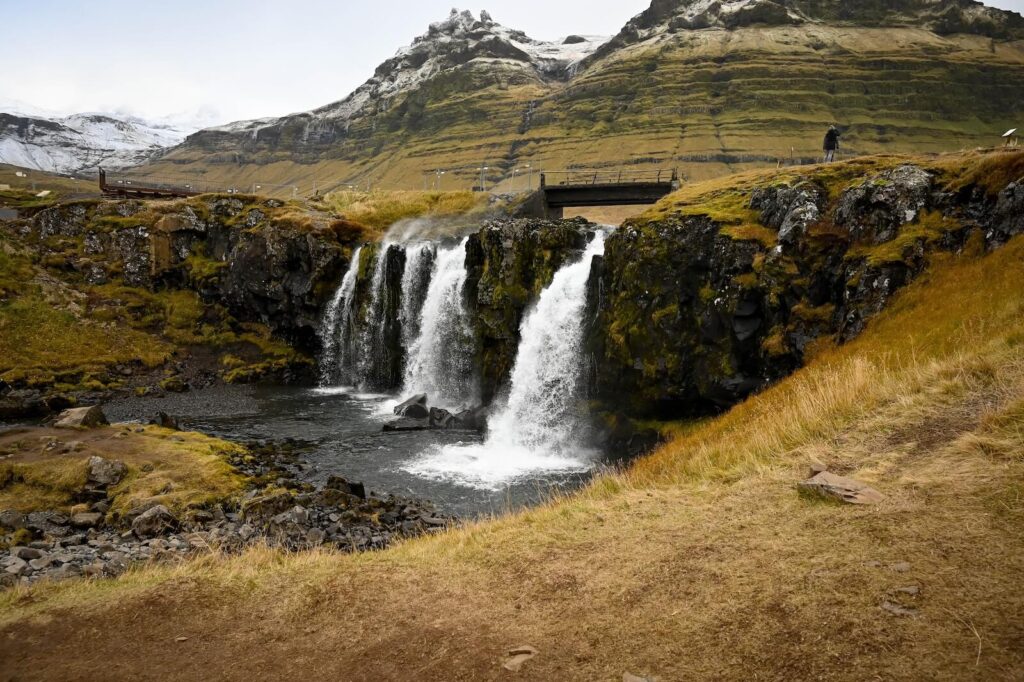
For example, we had a day trip planned for the Snæfellsnes Peninsula but there were forecasts for high wind and even snow (the one thing I was most nervous about when doing a self-drive trip). We kept a close eye on all the weather apps and websites and made our decision to proceed with our plans the evening before.
As an alternative, we would have explored closer to Reykjavík, including Thingvellir National Park and/or possibly hitting up Sky Lagoon.
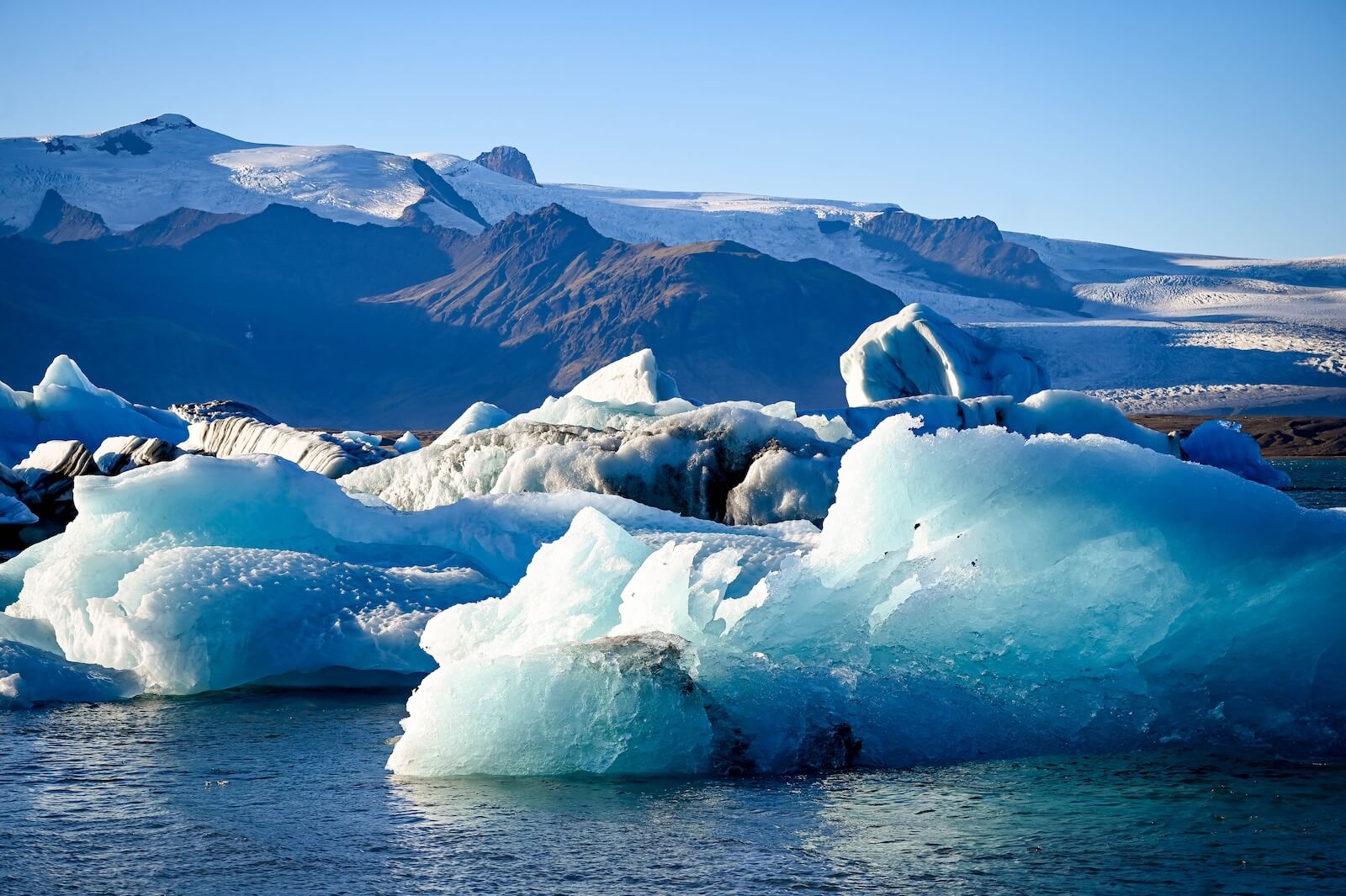
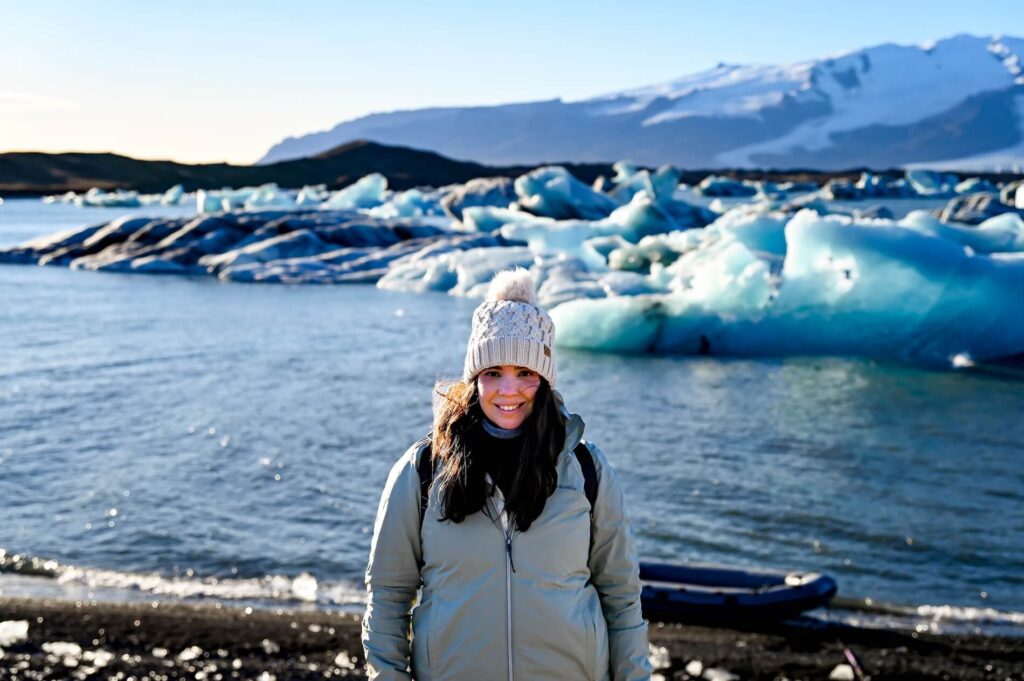
Another day we had our zodiac tour at Jökulsárlón Glacier Lagoon cancelled due to the previous day’s high winds. We decided to drive out to the lagoon anyway and I’m glad we did because it was so amazing even if we just saw everything from shore!
We modified our itinerary a bit and hit scenic stops along the way up to Jökulsárlón rather than driving straight through to make our zodiac tour time.
Do Not Overpack Your Itinerary
Guys – there’s just too many things to see in Iceland in one trip, especially if you’re visiting for one week or less. Choose a few “must-sees” for each day and build in enough time in your itinerary to adequately explore each stop and account for travel time in between everything.
Check Weather & Road Condition Apps
The two most-recommended weather and road condition apps for Iceland travel are Safe Travel Iceland and Vedur. Even if you don’t download their apps, you can go to their websites and check the daily weather and road conditions (which we religiously did – multiple times throughout the day), along with monitoring our phones’ built-in weather apps.
I like that Safe Travel Iceland has a map view with detailed weather warnings, sightseeing safety hazards, and road condition statuses (believe it or not, they will close off whole stretches of road in extreme weather).
How’s Iceland Weather in Autumn?
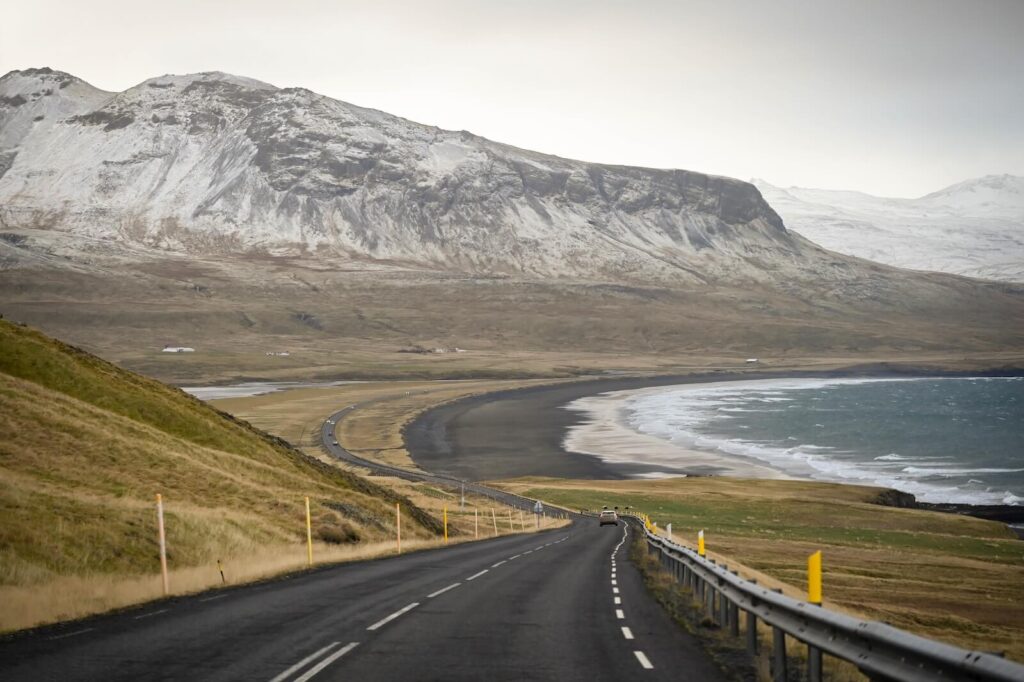
Since we’re talking about weather, they say Iceland can experience all four seasons in a day sometimes! That really means one thing: be prepared for any kind of weather and wear layers.
I’ve only visited Iceland in autumn (October to be exact) so I can’t speak on what the Icelandic weather is like in any other season (although summer is definitely the best for warmer weather).
Autumn in Iceland can bring rain (it rained our second day in Iceland) but it can also bring clear blue skies and sunny days!
What to Pack for an Iceland Trip?
Check out my detailed Iceland Packing Guide for everything you’d need to pack for a fall trip to Iceland (especially if traveling carry-on only)!
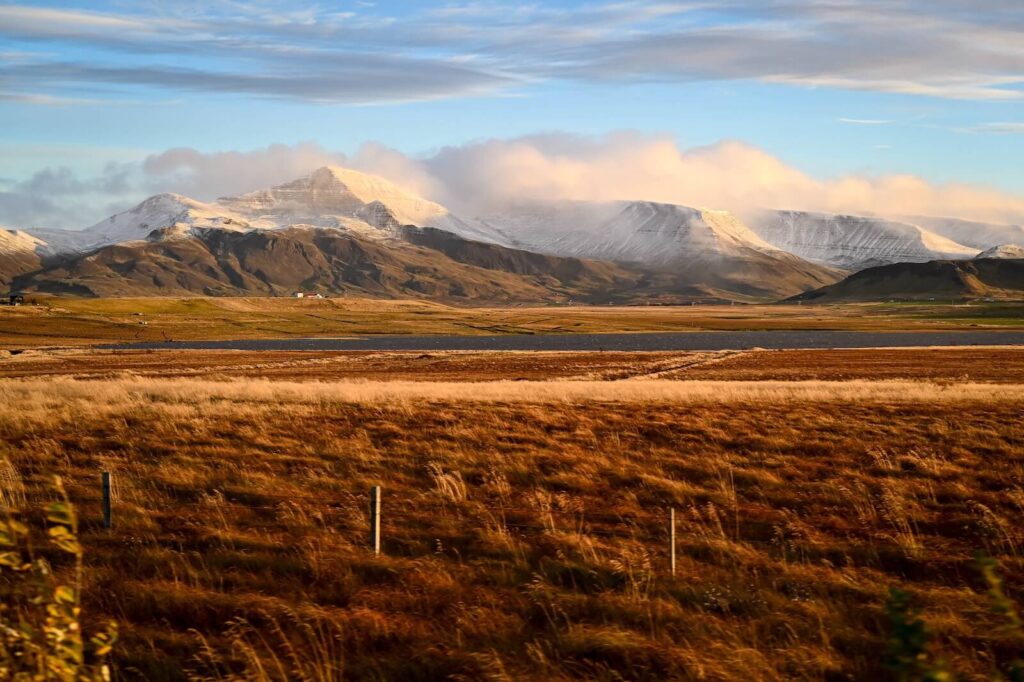
The temperatures will still be pretty chilly, especially as you get closer to the end of the month and snow can definitely start to fall at lower elevations. In fact, two days after we left, a historic snowstorm hit leaving every one pretty much snowed in for a couple of days. I don’t know how we got lucky to miss that – although I wouldn’t have minded being “stranded” in Reykjavík for a few days!
One thing I know for sure – the wind in Iceland is unreal. Make sure you dress for the wind, meaning leave those umbrellas at home and wear wind-breaker rain jackets, gloves, scarves (or a neck warmer), and a hat or something to protect your ears.
Read through my full packing guide for everything I recommend for an Iceland trip!
Submit a Travel Plan to Safe Travel Iceland
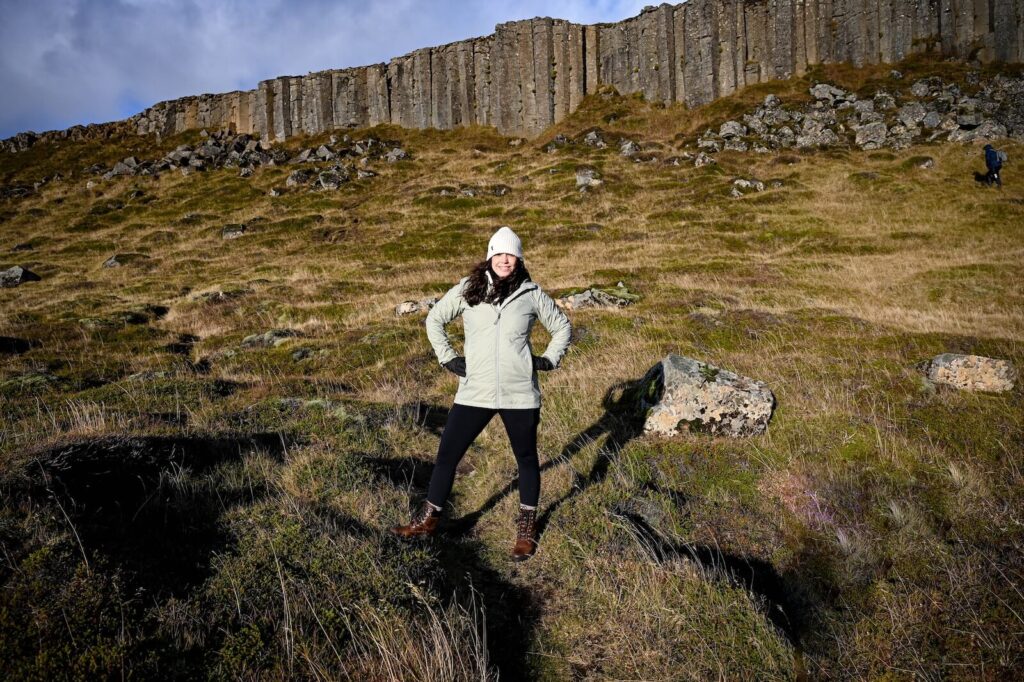
Hand up, I did not actually do this because I didn’t know about it ahead of time, but you can submit your travel plans to Safe Travel Iceland so they have you in their database in case search and rescue is needed. This is not meant to scare you – just to help you be prepared, especially in winter when conditions can get very intimidating and change rapidly.
Be Prepared For No AC in Hotel Rooms
You might be thinking, “But we’re in the arctic, why would we need AC?” I thought that too but for some reason hotels keep the heat on blast in common areas and in the rooms. I was sweating every night!
Our hotel in Reyjkavík luckily had a window we could crack and they also provided fans in our rooms. In Vík, our hotel had a back patio door that we could leave open for a few to let some cool air in if needed.
Are there public toilets at scenic stops?
Most of the popular sights are going to have public restrooms available. A few have visitor centers like Gullfoss and Geysir, while many have simple standalone “water closets.”
However, there are also many stops that have nothing at all so you’ll definitely want to take advantage of toilets where you can (i.e. restaurants and gas stations).
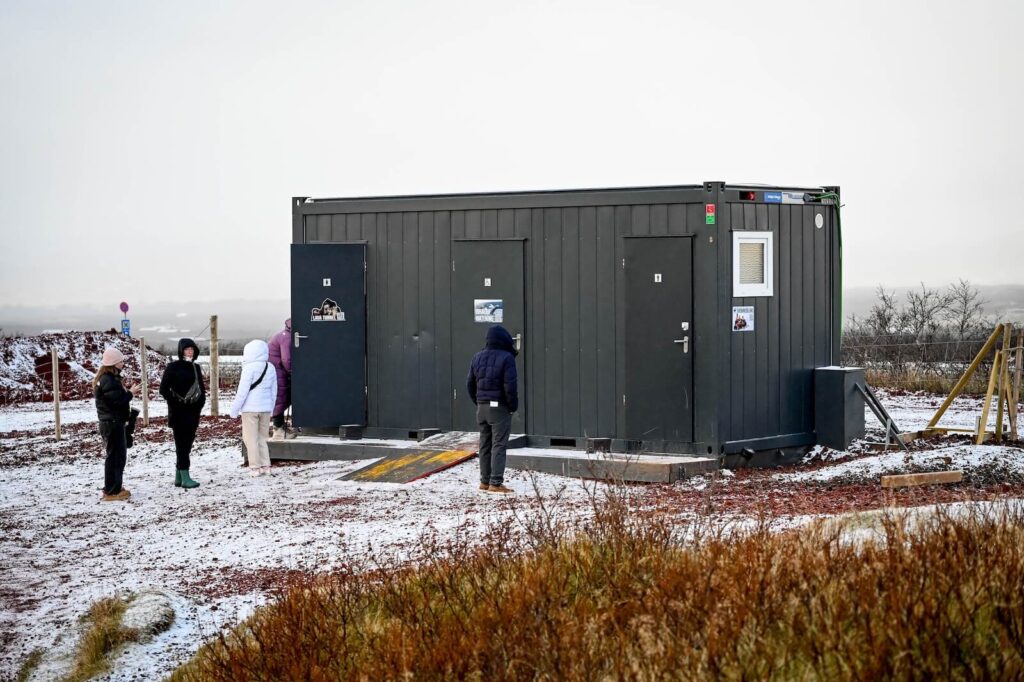
We never had to pay anything in terms of fees to use a restroom, but I have heard of some requiring a small fee.
Below are my restroom notes on stops that we personally visited (meaning this does not cover every single location in Iceland).
Golden Circle Stops with Restrooms
South Coast Stops with Restrooms
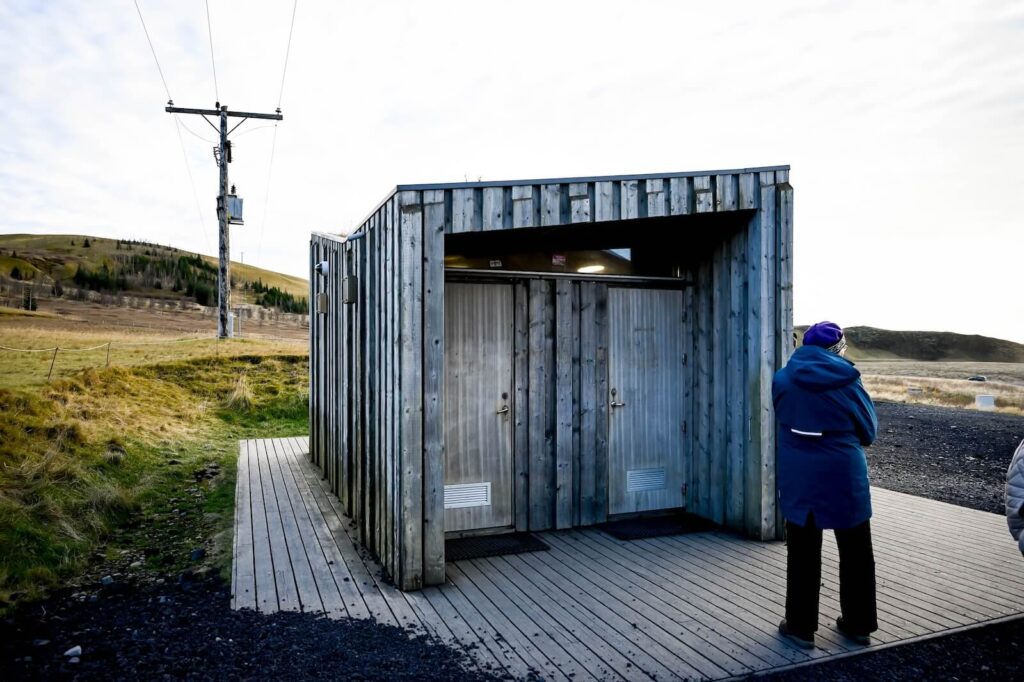
No Restrooms/Poor Restroom Quality
Iceland Rental Car Tips
One of the biggest decisions we had to make for our Iceland trip was whether or not to rent a car, particularly since we were traveling in the late autumn season (in the second half of October). Would the weather cooperate? Impossible to answer.
In the end, my husband felt comfortable with our chances and we decided to book a car rental for more flexibility in our itinerary. It turned out to be the best decision!
There are definitely a lot of things to consider when renting a car in Iceland, however. Here are my best tips for that.
Pick a Reputable Rental Car Company
Car rentals in Iceland can be expensive but I do think its important to go with a reputable company like Blue Car/Zero Car, Lotus, MyCar, or Lava. There are also big name international brands like Hertz and Avis, but the Icelandic brands have way better reviews.
My advice is to steer clear from smaller “discount” car rental agencies as I’ve seen many people complain about cars not being available or reservations being cancelled in online forums for those.
We booked our rental with Zero Car and I would highly recommend them.
Our Zero Car Experience
After I had done a ridiculous amount of research on the best car rental companies in Iceland, I whittled it down to a handful and did a price and coverage analysis. In the end, we settled on renting with Zero Car to get the best bang for our buck.
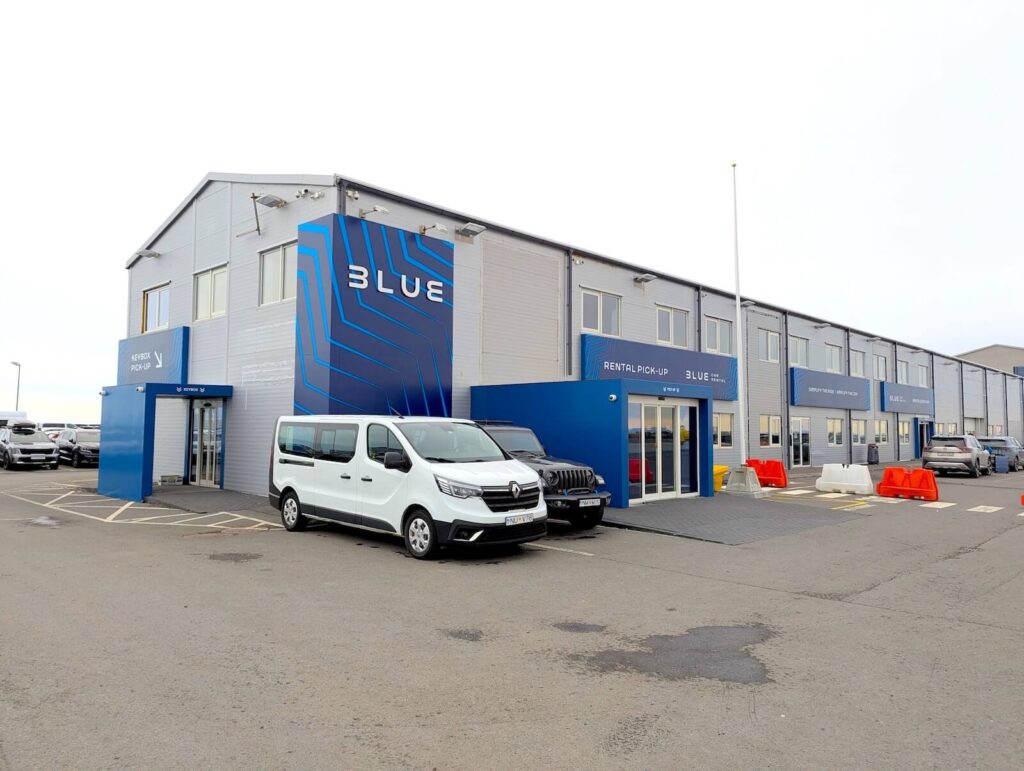
Zero Car is a sister company of Blue Car, one of the most popular and reputable car rental agencies in Iceland. Zero Car gets used models from Blue Car, which are rented at a lower price point. However, the best part of Zero Car’s pricing is that they automatically include full insurance and 24/7 roadside assistance for every single rental (more on car insurance below).
We reserved a “newer” Toyota Rav4 model and actually ended up with an upgrade at check-in – a Toyota Land Cruiser 150! I kind of fell in love with this car and want one for myself someday. It was the perfect size for our group of four – maximum comfort for those long road trip days.
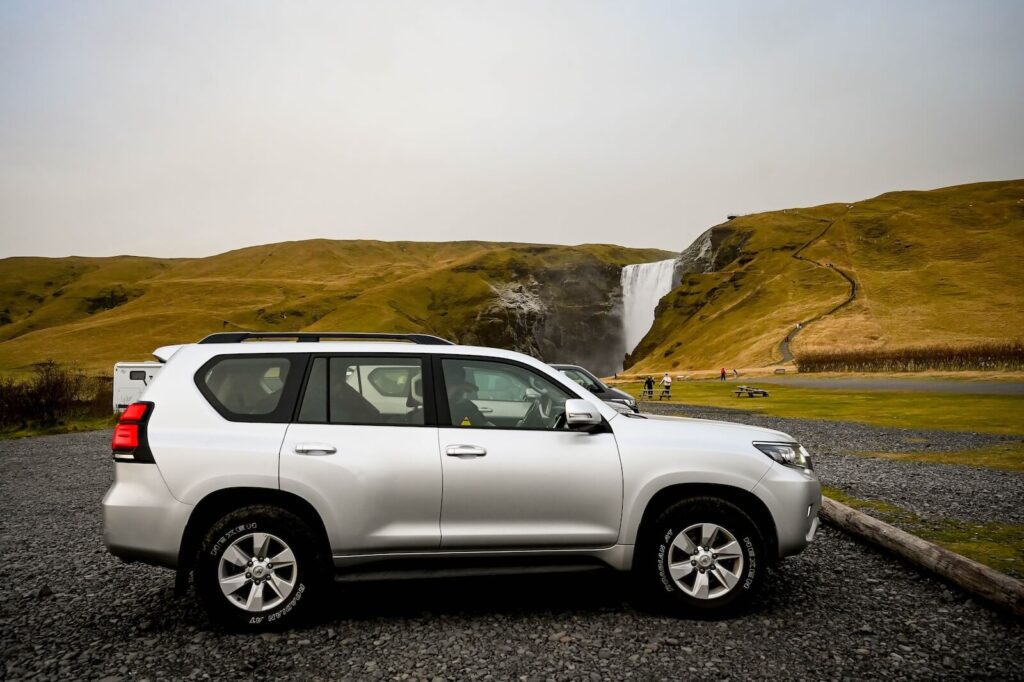
Check-in at Zero Car was super easy – we picked up our keys from a contactless key box area in the Blue Car building. Ahead of our car pickup, I checked in online via an email link and received our key box code via email.
Where are the Rental Car Facilities Located?
There are rental car facilities right inside the airport terminal, but a few are located either across the parking lot at the airport (Blue Car/Zero Car) or off site accessible by shuttle (Lotus, Lava & MyCar).
Rental Car Insurance
Don’t skimp on rental car insurance in Iceland to save a few bucks. Always go for full coverage and roadside assistance, even if you have coverage with certain travel credit cards. There are extra things that might not be covered, like wind damage or ash/gravel protection.
Zero Car includes full protection and 24/7 roadside assistance with all of their rentals.
Driver’s License Requirements
If you’re coming from the U.S., there is no need to get an international driver’s license. In fact, most countries’ driver’s licenses are acceptable. The only case where you need an international driver’s license is if your driver’s license is written in characters outside of the Roman alphabet (i.e. written in Arabic, Chinese or Cyrillic scripts).
The minimum driving age for car rentals is 20 and if you’re renting a larger SUV, you must be at least 23 years old.
Make sure you check the requirements with your rental car agency to verify all of this.
Vehicle WiFi & Radio
If you aren’t planning on using your phone plan or an e-sim for your trip, you may want to pay extra for the in-vehicle WiFi. We have Verizon and pay for a plan that already includes international coverage and I actually found Verizon’s service to be relatively good in most places in Iceland!
Radio Stations
One thing I would do next time: get a vehicle with satellite radio. The radio station selection in Iceland is minimal, especially when you get away from the cities and towns.
Alternatively, if you have good coverage or pay for in-vehicle WiFi, get your Spotify playlists queued up!
How to Spend One Week in iceland
For ideas on how to spend one week in Iceland, check out my One-Week Iceland Itinerary, covering a self-drive trip based in Reykjavík and Vík.
Iceland Driving Tips
Now that we got the rental car notes out of the way, here are some additional tips I found handy for driving in Iceland.
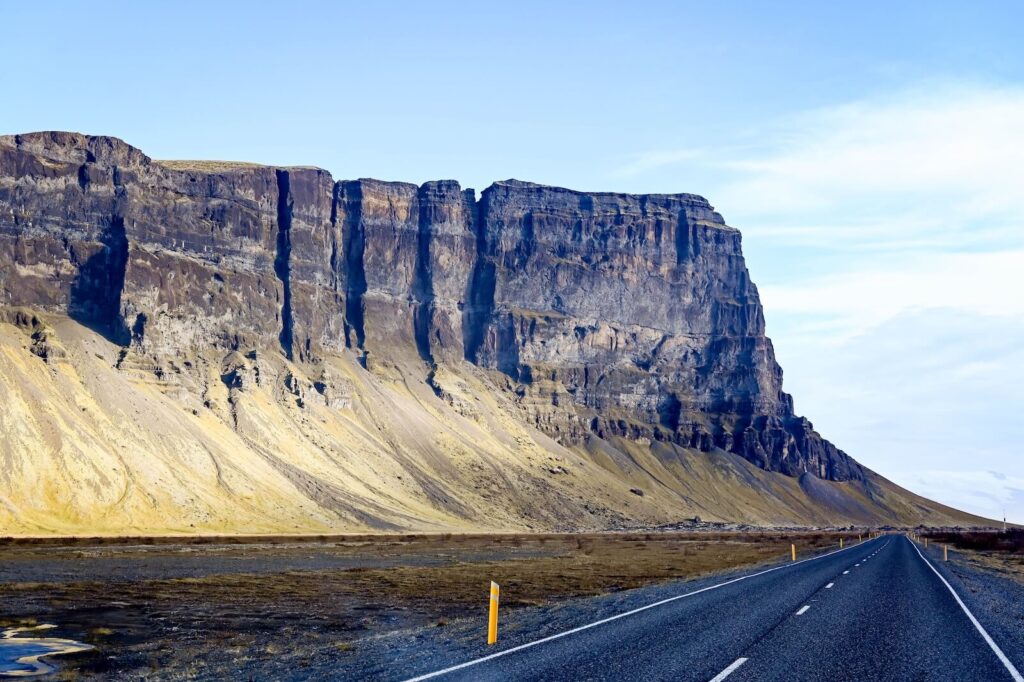
Right or Left Side?
Icelanders drive on the right side of the road so it’s a super easy transition if you’re American or European outside of the U.K.
Download Offline Google Maps
Before you get to Iceland, download offline maps from Google that cover the regions of Iceland you will be traveling to just in case you don’t have service or choose to forego the in-vehicle WiFi.
Even though my Verizon service worked better in Iceland than some places back home, I was glad to have my offline maps for navigating when the service did cut out.
Parking & Parking Apps
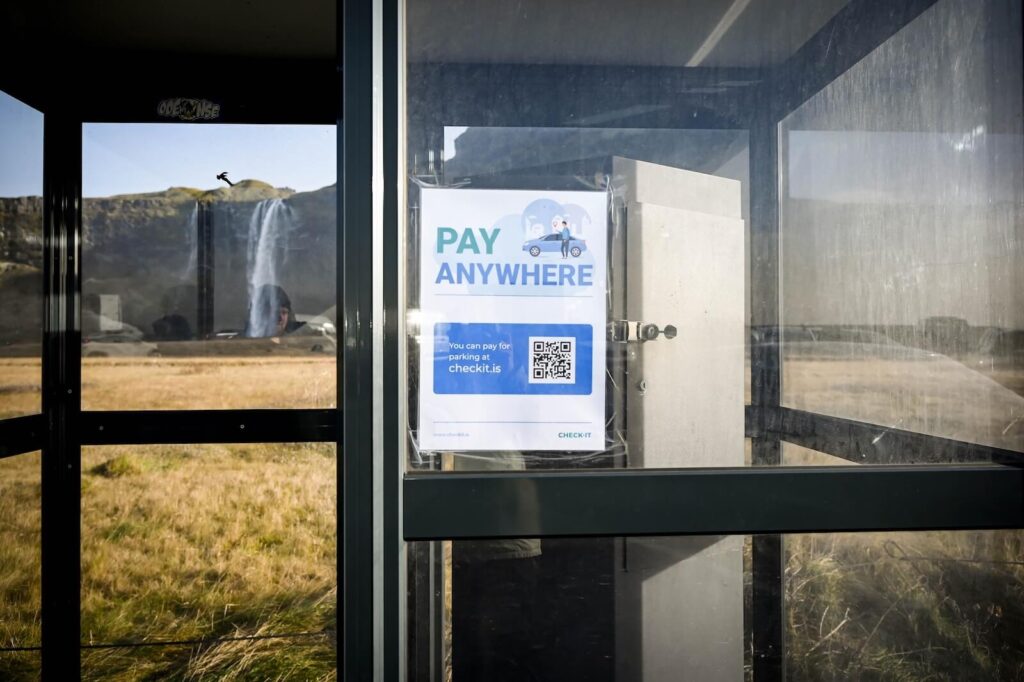
Most parking lots and garages around Iceland are transacted via Parka or EasyPark, with a few exceptions where you can pay by QR code for sites like Checkit.is. Download both of these apps before your trip!
There are also sometimes kiosks for parking at popular sites and paying at these avoids a small transaction fee. That being said, they aren’t at every lot and paying in the app before you even leave the comforts of your car is super easy and worth the tiny fee in my opinion.
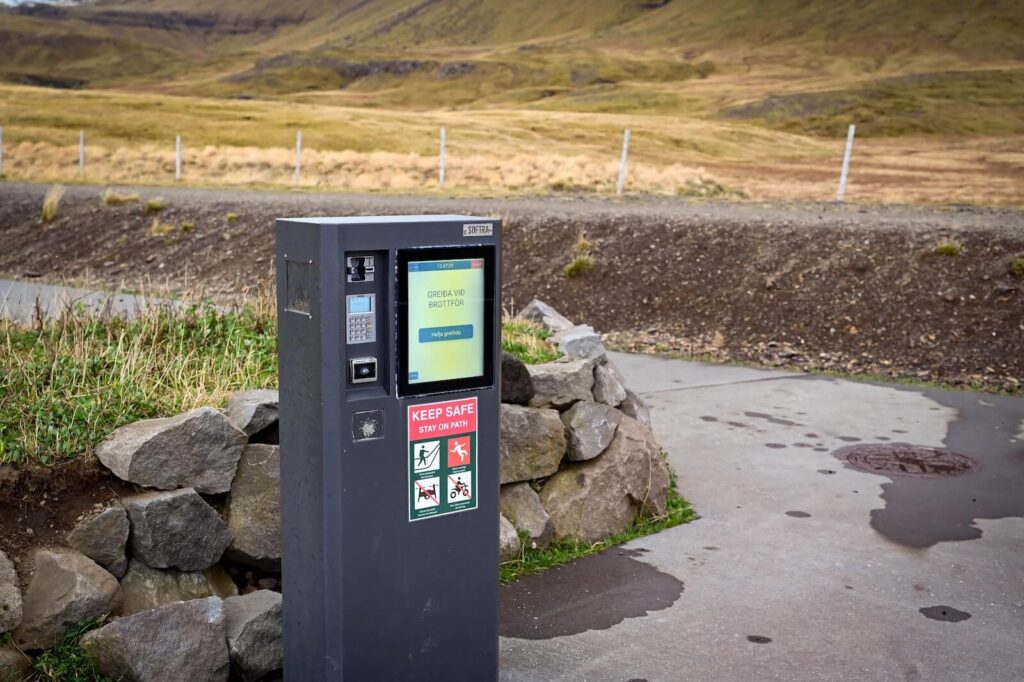
To pay for parking in the parking apps, search for the parking area you’re located in by name of the sightseeing destination like “Skogafoss” or a designated number which will sometimes be located on a sign in the parking lot.
Parking App Pro Tips
Pay with Parka
Pay with Easy Park
Pay with Checkit.is
Parking in Reykjavík
Driving in Reykjavík is pretty easy as it’s a very chill and compact city! Parking may be another story…
Street parking is available in Reykjavík but there are zones to consider, along with what day of the week and what time of day it is. I’m not going to pretend to be an expert on this because we only parked in a garage in Reykjavík.
Guide to Iceland does have a handy guide to explain Reykjavík parking better for you.
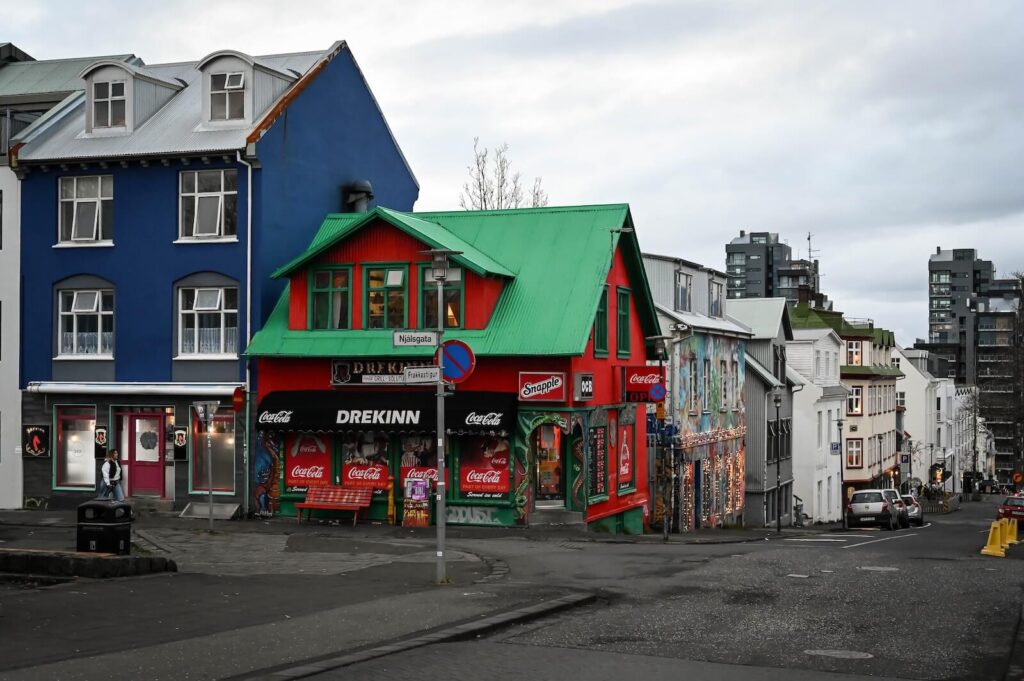
We parked in the Traðarkot parking garage in Reykjavík since it was right across the street from our hotel and chose to walk everywhere when in the city. Reykjavík is compact enough that you can get anywhere in pretty much 15 minutes on foot if you’re in a central area.
For the Traðarkot garage, there are scanners that will will scan your license plate at entry and exit for payment and they use EasyPark for payment. At the time we visited, parking was 260 ISK for the first hour and then 130 ISK every hour thereafter. We never paid more than $30 USD per night.
Parking Lot Costs
Parking in each lot or garage is based on passenger capacity, i.e. 1,000 ISK for a five-seater (which is probably what most of you reading this will be driving). Most lots around Iceland are going to hover around the 1,000 ISK mark and these fees are good for the entire day.
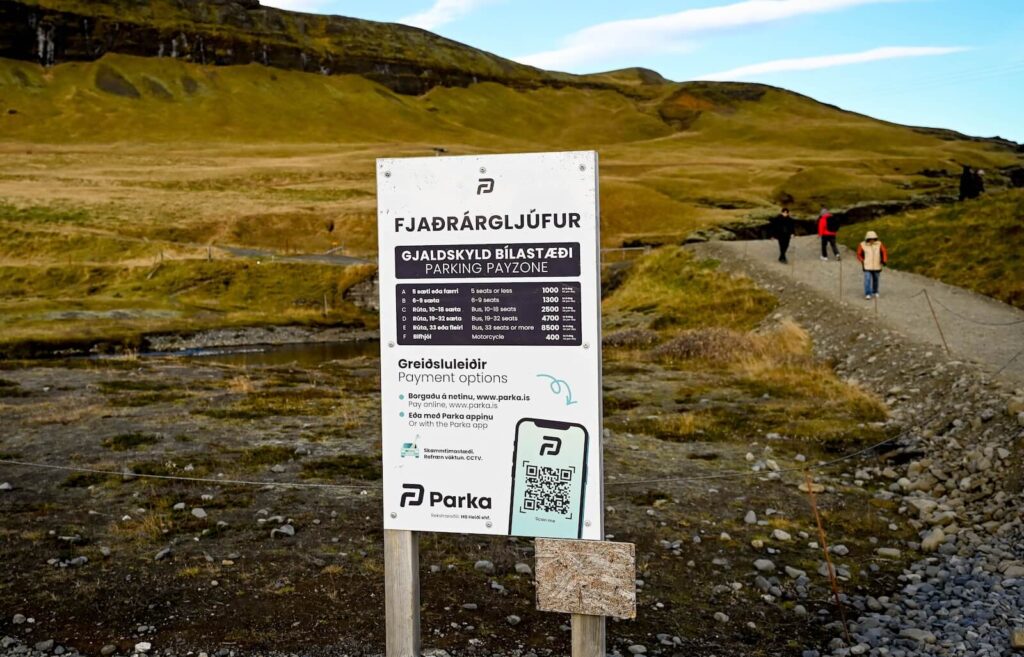
Transaction fees will apply (i.e. 1,000 ISK plus an 86 ISK transaction fee) if you are paying via the parking apps. To avoid the transaction fees, you can pay directly at a kiosk; however, not all lots have these available. I personally think it’s a small fee to pay for convenience.
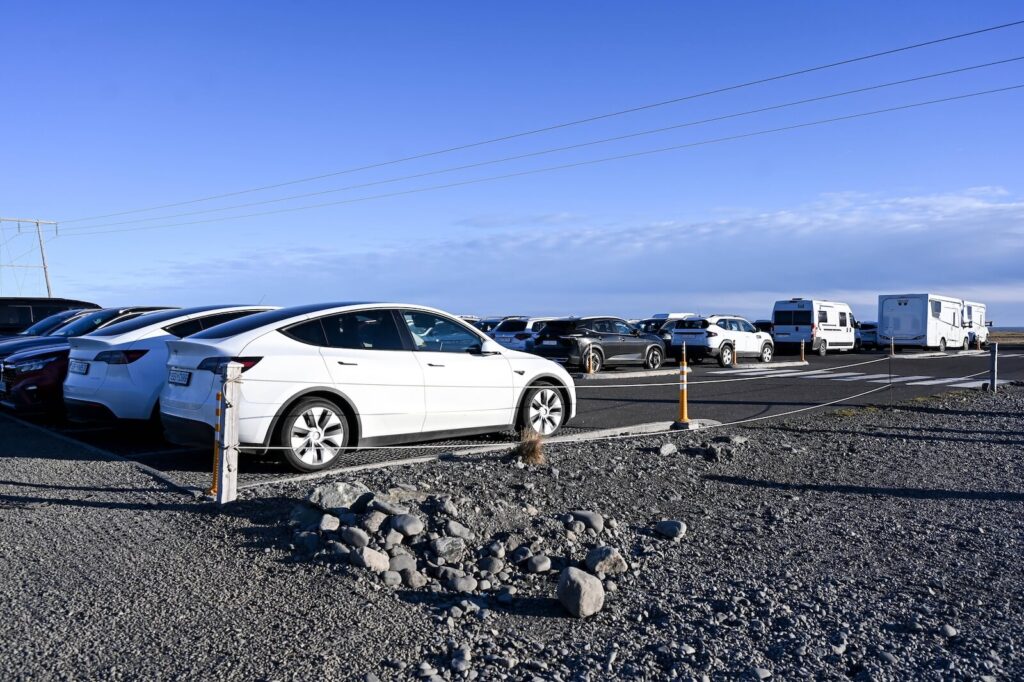
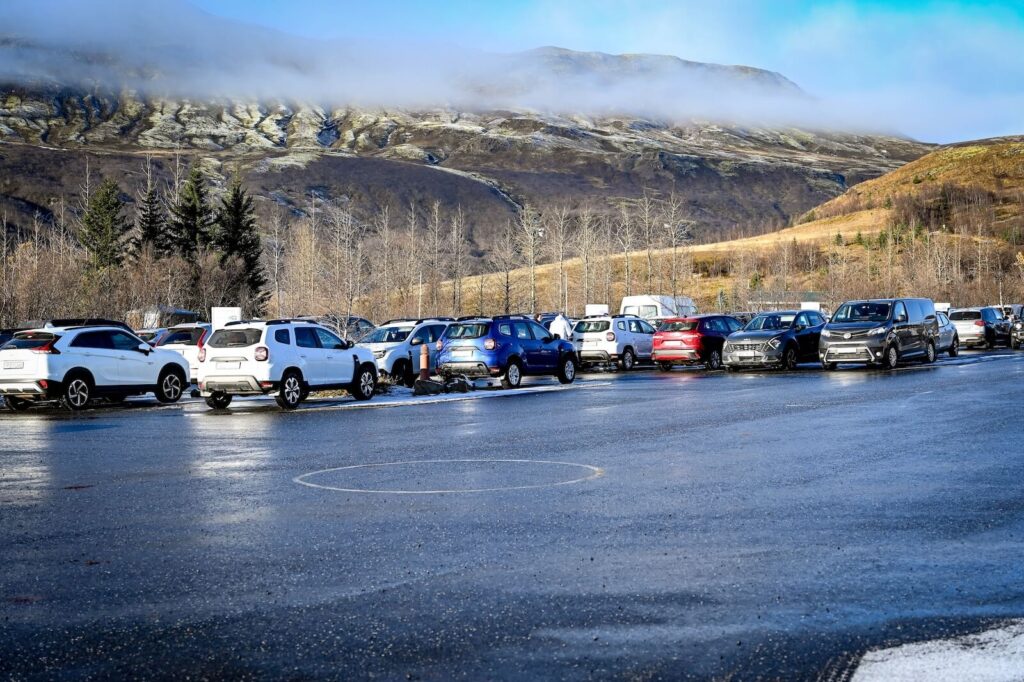
Parking Lots at Popular Sites
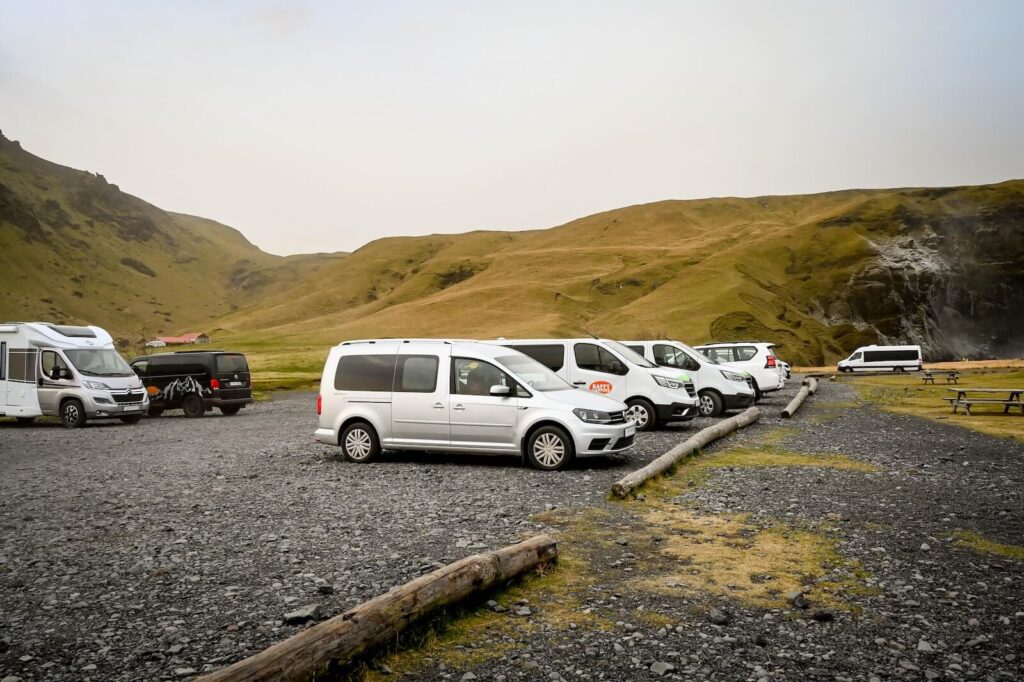
Lots for parking at each site are going to vary from paved lots to dirt or gravel. Any type of vehicle should manage just fine. Below are some examples of lots we parked in.
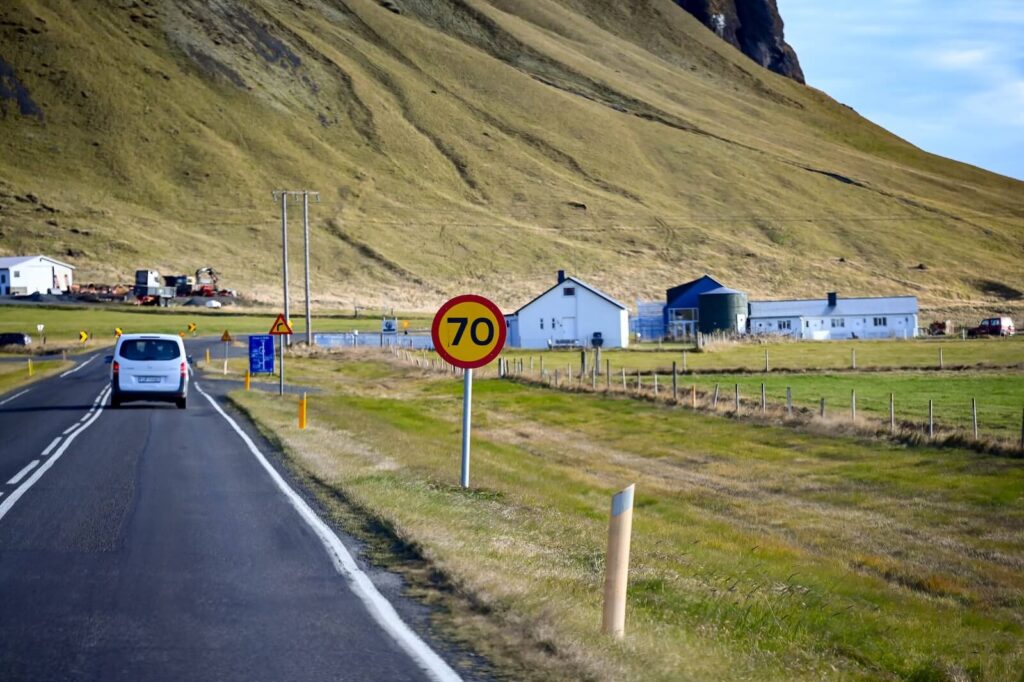
Road Signs
Road signs in Iceland are typically yellow or blue with red lines/accents. You will also need to keep in mind that the speed limits are in kilometers per hour and not miles per hour.
Check out the road sign key from Safe Travel Iceland so you can identify these before you go.
Roundabouts
One of my least favorite road features are roundabouts and let me tell you, there are a lot of them in Iceland – like the most I’ve seen, anywhere.
The most important thing to know about two-lane roundabouts in Iceland is that the inside lane has the right of way. Only choose the outer lane if you plan on exiting at the immediate next exit. If you are in the outer lane, remember to yield to cars in the inner lane.
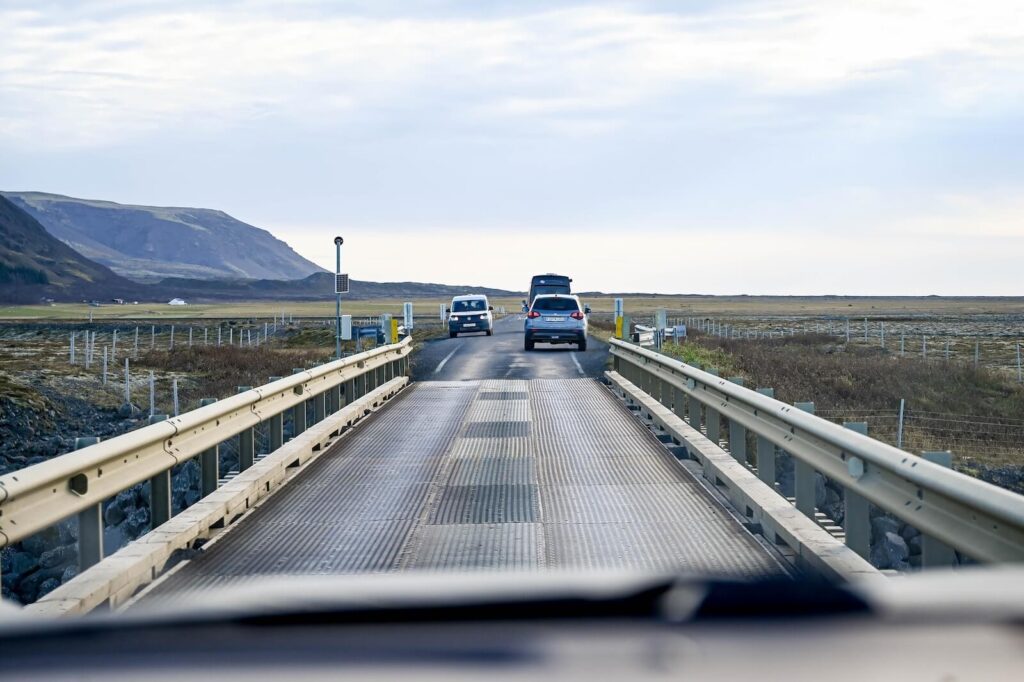
One-Lane Roads
One-lane roads can be common when driving around Iceland. Just be courteous and take turns with oncoming traffic – whoever gets to the opposite side first goes first. The ones we came across were easy peasy, but they might not all be that way.
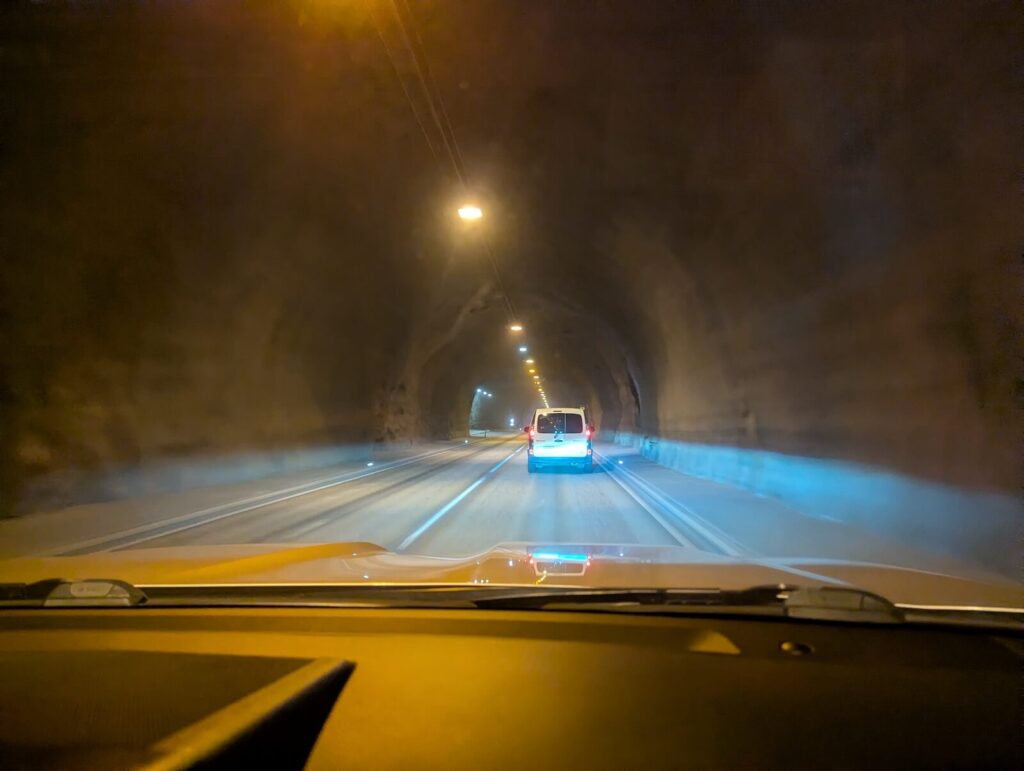
Tunnels
There are some tunnels you may pass through on your road trip journey. For example, to get from Reykjavík to the Snaefellsnes Peninsula, we passed through the Hvalfjord Tunnel, which is thankfully a toll-free tunnel.
There is a toll tunnel in the north between Akureyri and Húsavík. We haven’t been to the north yet, but the tunnel is called Vadlaheiðar Toll Tunnel and the toll must be paid online within 24 hours to avoid a fine.
Alternatively, spend an extra 10 minutes to take the old route to avoid the tunnel and fee altogether.
Speed Cameras
There are most definitely speed cameras set up to catch speeding cars! Below is a picture of what they look like.
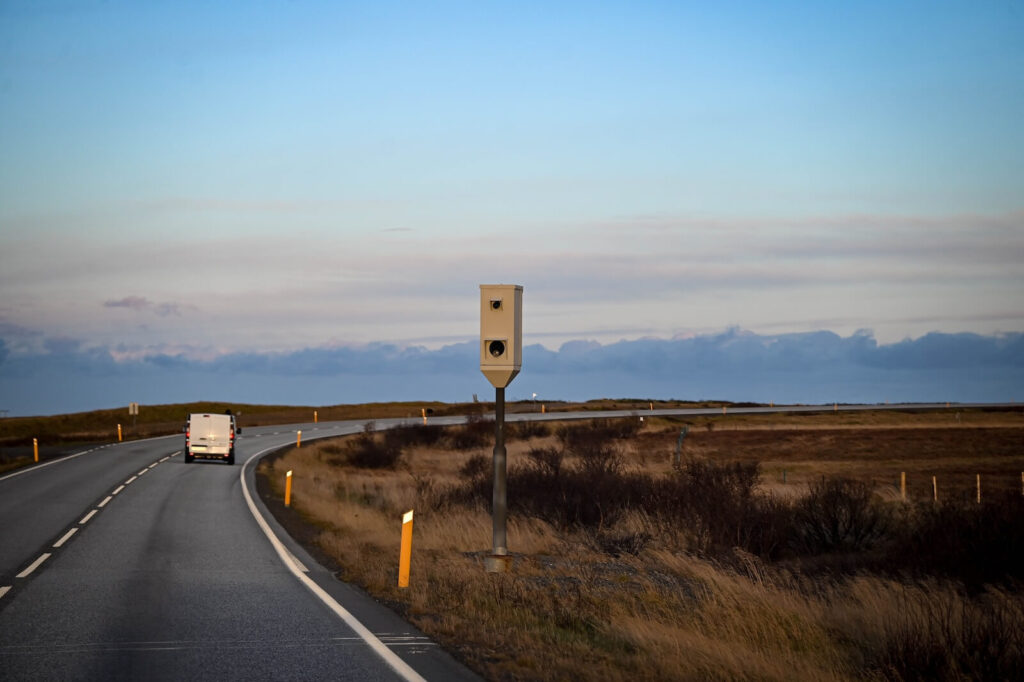
Iceland has a very small police force (due in part to being one of the safest countries in the world) so you won’t see them out and about trying to pull people over. That being said, we did see one on the road from Reykjavík to Selfoss and he just flashed his lights at us as a warning to slow down – thank you for not coming for us!
If you do get caught speeding, a ticket will go to your rental car agency who will then pass it along to you to pay the fine. Thankfully, we didn’t receive any speeding tickets.
Gas Station Tips
Filling up your vehicle at a foreign gas station is always intimidating for the first time. Everything in Iceland is labeled in both Icelandic and English, which reduces the stress levels immensely. Aside from a few key things, getting gas in Iceland is relatively easy.
Which Gas Stations Are Best?
The most common gas stations we saw in Iceland were N1 (best for snack stops) and Orkan (the pink gas stations).
We only ended up getting gas at Orkan stations. I had come across a lot of chatter in online groups recommending gassing up at Orkans in order to avoid entering a pin when paying with a credit card. As Americans, we don’t commonly use pins for credit cards, so I wanted to dodge that.
I can confirm, no pins are needed at Orkan! These stations also do widely accept Apple and Google Pay if you want to avoid credit card issues altogether.
And on the topic of credit cards, always make sure you have something that charges no foreign transaction fees (most travel rewards credit cards offer this as a benefit).
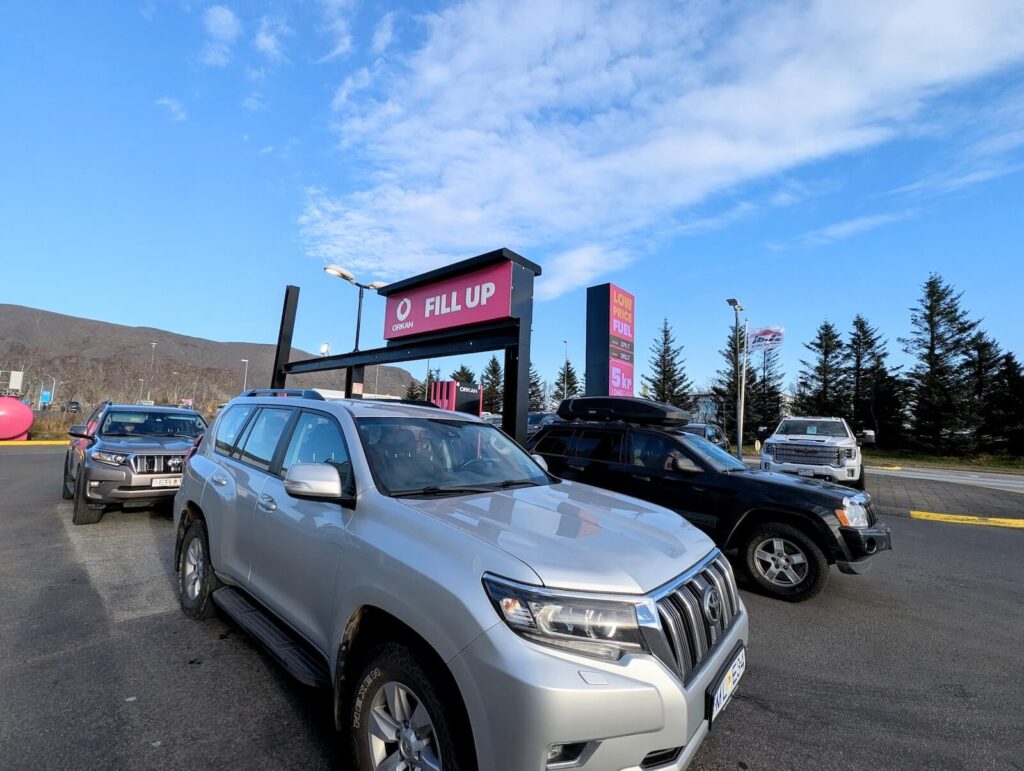
Fixed Amount vs. “Fill Up”
Another thing to know is that if you choose the “fill up” option rather than choosing a fixed amount, your credit card will have a hold placed on it (sometimes up to a couple hundred U.S. dollars). It’s not a cause for panic – it will adjust soon after. However, this does catch a lot of travelers off guard so it’s something to be mindful of.
To avoid the credit card holds, choose a fixed amount in ISK, i.e. 5,000 ISK. You will only ever be charged for what you actually use regardless of which method you choose to gas up.
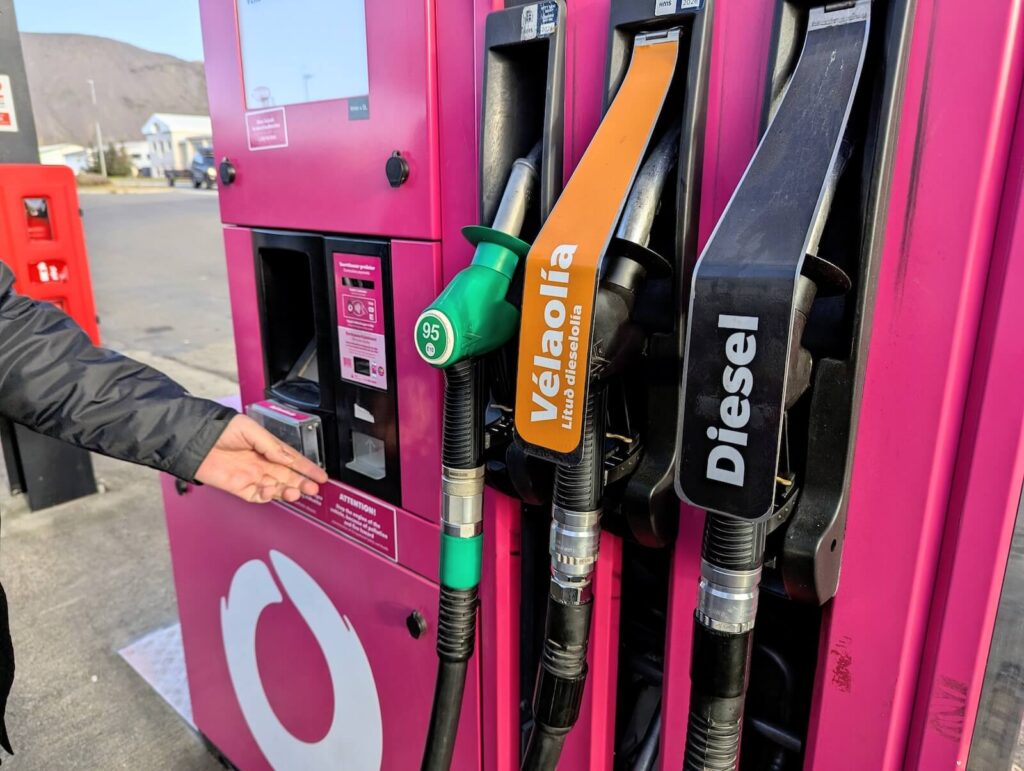
Regular Gas vs. Diesel
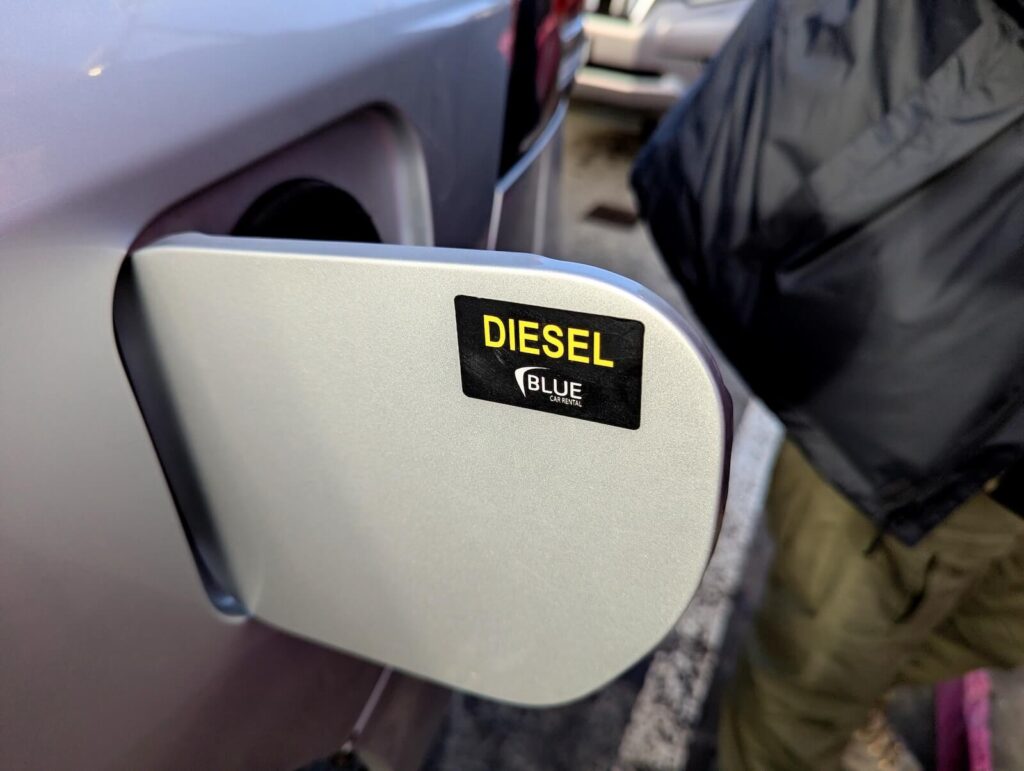
Always check what fuel your vehicle takes. You’d think this was a no brainer, but I had to help out a group in the vehicle behind us with opening their tank and making sure they put the right fuel in.
Our Zero Car rental had a clear label by the gas tank for diesel.
Mark Gas Stations on Your Route
Google Maps is awesome for planning out road trip routes! I created a Gas Station list in my Google Maps with a little gas pump icon (I’m a very visual person) to plot stops along our road trip route. You definitely don’t want to be caught without gas on a long stretch of the Ring Road!
Since we did not do the entire Ring Road on our first trip, gas stops actually weren’t that frequent. We only filled up three times during our week in Iceland – once in Selfoss on our way to the South Coast (after having done a Snæfellsnes road trip the day prior), once in Vík before heading to the Golden Circle (after having done a trip up to Jökulsárlón the day prior), and once near Keflavík airport before returning our car.
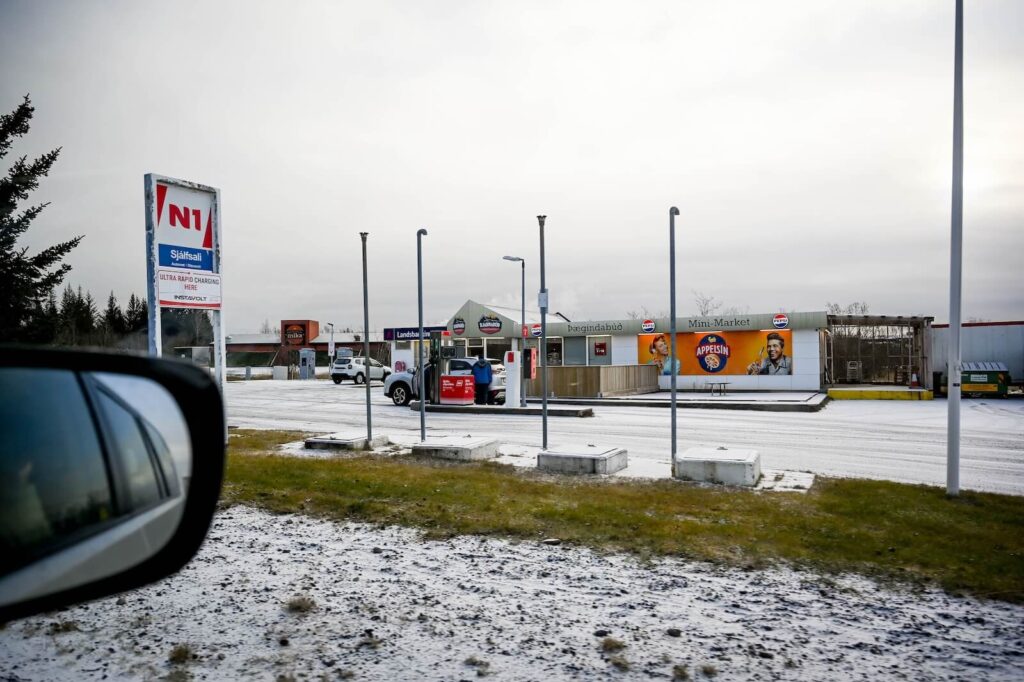
Road Trip Snacks
Iceland has some tasty snacks for road tripping! Stop at a Kronan, Bonus, or N1 mini marts and get some Icelandic favorites. These stores are also great spots to pick up items that you can use for budget-friendly lunches, from pre-built sandwiches to meats, cheeses, and crackers to build your own picnics.
My personal favorites:
- Collab energy drinks (I loved the passion fruit flavor); be careful opening these in the car though as they will fizz over!
- Appelsín (orange soda – there are both with sugar and without; read those labels)
- Hraun chocolate bars
- Freya chocolate bars
- Pristur candies (chocolate and licorice)
- Prince Polo bars (these are Polish but popular in Iceland)
- Osta Stjörnur (cheese stars) or Paprikustjörnur (paprika stars)
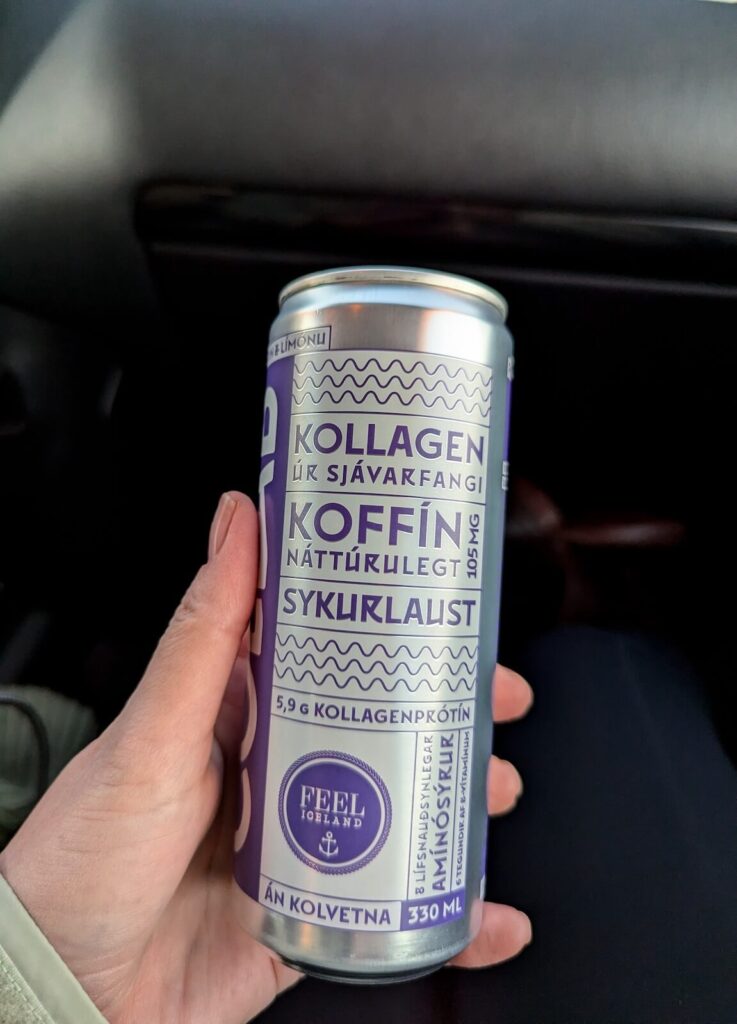
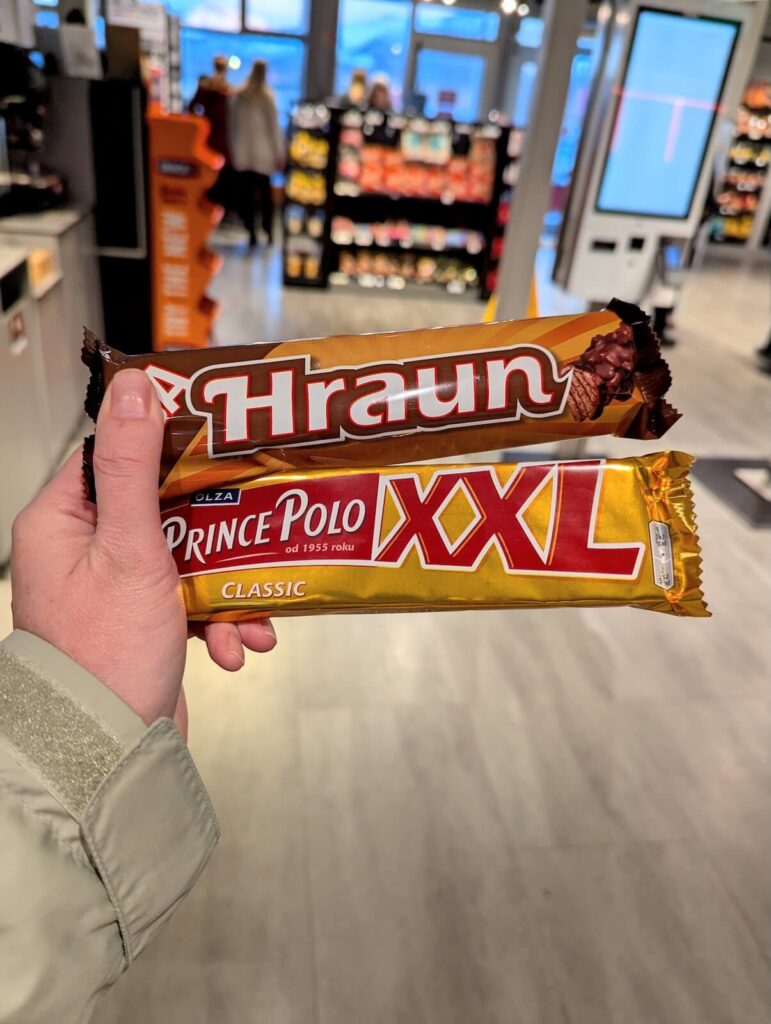
Airport Tips
Lastly, when you’re departing Iceland, keep in mind there is a passport control area that you’ll need to pass through to get to your final boarding gates.
This area will get backed up pretty easily and it can take some time to get through. There are plenty of restaurants and bars after passport control so don’t be afraid to make your way through there right away.
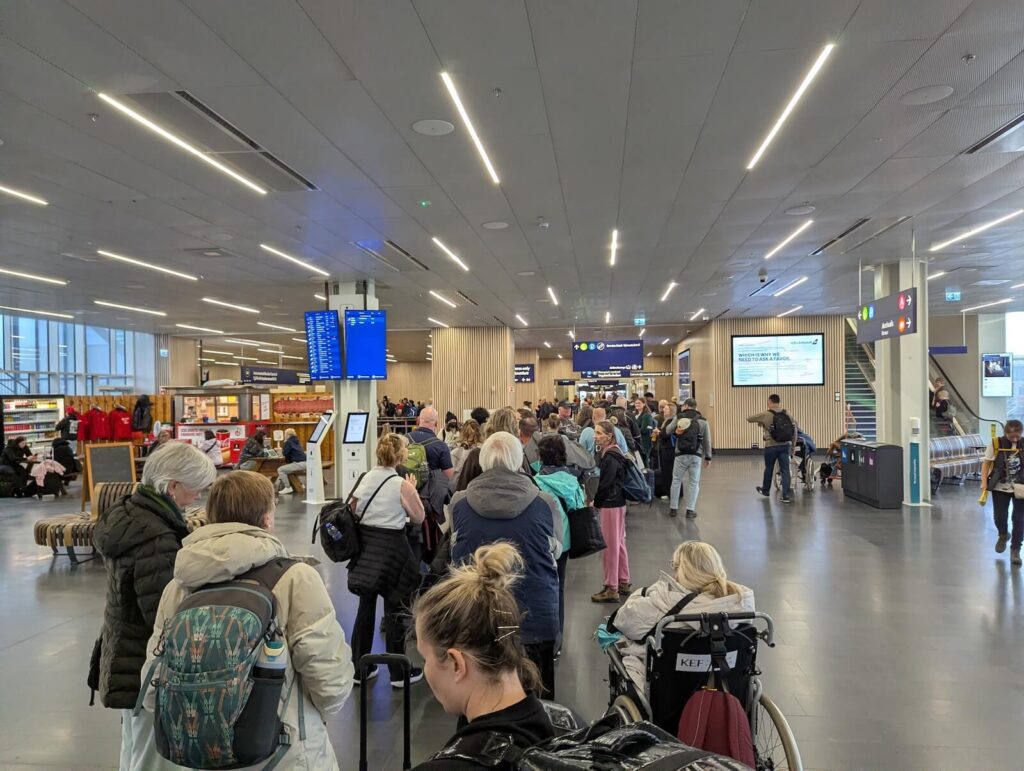
Those are all my helpful tips I collected when planning and experiencing our first trip to Iceland! When we return, I’ll be sure to add any more tidbits of insight that I gathered.
If you have attraction or scenic site-specific questions, check out my One-Week Iceland Itinerary post for more detailed notes on those (i.e. for the Blue Lagoon, Jökulsárlón and Diamond Beach, etc.).
Are there any specific Iceland travel questions you have that I didn’t cover? Drop me a comment below!
Want More Iceland Inspo? Check These Out:
- One-Week Iceland Itinerary Based in Reykjavík & Vík
- Iceland Packing Guide: What to Pack for Iceland in the Fall
- Where to Eat in Iceland: A Guide to My Favorite Food Finds in Iceland
- What to Eat in Iceland: The Ultimate Foodie Bucket List
- Reykjavík Food Tour Review: The Best Thing to do In Reykjavík
- Snæfellsnes Peninsula Day Trip Itinerary from Reykjavík